
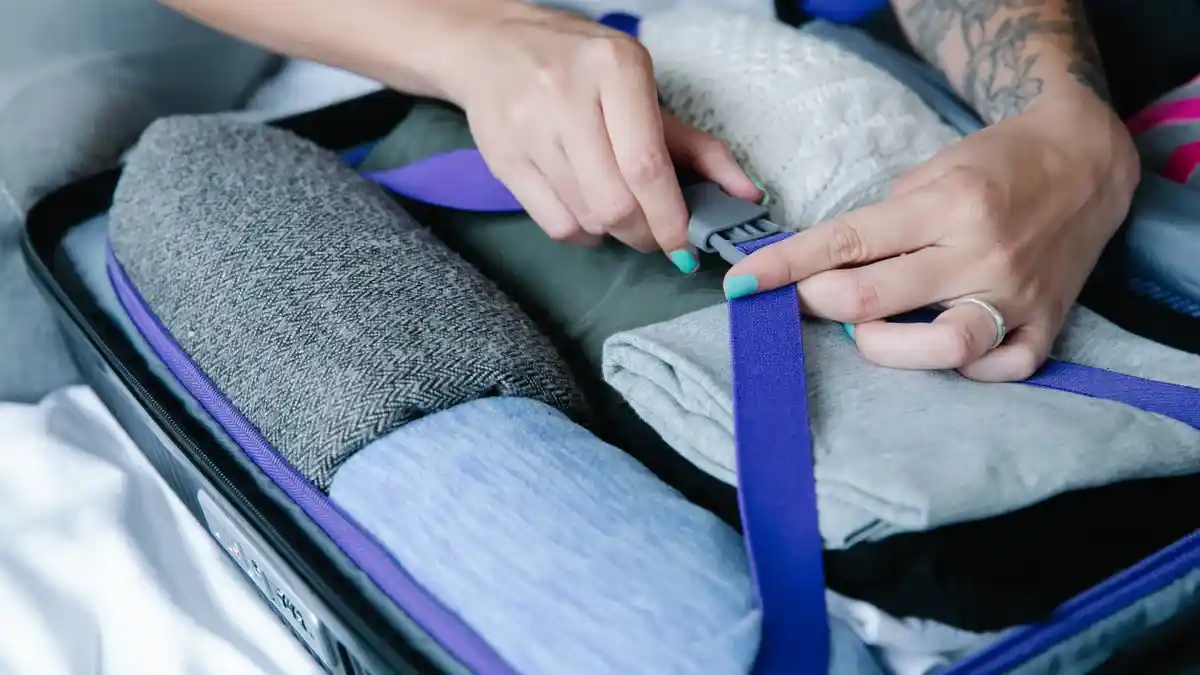
Last updated: November 18, 2026
Quick answer: you can pack a carry-on for one bag travel by choosing a small color mix, limiting shoes, using packing cubes, and leaving anything that only works for one outfit or one occasion behind. One-bag travel works when every item earns its spot.
This guide shows how to pack a carry-on for one bag travel, the trade-offs, and the steps that stop you from overpacking before a trip even starts.
What one-bag travel asks you to decide first
One-bag travel starts with a hard cut: put every item in the bag only if it can earn space in more than one outfit, one setting, or one day. That rule sounds simple, but it changes what you pack more than any brand of suitcase does.
Picture this: you’re standing over an open carry-on suitcase with a pile of clothes on the bed, a toiletry bag on the dresser, and a pair of “just in case” shoes by the door. The goal is not to fit everything. The goal is to fit the right things and stop there.
That means making three decisions before anything gets folded: what weather you’re packing for, how formal your days really are, and how many times you’ll do laundry. A capsule wardrobe is the right tool here because it trims choices without forcing you into a tiny closet of random basics.
Use this filter on every item:
- Does it match at least 3 other pieces?
- Can it be worn for 1 full day without fuss?
- Will it still make sense after a wash or two?
- Would you buy it again for travel, not just for home?
If the answer to any of those is no, it belongs on the leave-behind pile. That pile is the whole point. Most packing mistakes happen before the zipper ever closes.
For a broader system view, this page sits under the Packing Systems and Organization hub, where the packing method matters as much as the bag.
How do I decide what to pack in one bag?
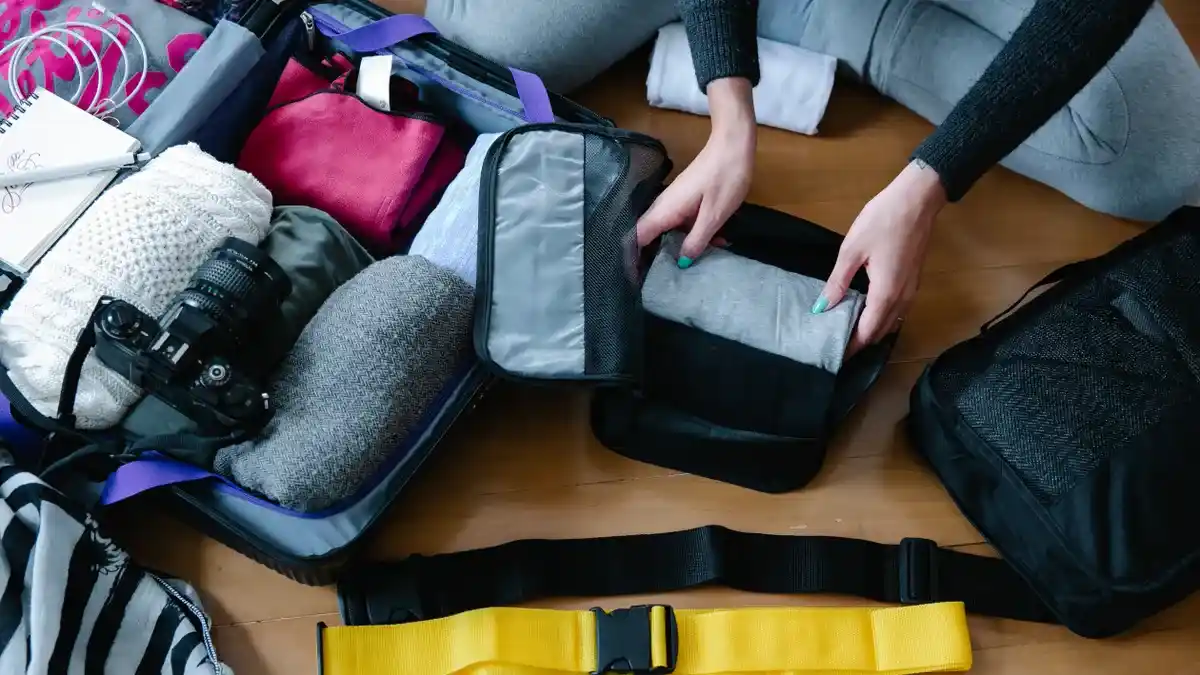
Decide by outfit first, then by category, then by backup item. That order keeps you from packing a drawer instead of a plan.
Because the trip date and weather matter, start with your actual schedule. You may also want to compare this approach with our packing checklist and capsule wardrobe guide before you fill the bag.
A travel checklist helps, but the checklist should be built around a trip, not around fear.
Start with these 4 questions:
- What will I do most days?
- What shoes fit those days?
- Which clothes can layer in 2 temperatures?
- What can I buy or wash at my destination instead of carrying now?
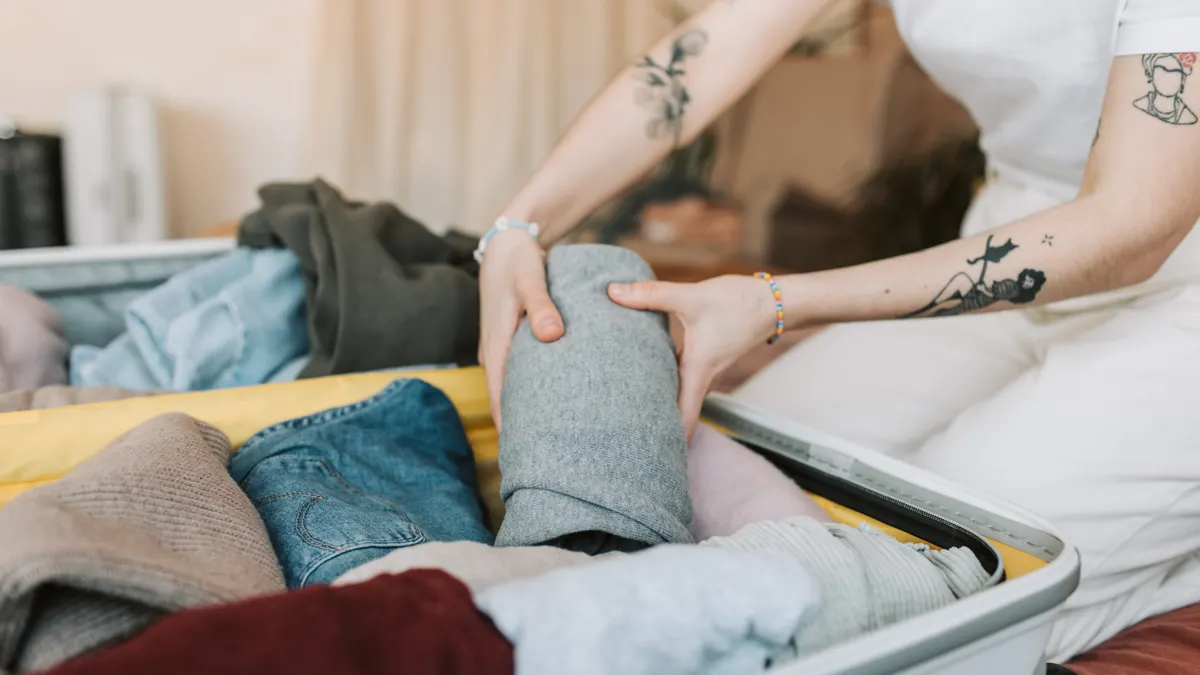
Now set a number and stick to it. For many trips, that means 2 tops, 2 bottoms, 1 layer, 1 sleep set, 1 active set, and undergarments for the days you’ll be away. The exact count changes by climate and laundry access, but the structure stays the same.
Use this simple split:
- Wear on the plane: your bulkiest shoes, heaviest layer, and the least-packable items.
- Pack in the bag: clothes that compress well and mix cleanly.
- Buy or borrow later: shampoo, sunscreen, beach gear, and anything bulky for one-day use.
A generic article usually stops at “roll your clothes.” That misses the real issue. Rolling helps, but a bad list still fills the bag. In practice, the best one-bag systems remove duplicates first: too many tops, two similar jackets, three pairs of shoes, extra jeans that look interchangeable.
Here’s the catch: the more special your outfit plan, the harder one-bag travel gets. A destination wedding, a formal work trip, or a week with multiple dress codes may need a different packing setup. That’s not failure. It’s just a different problem.
Build your capsule wardrobe before you fold anything
A capsule wardrobe is the backbone of one-bag travel because it turns random clothes into repeatable outfits. If each piece works with several others, you need fewer total items and you waste less space.
Because the goal is repeat wear, start with the pieces that do the most work. You can also link this step to how to build a capsule wardrobe if you want a fuller outfit plan before you pack.
Picture this: you’re holding 6 shirts and 4 bottoms, but only 3 outfits actually work without awkward color clashes. That’s where the capsule idea pays off. It isn’t about owning less for the sake of it. It’s about owning pieces that connect.
Use a narrow color base:
- 1 or 2 neutral colors
- 1 accent color
- 1 pair of shoes that works with most outfits
- 1 light layer and 1 warmer layer
Then check combinations. Lay out each top with each bottom. If a piece only works with one other thing, it is a weak travel piece. If it works with 3 or more, it is doing real work.
A good capsule usually includes:
- 3 to 5 tops
- 2 bottoms
- 1 outer layer
- 1 sleep set
- 1 “nice enough” outfit piece if needed
- 1 workout or active set if the trip calls for it
The numbers are not magic. They are a guardrail. If your wardrobe plan goes past that, ask what each extra item does that the others do not. If the answer is “nothing specific,” leave it home.
That approach also makes unpacking easier. Your clothes already belong together, so you are not sorting a pile of strangers when you arrive.
Use packing cubes to sort, not to smuggle in more stuff
Packing cubes help when they organize a plan; they hurt when they hide extra bulk. The cube is a container, not a loophole.
Because categories are easier to manage than loose items, cubes can make a carry-on feel calmer. For a simple one-bag system, they also fit well with our travel gear guide and carry-on luggage guide.
Picture this: you have one cube for shirts, one for bottoms, one for underwear, and a small pouch for cords. The bag closes without force because each category has a job and a limit. That’s the real value of packing cubes.
Use cubes like this:
- 1 cube for tops
- 1 cube for bottoms or layers
- 1 small cube or pouch for underwear and socks
- 1 clear pouch for liquids if needed
- 1 slim tech pouch for cables, adapters, and a charger
Choose cubes that fit the bag shape instead of filling every inch on purpose. A cube that overpacks makes the whole system worse. You get a squashed bag, wrinkled clothes, and no room for the thing you forgot to think about.
Do not pack by cube just because the cube is empty. That’s how people end up with 4 tiny bags inside one larger bag and still can’t find a clean shirt. Each cube should answer one question: where does this category live?
If you want a loose rule, use the 1-1-1 method for small travel items: one toiletries pouch, one tech pouch, one document or valuables pocket. It keeps the inside of the bag from turning into a junk drawer.
One honest drawback: cubes take up a little space of their own, and some fabrics add weight. If you already pack very light, a single pouch system may be enough. A cube setup is best for travelers who want order more than absolute minimal volume.
What should stay out of the bag?
Leave out anything that exists for “just in case” and rarely gets used twice. That habit saves more room than any folding trick.
Because the bag only works when it stays lean, this is where one-bag travel often gets easier or falls apart. The same logic applies to your packing checklist when you trim it down to the trip, not the fear.
Picture this: the bag is 90% ready, but you keep reaching for backup items—an extra jacket, a second pair of jeans, a third pair of shoes, a full-size toiletry kit. This is where one-bag travel usually falls apart.
Use this leave-behind list:
- Second “maybe” shoes
- Duplicate toiletries
- Full-size bottles
- Spare outfits for moods, not plans
- Thick books if an e-reader or phone can do the job
- Bulky towels unless the trip truly needs one
- Single-use gear for one photo, one meal, or one event
The cost of overpacking is not just weight. It is slower mornings, a heavier bag in train stations, and less room for laundry or souvenirs. A bag that is packed to the edge also gets harder to repack on the return trip.
Here’s a better test: if the item would be annoying to replace but easy to borrow, rent, or buy once, leave it home. If it would be hard to replace and useful all week, it probably stays.
Now, you might be wondering about “backup” clothing. One backup item is fine. A whole second version of the same wardrobe is not. If you’re packing a spare because you’re nervous rather than because the weather or schedule requires it, that spare is probably dead weight.
For liquids, keep the toiletry set tight and travel-sized. The TSA’s 3-1-1 liquids rule is a useful guide in the U.S., and it shows why toiletries can take over a carry-on fast. Pack only what you’ll use in the days before you can restock.
The packing order that keeps the bag closed
Pack the heaviest and least flexible items first, then fill the dead space with soft things. That order keeps the bag balanced and makes room for the rest without a last-minute fight.
Because the layout matters, start with the items that are hardest to fit. That makes the rest of the carry-on suitcase easier to close and easier to carry.
Picture this: your shoes are sitting by the opening, your clothes are folded in neat stacks, and your charger is still floating loose. That is the wrong order. Heavy items should go low and close to the wheels or the back panel, depending on the bag shape.
Use this sequence:
- Put shoes, toiletry pouch, and tech pouch in first.
- Add folded bottoms and layers along the sides.
- Place shirts and sleepwear in cubes or flat stacks.
- Fill gaps with socks, underwear, or a small scarf.
- Top off with items you may want first after arrival.
This order works because the bag stays stable. It also helps protect fragile items like sunglasses, headphones, or a laptop sleeve if you’re carrying one.
If your suitcase has an internal compression strap, use it only after the contents are arranged. Tightening a bad layout just locks the mess in place. A better fit beats brute force every time.
A simple packing checklist for the final check:
- Can I lift the bag one-handed?
- Does anything poke against the zipper?
- Is one full outfit easy to reach?
- Do I know where my documents are?
- Can I still add a small purchase on the trip home?
If the answer to that last one is no, the bag is too full. Leave a little air in the system. That empty space is not wasted.
What changes when the trip gets longer?
Longer trips do not require a bigger bag if laundry, repeat wear, and outfit mixing are part of the plan. That’s the part most people miss.
Because the trip length can change without changing the system, one-bag travel still works for a longer stay if you plan for washing. The same idea also fits a packing systems guide if you want to compare setups.
Picture this: you’re leaving for 7 days and thinking you need 7 complete outfits. That sounds logical, but it is usually the fastest way to break the one-bag rule. With a sink wash, hotel laundry, or a laundromat stop, the same core items can last much longer.
Use this thinking instead:
- Pack for 3 to 4 days of clothing.
- Plan one wash cycle mid-trip if needed.
- Choose fabrics that dry overnight.
- Bring one outfit that can work dressed up or down.
That approach is especially useful for business-casual trips and mixed-city travel. A black tee, dark trouser, and clean layer can do more work than a closet full of one-off pieces.
Still, there are limits. If the trip includes formal events, unpredictable weather, heavy exercise, or very limited laundry access, one-bag travel gets harder. The system can still work, but only if you accept the trade-offs and choose fewer nonessential extras.
A plain rule helps here: pack for function, not for fantasy. If you imagine three separate versions of yourself on the trip, you’ll overpack for all of them.
Can I travel for a week with only a carry-on?
Yes, a week usually fits in a carry-on if you repeat outfits, wash once, and skip duplicates. The key is not the number of days. It’s how often the same pieces can do another job.
Because a week is the most common test case, this is where one-bag travel feels either realistic or impossible. The answer depends more on your plan than on the calendar.
Picture this: a 7-day trip, one bag, and a closet that already leans simple. That trip is manageable if your wardrobe is small, your shoes are versatile, and your toiletries are travel-sized. A week is not automatically too long. It only feels that way when each day gets its own separate outfit logic.
Use this week-long setup as a model:
- 3 to 4 tops
- 2 bottoms
- 1 layer
- 2 pairs of shoes at most
- 1 sleep set
- 1 toiletries pouch
- 1 laundry plan
If you need more than that, ask why. The answer is usually dress code, weather, or fear. Only one of those is a real packing reason.
For a simple one-bag system, the rule is this: every item should either keep you clean, dressed, organized, or ready for the weather. If it does none of those, it doesn’t belong in the bag.
Key Takeaways
- Build the trip around outfits, not individual clothing items.
- Keep colors tight so pieces mix without thought.
- Use cubes to sort categories, not to hide extra volume.
- Leave behind “maybe” items that only serve fear.
- Pack for repeat wear, one wash, and easy access.
- A week can fit if your plan is lean and realistic.
What is one-bag travel?
One-bag travel is packing everything you need into a single bag, usually a carry-on suitcase or a backpack that fits your trip without checked luggage. The method depends on choosing versatile clothes, smaller toiletries, and a clear limit on extras. It works best when the bag serves the trip instead of the trip serving the bag.
How do i decide what to pack in one bag?
Decide by outfit, not by category. Start with what you’ll do each day, pick clothes that mix with at least 3 other pieces, and cut anything that only works once. A travel checklist helps, but it should reflect your real schedule, laundry access, and weather, not a fantasy version of the trip.
can i travel for a week with only a carry-on?
Yes, a week can fit in one carry-on suitcase if you repeat outfits, wash once, and keep shoes and toiletries under control.
Drafted with AI; not yet reviewed by a person.


Leave a Reply