
Last updated: November 18, 2026
Quick Answer: Pack a carry-on for a two-week trip by building a small capsule wardrobe, limiting shoes to two pairs, using packing cubes to separate outfits, and planning to wash one load of clothes mid-trip. If the bag closes easily and you can lift it without wrestling the zipper, the system is working.
Key Takeaways
- Start with the bag you are using, then fit the trip to the bag, not the other way around.
- Choose clothes that mix across 10 to 14 days so you are not packing 14 separate outfits.
- Use packing cubes for clothing and a laundry bag for worn items; compression bags help only if the fabric can tolerate wrinkles.
- Keep toiletries in travel-size containers and assume liquids must fit the standard security liquid rules for your flight.
- Pack for one planned wash instead of trying to carry every shirt, sock, and base layer from day one.
A two-week trip does not require two weeks of clothes, and this carry-on guide for a two-week trip starts with a plan for repeat wear, one or two laundry stops, and a ruthless limit on bulky items. The goal is not a perfect minimalist capsule; the goal is a bag that closes, stays organized, and still leaves room for the return trip.
Start by deciding what must fit in the bag
The first step is to list the things that cannot be replaced easily on arrival: clothes for your climate, any medications you need, your chargers, and the shoes you will actually wear most. Lay those items out on a bed or floor before anything goes into the suitcase.
Then divide the trip into categories: days that need polished outfits, days that are casual, and days when you can repeat the same bottoms. A 14-day business trip needs a different mix than a 14-day beach trip, even if the suitcase size is the same.
For a two-week trip, use a 21-inch or similar carry-on suitcase if that is your travel style, but do not start by filling every corner. Start by asking what the trip requires in layers. A warm-weather trip may need only one jacket. A colder trip may need one outer layer, two midlayers, and fewer tops. That trade-off matters more than the number of days.
The result you want here is a flat pile that already looks smaller than you expected. If you have four pairs of shoes, five heavy sweaters, and a full-size toiletry kit, the system is already too ambitious. Cut before you fold.
For airline basics, the TSA liquids rule is the standard many travelers plan around: containers of 3.4 ounces, or 100 milliliters, or smaller, all in one quart-size bag for carry-on screening. The Transportation Security Administration explains this on its liquids page, and that limit is what makes travel-size toiletries nonnegotiable.
How do I build a two-week capsule wardrobe for a carry-on?
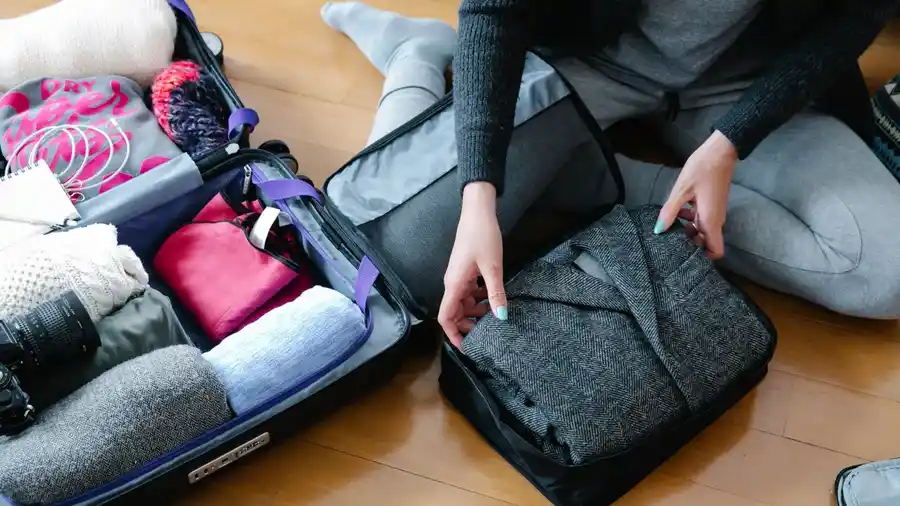
A two-week capsule wardrobe is a small set of mix-and-match clothes that creates more outfits than individual pieces. The easiest version is 3 bottoms, 5 to 7 tops, 2 layers, and 2 pairs of shoes.
Pack around color families, not individual outfits. Black, navy, gray, olive, white, tan, and denim tend to work together without much effort. If every top works with every bottom, 3 bottoms and 6 tops can produce 18 combinations before you add a layer. That is why capsule packing beats “one outfit per day.”
For a two-week trip, use this order:
- Choose bottoms first. Pick 2 trousers, jeans, skirts, or shorts that can be worn twice without feeling stale. When this works, the bottoms all match at least three tops.
- Add tops that change the look. Pack 5 to 7 shirts, blouses, or tees in fabrics that dry quickly, such as merino blends, technical knits, or lightweight cotton. The pile should still fit in one packing cube.
- Add one smart layer and one casual layer. A blazer, cardigan, denim jacket, or light sweater can reset the same top-and-bottom combination. If you can wear the layer on the plane, it saves space.
- Limit shoes to the pairs that serve different jobs. One walking pair and one dressier pair is the usual ceiling. If the second pair is only for “just in case,” it stays home.
- Add underlayers and sleepwear last. Pack 4 to 6 pairs of underwear, 4 to 6 pairs of socks, and 1 or 2 sleep sets, then stop. Laundry fills the gap later.
The sign that this step worked is simple: every item on the list can be worn with at least two other items you packed. If a piece only works with one outfit, it is a liability, not a solution. This is also where a lot of people overpack a jacket they never wear. One outer layer is enough for most trips unless the destination has a sharply different climate.
If you want a useful rule, use “one week of clothes, two weeks of options.” That means enough pieces to cover 5 to 7 days cleanly, plus laundry and repeats to bridge the full trip.
Pack clothing into cubes before anything else fills the suitcase
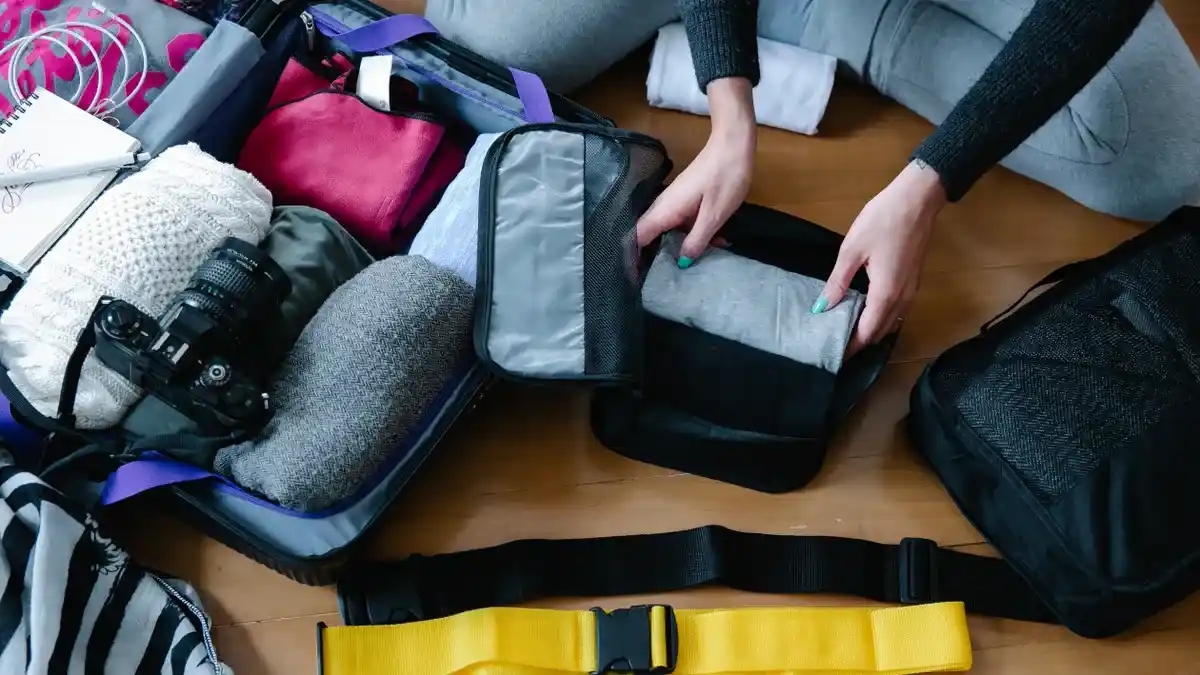
Packing cubes keep the bag organized, compress soft clothing a little, and stop the suitcase from turning into one mixed pile. Put clothes into cubes by category, not by day: one for tops, one for bottoms, one for underwear and socks, and one for sleepwear or gym wear.
Because the cubes work best when they are packed consistently, fold each item in the same direction, stack like with like, and press the cube flat before zipping it. If the cube closes without bulging, it is full enough. If the zipper bows hard, you are forcing in too much and the bag will waste space later.
A good layout inside the suitcase is usually this:
- one large cube for bottoms and layers
- one medium cube for tops
- one small cube for underwear and socks
- one separate pouch for cords and small accessories
This is where compression packing can help, but only for fabrics that tolerate it. A compression bag or compression-style cube can save vertical space with T-shirts, knitwear, and underwear. It can also create deep wrinkles in linen, dress shirts, and structured pieces. Use compression on soft items, not on anything that needs to look crisp the moment it comes out.
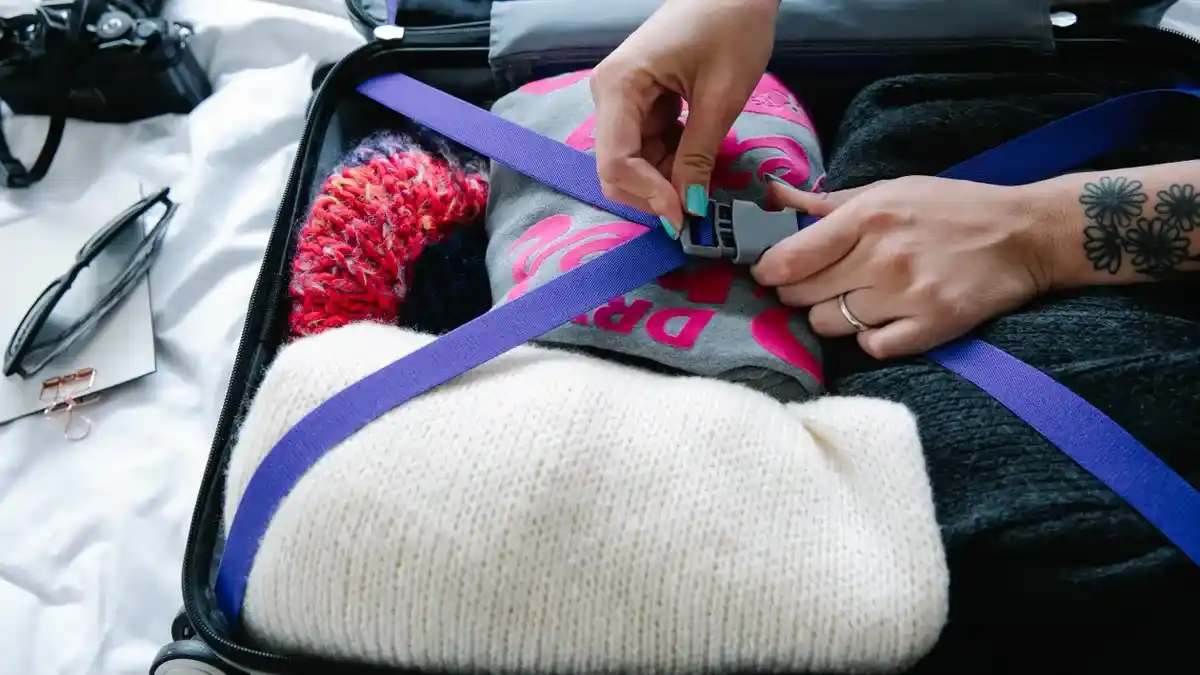
The visible sign that this worked is the suitcase shell closing without you sitting on it. The cubes should sit like bricks, not like stuffed pillows. If the bag only closes after you have climbed on the lid, remove one cube’s worth of clothing and move on.
A common mistake is packing every cube to the brim and then leaving no room for souvenirs, wet clothes, or the return airline’s stricter weight rules. Leave at least one empty cube slot or one quarter of the suitcase open if the trip includes shopping or laundry.
What toiletries can actually go in a carry-on?
Only travel-size toiletries should go in the main liquid pouch, and most of them should be decanted into 3.4-ounce or 100-milliliter containers. Full-size shampoo, conditioner, sunscreen, lotion, and liquid makeup usually belong in checked luggage, not here.
Use a clear quart-size bag or the local equivalent required by security. Put the items most likely to spill in leakproof bottles, then place the pouch near the top of the suitcase so it can be pulled out fast at screening. Toothpaste, facial cleanser, sunscreen, liquid foundation, and contact lens solution all count as liquids in most airport security systems.
A practical toiletry strategy for a two-week trip is to bring fewer categories instead of more bottles. Pick one cleanser, one moisturizer, one sunscreen, one shampoo, and one styling product if you need it. If a hotel supplies soap or shampoo, decide in advance whether you will use it. That single decision can free up a surprising amount of space.
A solid toiletry kit for this kind of trip often includes:
- 1 toothbrush and 1 compact toothpaste tube
- 1 travel-size shampoo
- 1 travel-size conditioner or a combined product
- 1 deodorant
- 1 sunscreen in a travel container
- 1 razor or grooming tool
- basic medications in original packaging when needed
The honest trade-off is that travel-size toiletries cost more per ounce and often run out before day 14. That is why many people carry one small refill bottle or buy replacements at the destination. If the trip includes a remote area, the safer plan is to bring enough product for the full trip within the liquid limit or to switch to solids where possible.
Plan laundry before the suitcase closes
Laundry planning is what makes a two-week carry-on trip possible. Without it, you are packing 14 days of clothing, which usually turns into too much volume and too many duplicates.
Decide before departure whether you will wash clothes on day 5, day 7, or day 10. Even one sink wash or one self-service laundry stop changes what needs to go in the bag. If you know laundry will happen, you can pack 4 to 6 tops instead of 10, and 2 pairs of pants instead of 4.
Bring a laundry bag, not a plastic shopping bag. A lightweight mesh or fabric laundry bag keeps worn clothes separate and stops clean items from absorbing odor. It also makes the return pack much faster because dirty laundry is already corralled.
For washing on the road, pack a tiny amount of detergent or a laundry sheet if the destination makes laundry easy. If not, plan to hand wash underwear, socks, and one or two shirts in the sink, then hang them on a towel rack or line. Fast-drying fabrics matter here. Heavy cotton takes longer to dry and can create damp, sour-smelling cubes if you pack it too soon.
This is the point where many travelers overestimate how much they will rewear. Some clothing can be worn two or three times. Base layers, socks, and anything that traps sweat usually cannot. A two-week plan works because you wash the high-turnover items, not because you pretend they do not get dirty.
The sign that this step worked is a separate bag of worn items and a trip schedule with one washing point marked on it. If laundry is still a vague hope, the packing plan is unfinished.
Keep the suitcase balanced so the trip starts smoothly
Balanced packing keeps the suitcase from tipping, keeps clothing from shifting, and makes the bag easier to lift into overhead bins. Put heavy items near the wheel end of a spinner and lighter cubes above them, or place weight close to the back panel in a two-wheel bag.
Keep shoes low and near the frame, since they hold shape and anchor the bag. Fill shoes with socks, chargers, belts, or other small items to prevent dead space. Put the heaviest toiletry pouch in the middle rather than at the very top, where it can crush soft clothes or make the lid bulge.
Use the smallest number of loose items possible. A belt should coil. Chargers should live in one pouch. Jewelry should go in a small pouch or pill case. The fewer loose objects you have, the faster you can repack after hotel laundry or airport security.
This section is where a lot of generic advice gets lazy and says “just roll everything.” Rolling is not magic. Some people get better results folding structured clothes and rolling soft items. The right method depends on the fabric and the shape of the suitcase. According to travel-advice guidance from the U.S. Travel Association, and if you are unsure about garment care, consult a clothing-care professional or tailor for structured pieces like a blazer, a collared shirt, and a sweater before treating them like gym clothes.
The result you want is a bag that opens in layers instead of collapsing into one heap. When you unzip it, you should see the cubes, toiletries, and laundry bag in distinct places. That is what makes a two-week trip manageable from the first hotel night to the last.
The guide to carry-on luggage for air travel situations belongs with this packing plan, because the luggage choice and the packing system work together. The wrong bag makes even a smart capsule wardrobe harder to use.
What people get wrong with two-week carry-on packing
The biggest mistake is packing for “just in case” scenarios that are unlikely to happen. One formal backup outfit, three extra pairs of shoes, and a full-size toiletry kit can eat the space needed for actual trip essentials. The cost is simple: more weight, more wrinkles, and less room for the things you will actually use.
Another mistake is ignoring the return trip. Many travelers pack the outbound leg perfectly and then have no room for laundry, gifts, or a dirty-weather layer on the way home. A suitcase that closes on departure but cannot close on return is poorly packed.
A third mistake is choosing fabrics that fight the system. Thick denim, bulky knits, and slow-drying cotton can be fine in moderation, but too much of them makes compression less useful and laundry slower. If a shirt takes overnight to dry, it can become a problem on a short hotel stop.
A fourth mistake is packing outfits instead of pieces. “Day 1 outfit, day 2 outfit” looks organized on paper and wastes space in practice. Pieces mix better, especially when you are relying on one pair of walking shoes and one dressier pair.
This method is not for someone who needs a different outfit every day for work events, weddings, or formal dinners. In that case, a carry-on may still work, but only with a stricter fabric choice and a much smaller leisure wardrobe. It is also not the right answer if the destination has severe weather, specialized gear, or bulky medical equipment that cannot be replaced on site.
How much should still be left empty in a carry-on for a two-week trip?
A useful carry-on should still have a little room after the first pack, not because the trip is underpacked, but because real travel changes the plan. A jacket comes off. A souvenir appears. A dirty outfit needs a place to go. That small cushion is what keeps the system from collapsing on day 8.
A practical target is one open pocket, one open cube slot, or enough empty space for a laundry bag and a single layer on the return trip. If every inch is filled on departure, the bag is too full. If the zipper still moves easily and the suitcase handles without strain, the packing plan is right-sized.
The honest answer is that there is no single outfit count that fits every two-week trip. Climate, dress code, shoe choice, and laundry access all change the number. What matters is not the total count; it is whether each piece earns its place, works with other pieces, and fits into a system that expects repetition.
Drafted with AI; not yet reviewed by a person.




Leave a Reply