
Last updated: November 18, 2026
Packing systems and organization solve one problem fast: they keep your clothes, gear, and small items easy to find in less than 5 minutes of repacking. In Packing Systems and Organization — The Complete Guide, the goal is to match your trip length, bag shape, and how often you need to get at your stuff. The sections below settle what to pack, how to divide it, and when a cube-based setup beats a folder, pouch, or compression bag.
What is a packing system, really?
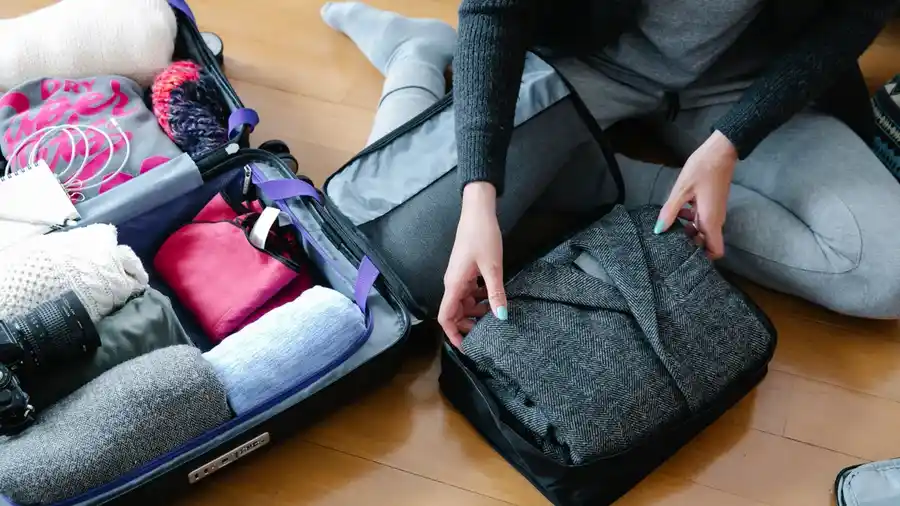
A packing system is a repeatable way to sort, protect, and access items inside a bag using cubes, pouches, folders, or compartments. It works best when it reduces three things at once: loose clutter, wasted space, and the time it takes to find one shirt, cord, or charger.
For a 4-day trip, you may start with one open suitcase cavity and a pile of mixed clothes. You can toss everything in, but the first time you need a clean shirt, you’ll dig through a mess. A real system turns that pile into labeled zones.
The truth is, packing systems are not about “perfect folding.” They’re about making your bag behave the same way every time. That matters more than fancy gear. A traveler with a carry-on, a weekend duffel, or a hiking pack needs different organization, but the same logic still applies: separate by purpose, limit loose items, and keep the things you need most near the top.
A useful system usually has three layers:
- Primary storage for clothes and bulk items
- Small-item storage for cables, toiletries, meds, and documents
- Access storage for things you may need in transit
That structure is the foundation. Without it, even a large bag becomes a black hole.
What packing setup works best for most people?
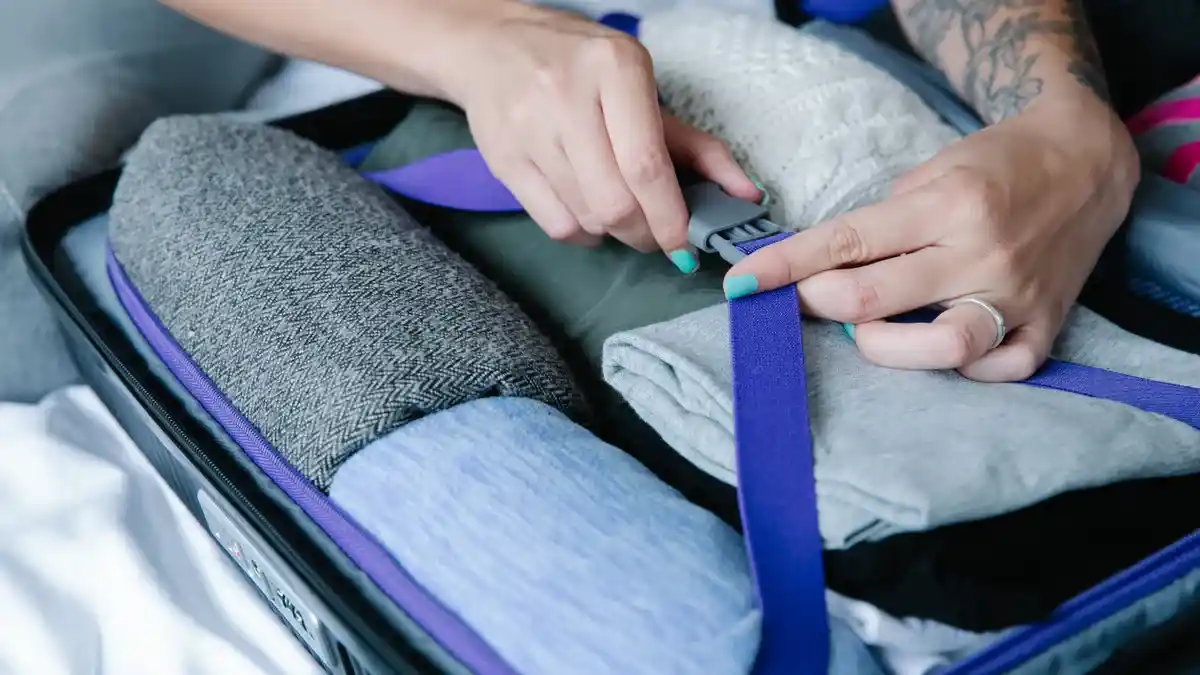
A cube-and-pouch setup is a strong starting point for many travelers because it gives you order without locking you into one packing style. It handles shirts, pants, underwear, toiletries, and cables better than a single open compartment, and it works in both soft bags and hard-shell cases.
For a Friday-to-Sunday trip, you still need room for shoes, a sweater, a phone charger, and a toothbrush. A modular setup lets you pull one cube out, open one pouch, and get on with the day. That’s the real win.
Here’s the catch: a setup with more pieces is not automatically better. Too many containers can waste space and slow you down. Three or four useful zones beat seven tiny bags that all look the same.
A strong basic system looks like this:
- One cube for tops
- One cube for bottoms or sleepwear
- One pouch for underwear and socks
- One pouch or case for cords and electronics
- One slim wash kit
- One document pocket or easy-access sleeve
This setup works because it maps to real tasks. Clean clothes stay together. Dirty items can move into a separate pouch. Small things stop disappearing into side seams. If you travel with a backpack, this is usually the cleanest place to start.
How do packing cubes actually help?
Packing cubes help by compressing loose clothes into fixed blocks, which makes stacking easier and reduces rummaging. They are best for travelers who want fast access and predictable storage, not for people who want every last inch squeezed out of a bag.
For a 20-inch suitcase, keeping two outfits separate from your gym clothes is much easier with cubes. Without them, the bag turns into one mixed pile. With cubes, each category has a home and stays that way even after the trip gets messy.
They also make repacking less annoying. If you sleep in one hotel, move to another, or live out of a bag for several days, you can pull out only the cube you need. That keeps the rest of your bag cleaner.
Cubes have real limits:
- They can waste space if the bag is an odd shape
- Overstuffed cubes can make zippers hard to close
- They do not protect fragile items well
- They can hide items if everything looks identical
For most people, the sweet spot is a medium cube for shirts, a smaller one for underlayers, and one slim cube or pouch for extras. A giant cube sounds efficient, but it often becomes a brick. That is not efficient at all.
Use cubes when:
- You unpack and repack often
- You want to group clothes by type
- You share a bag with family or a partner
- You need fast visual order
Skip cubes when:
- You carry only a few items
- Your bag is already tightly shaped
- You pack bulky gear that does not stack well
When should you use compression bags instead?
Compression bags are best when space matters more than access, especially for bulky clothing like puffer jackets, sweaters, or cold-weather layers. They reduce volume by pushing out air, but they add steps and make frequent access a pain.
For a winter trip, a jacket can eat half the suitcase. A compression bag can shrink that bulk and make the rest of your layout workable. That is where it shines. On the other hand, if you need to open your bag three times a day, compression is a hassle.
Compression bags are not the same as cubes. Cubes organize; compression bags flatten. If you use compression for everything, your bag may become denser, harder to search, and slower to unpack.
The downside is simple:
- Garments come out wrinkled more easily
- Zippers and valves add failure points
- You lose quick access to the items inside
- They work poorly for mixed or delicate contents
A compression bag makes sense for:
- Down jackets
- Thick sweaters
- Backup layers
- Short trips where volume matters more than speed
It is a poor choice for:
- Business travel with pressed clothes
- Kids’ bags that need easy access
- Anyone who repacks multiple times a day
If you are choosing between cubes and compression bags, use cubes first and add compression only for the bulkiest items. For airline carry-on planning, check your carrier’s current size rules before you commit. The TSA also recommends keeping security-sensitive items accessible in your carry-on, not buried in tightly packed layers. See the TSA packing guidance and your airline’s baggage rules for specifics.
How should you organize small items so they stop disappearing?
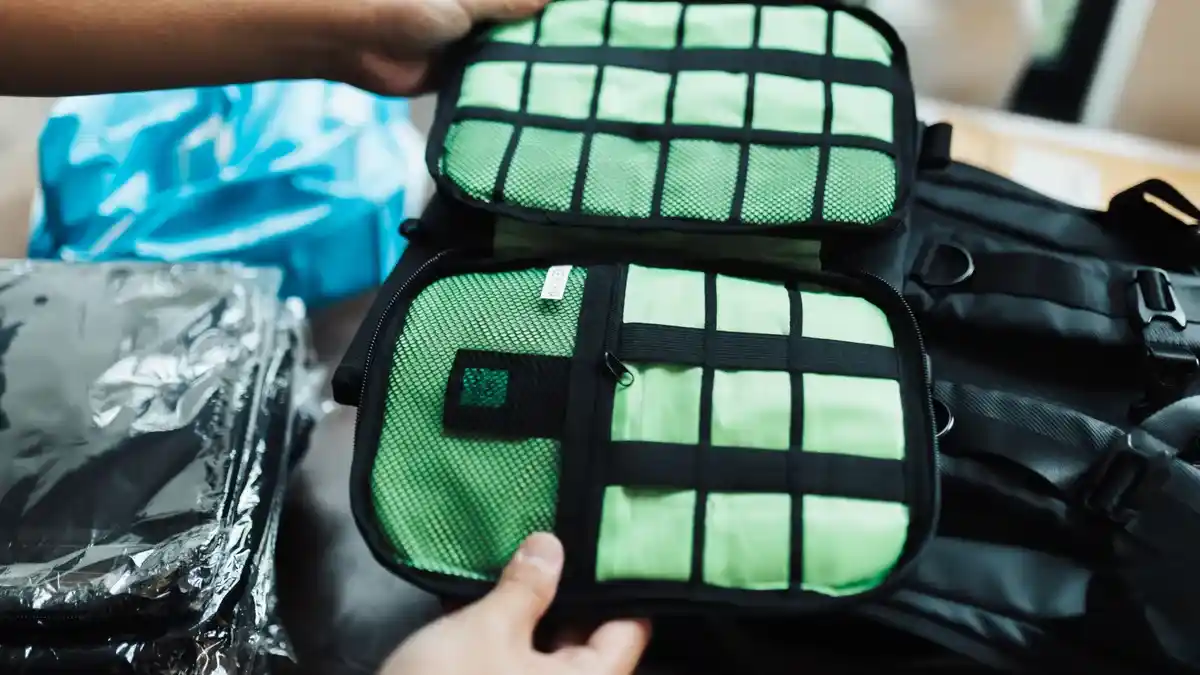
Small items need dedicated containers, or they vanish into corners, side pockets, and zipper gaps. A pouch system with separate homes for electronics, toiletries, medicines, and documents is often the best fix.
For airport security, you may need your charger, passport, headphones, and lip balm in one minute. If those items live loose in the bag, the whole setup falls apart. A pouch system turns that scramble into a quick grab.
This is where most generic advice fails. People talk about “staying organized,” but they do not say where the tiny stuff goes. Tiny stuff is the real problem.
Use clear categories:
- Tech pouch for cables, adapters, earbuds, power bank
- Toiletry bag for liquids, razor, brush, toothpaste
- Daily carry pouch for wallet, keys, meds, snacks
- Paper pocket for passport, tickets, receipts
- Laundry bag for worn clothes
A good pouch is easy to open, has enough structure to hold shape, and keeps its own contents from tangling. Flat pouches work well for cords. Boxier pouches work better for toiletries and bulkier chargers. For medication, follow the label and ask a pharmacist or other healthcare professional if you are unsure about storage or travel handling.
Avoid dumping all small items into one “miscellaneous” pouch. That creates a second junk drawer inside your bag. A labeled system works better because you can find the right item without emptying the whole thing.
What’s the best way to pack by trip length?
The best method changes with trip length because the cost of poor organization rises as the trip gets longer. For one to three days, simple separation is enough. For a week or more, category-based packing pays off fast.
For an overnight trip, you do not need a deep system. One clean outfit, one backup shirt, one toiletry kit, one charger. Simple is faster.
For short trips:
- Use one clothing cube
- Keep toiletries minimal
- Pack only one tech pouch
- Put the most-used items on top
For medium trips:
- Split clothing by type or day
- Separate clean and dirty items
- Keep one access pouch near the opening
- Add a laundry bag if you change often
For long trips:
- Group by function, not by day
- Use a dedicated wash kit and laundry plan
- Keep documents and high-use items in one spot
- Leave empty space for items you pick up along the way
The mistake most people make is overplanning the first day and underplanning day four. A long trip needs a system that can absorb changes. That means one bag for dirty clothes, a spare tote or fold-flat pouch, and a layout that still works after you buy souvenirs, snacks, or extra layers.
What packing mistakes waste the most space?
The biggest space-wasters are oversized containers, mixed item types, and packing for an imaginary version of the trip. Those three mistakes eat room faster than almost anything else.
For a weekend bag, five outfits “just in case” can crowd out everything else fast. The bag is not the issue. The layout is.
The worst mistakes are easy to spot:
-
Too many duplicate items
Two extra chargers, three similar shirts, and backup versions of everything create clutter fast. -
No category boundaries
If socks, chargers, snacks, and cosmetics all share one pocket, access gets slow. -
Overstuffed cubes
A cube packed to the zipper may look tidy, but it becomes hard to fit and harder to close. -
Ignoring bag shape
A system that works in a rectangular suitcase may fail in a narrow backpack. -
Forgetting dirty-laundry flow
If worn clothes have no home, they spread through the bag.
The fix is not more gear. It is better rules. Limit each pouch to one job. Keep the heaviest items close to the bag’s stable side. Use one dedicated spot for things you touch daily. That is how space gets used well.
How do you build a system that fits your bag?
A good system follows the shape of the bag instead of fighting it. Rectangular luggage likes cubes and stacked layers. Backpacks work better with slim, vertical blocks. Duffels work best with soft-sided pouches that can bend into open space.
For a backpack with a curved top and a narrow opening, a rigid organizer wastes room and slows access. A soft cube and a few slim pouches fit better and move with the bag.
Start with the bag’s real structure:
- Top access favors items you need fast
- Front pockets suit flat, often-used items
- Side pockets suit water bottles, umbrellas, or quick-grab gear
- Bottom space suits shoes or bulky layers
- Main cavity suits the biggest clothing blocks
Use the bag’s seams and edges to your advantage. Flat objects belong against flat surfaces. Bulky soft items fill gaps better than hard cases. If the bag has a clamshell opening, you can divide left and right halves by category. If it opens from the top, keep your most important items near the top third.
The best systems feel almost boring. That is a good sign. If you have to fight your bag every time you pack, the layout is wrong.
When should you rethink the whole system?
You should rethink the whole system when your bag keeps changing use cases, your access needs are high, or your gear is too specialized for generic cubes and pouches. In those cases, a different container style may work better.
For work trips, gym days, and family travel, one system can fail because the job keeps changing. One system cannot solve every use case.
The truth is, some situations need a different approach:
- Photography or tech-heavy travel may need padded dividers, not soft cubes
- Hiking or outdoor travel may need dry bags and weather protection
- Business travel may need garment folders or a wrinkle-aware layout
- Family packing may need color-coded bags or person-based zones
A system also deserves a reset if you keep unpacking the same thing and never using it. That means one of two things: either the item should stay home, or the bag should be reorganized around what you actually use.
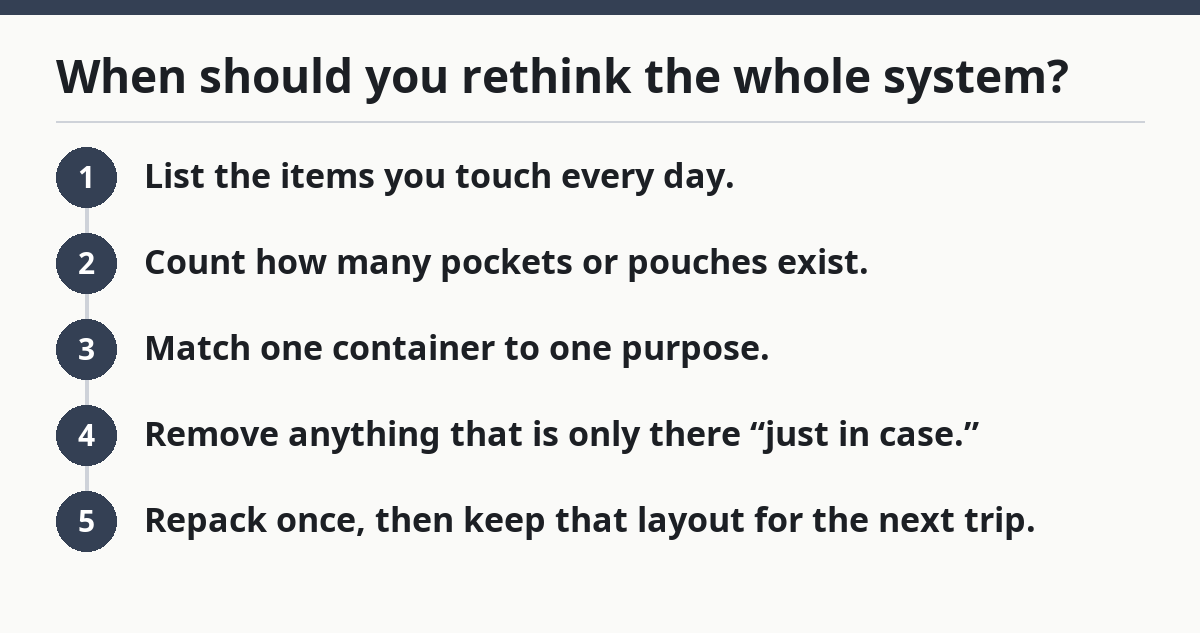
A quick audit helps:
- List the items you touch every day.
- Count how many pockets or pouches exist.
- Match one container to one purpose.
- Remove anything that is only there “just in case.”
- Repack once, then keep that layout for the next trip.
If the layout still feels bad after that, the problem is probably the container type, not your packing habits.
What packing system should I use if I want the least stress?
Use one clothing cube, one toiletries kit, one tech pouch, one laundry bag, and one document spot if you want the least stress. That setup is simple enough to remember and organized enough to stop the usual chaos.
If you want to leave in 20 minutes and not spend half that time searching for a charger, a small, repeatable system is enough. You do not need a perfect setup; you need one that behaves the same way every trip.
The best low-stress rule is this: if an item matters, it gets a home. If you need it often, it gets a spot near the top or front. If it is messy, sharp, liquid, or small, it gets its own pouch.
That rule works because it scales. A weekend getaway, a one-week business trip, and a family vacation all need the same logic, even if the bags differ.
The verdict
Choose packing cubes if you want the best all-around system for clothes, easy repacking, and visible order in a suitcase or backpack. Choose compression bags if your biggest problem is bulky clothing and you can accept slower access and more wrinkles. Neither if your trip needs padded protection, weatherproof storage, or highly specialized gear management.
Key takeaways
- A packing system is a set of rules, not just gear.
- One category per pouch works better than a mixed junk bag.
- Cubes organize; compression bags shrink.
- Small items need dedicated homes or they disappear.
- The bag shape should guide the layout.
- The best setup is the one you can repeat without thinking.
FAQ
How many packing cubes do I actually need?
You usually need fewer than you think. One or two medium cubes and one small pouch cover most short trips, while longer trips may call for one extra cube for laundry or bulky layers. Too many cubes can waste space and make the bag harder to search.
Are packing cubes better than folding clothes normally?
Packing cubes are better when you want separate zones and faster repacking. Normal folding is fine if you pack very lightly or use a bag with strong built-in compartments. The cube wins most often because it keeps categories together after the bag gets opened.
Should I use compression bags for a carry-on?
Use compression bags only for bulky items that would otherwise crowd out the rest of the load. They are useful for sweaters, jackets, and extra layers, but they are not ideal for items you need often because access slows down and wrinkles increase.
How do I keep toiletries from leaking onto clothes?
Put liquids in a sealed toiletry bag and keep that bag away from your clean clothing cubes. A structured toiletry case gives you another barrier if a cap loosens. That small extra step is worth it.
What’s the simplest organization system for a beginner?
Start with one clothing cube, one small tech pouch, one toiletry bag, and one laundry bag. That setup is easy to remember and covers the most common packing problems without adding extra clutter.
Drafted with AI; not yet reviewed by a person.




Leave a Reply