
Last updated: November 18, 2026
Quick Answer: in most cases, the best carry-on luggage for rough handling is a hard-shell model with reinforced corners, strong frame rails, quality spinner wheels, and a shell material like polycarbonate or aluminum that can take hits without cracking open. The right choice depends on whether you want maximum impact resistance, fewer scuffs, or a lighter bag that still survives baggage abuse. This guide breaks down the trade-offs, the weak points, and the picks that make sense for real transit wear.
Key Takeaways
- The toughest carry-on is usually a hard shell case with a polycarbonate shell, reinforced edges, and sturdy wheel mounts.
- A polycarbonate hard shell is often the best all-around bet for mixed rough handling.
- Wheel mounts, zippers, and the frame are often where rough handling shows up first.
- Choose the bag with the strongest shell, the fewest fragile add-ons, and the most protected hardware.
- #1 Best Overall: A polycarbonate hard shell with reinforced corners and replaceable spinner wheels
- #2 Best Budget Pick: A basic hard shell with a simple frame and no fragile exterior add-ons
- #3 Best Heavy-Duty / Upgrade Pick: An aluminum luggage case with a rigid frame and metal latches
| Product / Option | Best For | Core Spec | Standout Feature | Action |
|---|---|---|---|---|
| Polycarbonate hard shell | Most travelers who want a strong balance of weight and impact resistance | Hard shell luggage with flexible outer shell | Better at shrugging off impact than brittle plastics | Choose this if you want the safest all-around bet |
| Basic hard shell | Price-sensitive buyers who still want a rigid case | Simple hardside build | Fewer external parts to break | Choose this if cost matters more than premium finishes |
| Aluminum luggage | Frequent flyers who want the stiffest outer case | Metal shell and rigid frame | Excellent crush resistance and a premium latch system | Choose this if you want maximum rigidity and accept the weight |
| Heavy-duty softside | Travelers who need expansion and easier scuff repair | Softside luggage with dense fabric and strong corners | Can absorb abrasion better than hard glossy shells | Choose this if you need flexibility, not the toughest crush protection |
| Spinner-wheel carry-on | People who roll bags through airports every week | 4-wheel setup | Smooth movement, but wheel mounts can fail if cheap | Choose this if wheel quality is high, not decorative |
Picture this: you’re lifting a bag off a belt, shoving it into an overhead bin, then dragging it across curb cuts and cracked pavement. Rough handling exposes weak corners, cheap wheels, and brittle shells fast. The table below settles which builds hold up best and which ones only look durable.
What actually survives rough baggage handling?
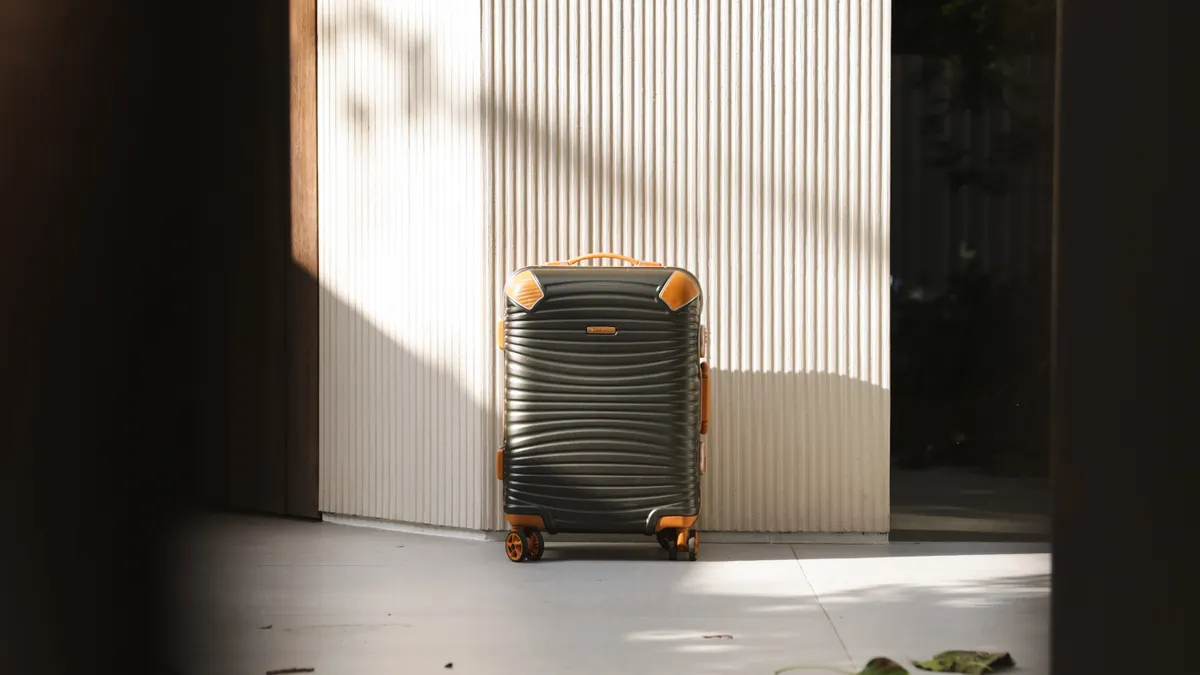
The strongest carry-on for rough handling is usually a hard shell luggage case with a polycarbonate shell, reinforced edges, and sturdy wheel mounts. That combination handles drops, compression, and scraping better than a thin shell with flashy styling. Aluminum luggage is stiffer still, but it brings more weight and can dent.
According to the U.S. Department of Transportation’s consumer guidance on damaged baggage, rough baggage handling can affect the shell, handles, zippers, and wheels, which is why build quality matters. Rough handling is not one problem; it is three. A bag gets dropped, stacked under other bags, then dragged. That means the shell, frame, and wheels all have to earn their keep.
- Impact resistance: polycarbonate flexes under stress better than brittle plastics, so it tends to crack less often.
- Frame strength: a rigid frame keeps the case square when someone jams it into a bin.
- Wheel durability: spinner wheels take constant side loads, so the wheel housing matters as much as the wheel itself.
- Corner protection: corners take the first hit on conveyor belts and when bags slide off carts.
The truth is, no shell is magic. A bag that is hard on the outside but weak at the corners still fails where it counts. That is why a “best carry-on” for rough treatment is really a build-quality question, not a logo question. If you are unsure about baggage limits or damage claims, consult your airline’s policy before you fly.
For a broader material guide, the hub on [Luggage Materials and Durability] belongs on your next stop, because this page is focused on rough handling rather than every material trade-off.
The best carry-on luggage for rough handling by build type
Because you are comparing build types, the safest bet is a polycarbonate hard shell with reinforced corners and quality wheels. The next-best pick depends on whether you value stiffness, low weight, or easy scuff repair.
1) Polycarbonate hard shell: best all-around choice
Polycarbonate is the most practical choice for many travelers because it balances impact resistance and weight better than many other hard-shell plastics. It is less likely to shatter than brittle shells, and it usually gives enough flex to absorb knocks.
Real drawbacks exist. Glossy polycarbonate shows scratches fast, and a thin shell can still crack if the frame and corners are weak. It can also flex more than aluminum, so a cheap version may feel less confidence-inspiring when packed tightly.
Who Should Skip This: travelers who want the stiffest outer case and don’t mind extra weight should look at aluminum luggage instead.
Buy this if: you fly often, want a lighter case, and need a shell that can take routine bumps without turning into scrap.
Skip this if: you are rough on gear and care more about maximum rigidity than weight.
2) Aluminum luggage: best for stiffness and crush resistance
Aluminum luggage is the heavy-duty upgrade. Its outer shell and frame are rigid, so it resists crushing better than most plastic cases. That stiffness is the main reason people choose it for repeated handling.
But the trade-offs are real. Aluminum dents rather than flexes, and those dents can be cosmetic or structural depending on the hit. It also weighs more, which can matter on a strict airline limit, and the hard shell can transfer impact into the frame if the case is overloaded.
Who Should Skip This: travelers who want the lightest possible carry-on or hate visible dents should choose polycarbonate hard shell instead.
Buy this if: you want a premium, rigid case and are okay with added weight and dents.
Skip this if: you pack near the limit and want something easier to carry through long terminals.
3) Heavy-duty softside luggage: best for abrasion and flexibility
Softside luggage can be a smart pick when rough handling means scraping, sliding, and compression more than direct impacts. Dense fabric, strong stitching, and reinforced corners can make it easier to live with scuffs than a glossy hard shell.
Here is the catch: softside bags are often weaker against crush damage. A worn zipper, bent frame, or torn corner can end the trip fast. They also usually protect less well from sharp hits than a hard shell with a rigid frame.
Who Should Skip This: frequent flyers who see bags dropped, stacked, or slammed into bins should choose polycarbonate hard shell or aluminum luggage instead.
Buy this if: you want a flexible case and expect more rubbing than crushing.
Skip this if: your bag regularly gets thrown, stacked, or pinched in transit.
What features matter most when baggage handlers are not gentle?

Because the shell is only part of the story, wheel mounts, zippers, and the frame are often where rough handling shows up. Materials get all the attention, but the hardware decides whether the bag still rolls at the end of the trip.
A good carry-on for rough handling should have:
- Spinner wheels with solid mounting points, not flimsy plastic arms
- A strong telescoping handle that does not wobble when fully extended
- Recessed or protected zippers that are less exposed to snags
- Reinforced corners and side rails
- A frame that keeps the shell from bowing under pressure
The wheels deserve special attention. Spinner wheels make airport movement easy, but they also add more moving parts and more points of failure than a two-wheel setup. If the wheel housing is thin, the bag can start wobbling after one hard hit. That is why a well-made spinner can be excellent, while a cheap spinner can be a liability.
A hard shell without decent hardware is half a bag. A simple frame with strong wheels often lasts longer than a flashy case with weak components.
How do I choose a durable carry-on?
Because you are comparing bags that can look similar online, the strongest shell, the fewest fragile add-ons, and the most protected hardware are the best order of priorities. That order matters more than color, texture, or marketing copy.
Use this order when you shop:
- Start with the shell material. Choose polycarbonate if you want a lighter hard shell that can flex. Choose aluminum if you want the stiffest case and can handle the weight.
- Check the corners. Look for reinforced corners or edge guards, since corners take the first hit on belts and curbs.
- Inspect the wheels. Spinner wheels should sit in protected housings and feel sturdy in product photos and descriptions.
- Look at the frame. A rigid frame helps the bag keep its shape when packed full.
- Skip unnecessary weak points. External pockets, glossy finishes, and oversized trim can add places to scuff, split, or snag.
A simple rule helps here: the fewer fragile bits hanging off the bag, the better. A bag built for rough handling should look almost plain. That is not a flaw; it is a sign the money went into structure, not decoration.
If you travel once a year, a middle-of-the-road hard shell is usually enough. If your bag rides buses, cabs, and airports every month, step up to stronger shell material and better wheel mounts.
Common mistakes that make a “durable” bag fail early
Because the shell is only one part of the system, the usual failure is not the material alone; it is bad hardware, thin corners, or a pack job that strains the frame. Those mistakes cost you shape, wheel life, and sometimes the whole bag.
The most common mistakes are easy to spot:
- Choosing style over structure. A shiny shell can hide thin walls or weak corners.
- Ignoring the wheels. Cheap spinner wheels can wobble, crack, or pull loose after repeated curb hits.
- Overpacking the case. A full bag puts pressure on zippers and frame rails.
- Buying the lightest option without checking build quality. Ultra-light shells can feel fragile if the frame is weak.
- Picking softside luggage for crush-heavy travel. It may handle abrasion well but lose the fight against stacked baggage.
What to do instead: choose a case with fewer exposed parts, stronger corner protection, and hardware that looks built for repeated use rather than short-term polish. If you want a bag that survives rough handling, spend attention on the parts people overlook.
Which carry-on features help with rough baggage handling?
Because rough handling usually shows up at the shell, frame, and wheels, the best features are a rigid frame, protected spinner wheels, reinforced corners, and a shell that resists cracking. Those four features do more than any slogan on the tag.
A few details matter more than most buyers think:
- Polycarbonate shell: better flex for impact resistance than many brittle plastics.
- Aluminum frame or shell: stronger feel and better crush resistance, with more weight.
- Spinner wheels: easy movement, but only if the wheel housing is sturdy.
- Recessed handles: less likely to snag on conveyor belts or vanish into a weak mount.
- Reinforced edges: help the bag survive the hits that land on corners first.
There is no perfect material for every trip. If your priority is impact resistance, choose a tough hard shell. If your priority is stiffness, choose aluminum luggage. If your trip means more scraping than crushing, a dense softside bag can still make sense.
For readers comparing materials in more depth, the related guide on luggage materials explains the bigger picture. This page stays focused on what holds up when baggage handlers are not gentle.
The best part? Once you stop shopping by looks and start shopping by structure, the right bag becomes obvious fast. The shell matters. The frame matters. The wheels matter most when the bag hits the ground.
Drafted with AI; not yet reviewed by a person.




Leave a Reply