
Last updated: November 18, 2026
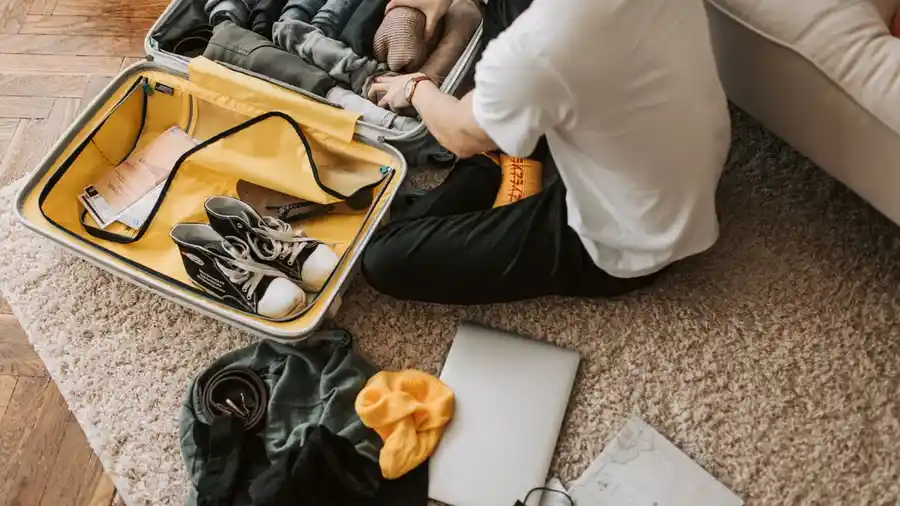
Quick Answer: To pack shoes in a carry-on, put the heaviest pair on the bottom, keep each shoe in a shoe bag or a plastic sleeve, and fill empty space with socks, underwear, or a packing cube so the shoes stay clean and don’t crush your clothes.
Key Takeaways
- Shoes need to fit, stay clean, and avoid taking over the bag.
- Put shoes low or along the outer edge, not on top of folded clothes.
- Sneakers pack easiest, dress shoes need support, and bulky pairs often set the limit.
- Most travelers can fit 1 to 3 pairs, but size, stiffness, and clothing change the total.
This guide explains how to pack shoes in a carry-on, where they belong inside the bag, and how to keep dirt off your clothing while still fitting more than one pair. It also covers sneakers, dress shoes, and the trade-offs that generic packing advice tends to gloss over.
The fastest way to pack shoes in a carry-on
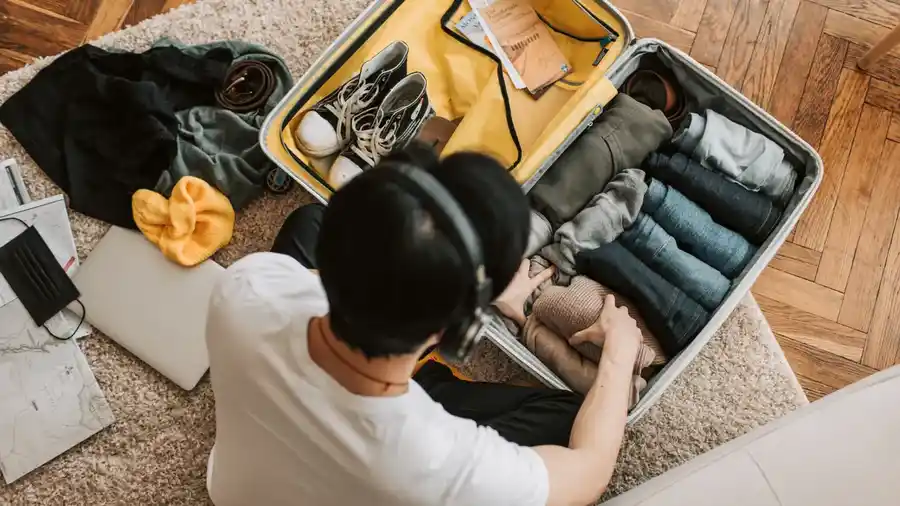
Start with the shoes, not the shirts. You want them to fit, stay clean, and avoid swallowing half the bag.
The formula is bottom first, bagged, and filled. Shoes go near the wheel end or outer edge of the case, each pair gets its own shoe bag, and the hollow space inside the shoes gets stuffed with soft items.
In short: weight stays low, clothes stay protected, and the shoes keep their shape.
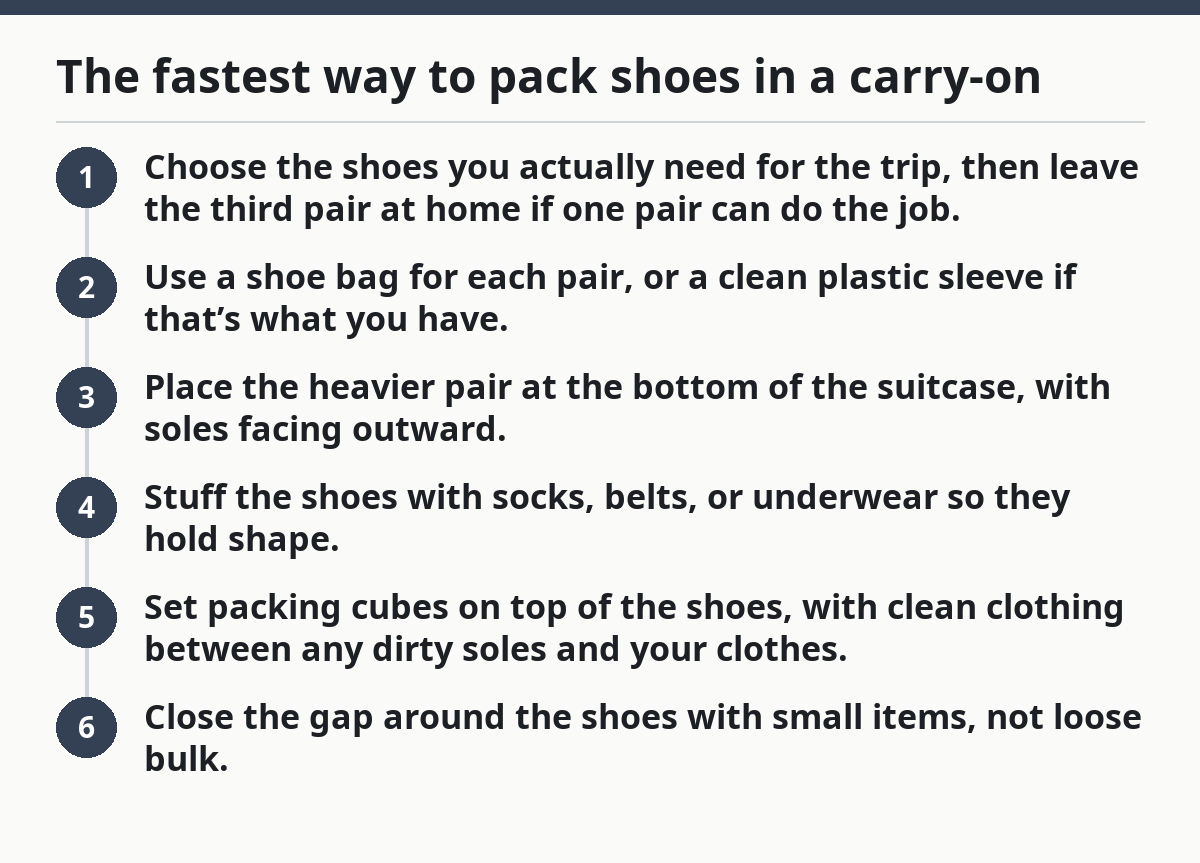
- Choose the shoes you actually need for the trip, then leave the third pair at home if one pair can do the job.
- Use a shoe bag for each pair, or a clean plastic sleeve if that’s what you have.
- Place the heavier pair at the bottom of the suitcase, with soles facing outward.
- Stuff the shoes with socks, belts, or underwear so they hold shape.
- Set packing cubes on top of the shoes, with clean clothing between any dirty soles and your clothes.
- Close the gap around the shoes with small items, not loose bulk.
Works in a hard-shell case or a soft-sided bag. No fancy gear required.
Where should shoes go in a carry-on?
At the bottom, or along the outside edge. Not on top of your folded clothes. Shoes are rigid; rigid things leave ugly pressure lines in soft fabric.
Picture this: you open your bag after a flight and find your shirt collars bent flat because a pair of loafers sat on them for four hours. That is the mess this placement prevents, especially when you are packing 2 pairs of shoes and a week’s worth of clothing.
The cleanest setup is this:
- Put shoes near the wheel end of a spinner case.
- In a soft bag, place shoes against the wall, not in the middle.
- Keep the soles away from anything white, light-colored, or easily crushed.
- Use a packing cube as a barrier between shoes and shirts.
A bulky pair can eat the same space as a full stack of tees. That math stops working fast. The TSA notes that carry-on screening bags must still clear the checkpoint, so a crowded bag can become harder to manage at security. The fix is not force; it is choosing a slimmer pair or wearing the bulkiest shoes in transit.
A useful rule: the heavier and dirtier the shoe, the lower and farther out it goes.
How do I keep shoes from dirtying my clothes?
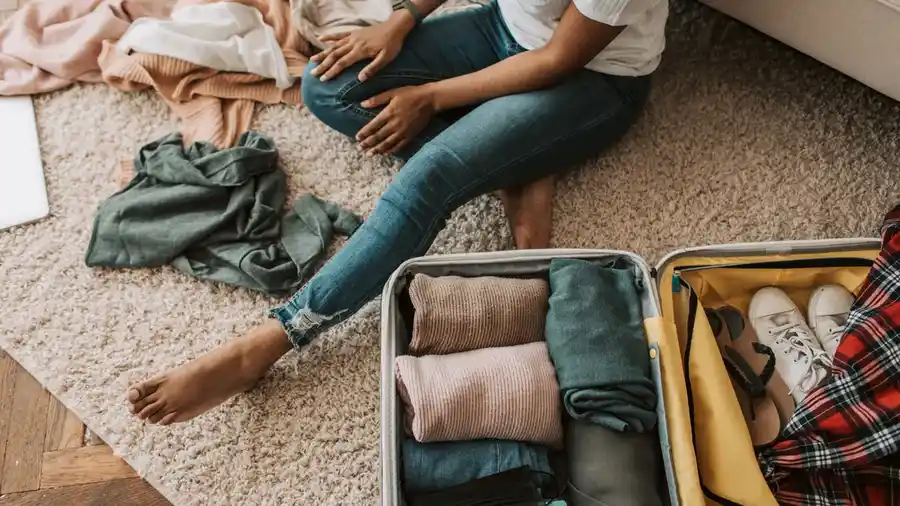
Separate them with a shoe bag, a cube, or a clean layer of fabric, and make sure the soles never touch folded items directly. Street dust, grit, and wet soles are the usual culprits.
Picture this: your sneakers were fine in the airport, then the sole picked up dust on the walk to the gate. Ten minutes later, that dust is on your shirt, your scarf, and the lining of your bag. Nasty little chain reaction.
Use this barrier method:
- Shoe bag: Best for clean separation.
- Shower cap or plastic sleeve: Works in a pinch for a quick trip.
- Packing cube: Good as a second wall between shoes and clothing.
- Socks inside the shoe: Good for shape, not enough on its own for cleanliness.
Two things cause most messes. First, people pack shoes loose. Second, they put the outsole against clothes and assume the fabric will be fine. It won’t be after a long ride. If you are unsure what level of separation is right for a trip, check a travel professional or your airline’s baggage guidance.
If the shoes are damp, let them dry before packing. A wet heel or sole can mark fabric faster than a dry one, and it can make the whole bag smell off.
Use the barrier. Cheap fix, big payoff.
How to pack sneakers, dress shoes, and bulkier pairs
Sneakers are easiest to pack, dress shoes need shape support, and bulky shoes usually decide how much else fits in the bag. Shoe type changes the method more than most people expect.
Picture this: you’re packing one pair of running shoes and one pair of dress shoes for a trip with both walking and dinner plans. The running shoes have soft uppers and can compress a little. The dress shoes need help staying shaped so the toe box does not collapse.
Here’s the practical split:
- Sneakers: Put socks or a T-shirt inside, then bag them as a pair if they are clean enough.
- Dress shoes: Keep them in separate shoe bags if possible, and stuff the toes with socks or tissue so they hold form.
- Bulky trainers or boots: Wear them if they are the heaviest pair. If you pack them, they should go first and anchor the bag.
Different shoes behave differently, so treating them all the same is where people go sideways. Sneakers can often share a compact space with soft clothing. Dress shoes are more fragile, and cheap shoe trees help, but they also take space you may not have. If you are unsure how much support a particular pair needs, consult a professional shoemaker or follow the manufacturer’s care guidance.
If you need multiple shoe types, pick the pair that matters most for the trip and let the others earn their place. A carry-on is not a closet.
How many pairs can fit without wrecking the rest of the bag?
Most travelers can fit 1 to 3 pairs of shoes in a carry-on, but the real limit depends on size, stiffness, and how much clothing you’re bringing. Two slim pairs are far easier than two bulky pairs.
Picture this: you want sneakers for walking, loafers for dinner, and sandals “just in case.” That extra pair sounds harmless until the space for shirts and toiletries has vanished.
Use this simple test:
- If one pair is bulky, count it as a major item.
- If both pairs are slim, they can often share the same side of the bag.
- If a pair is tall, stiff, or heavy, expect it to reduce clothing space fast.
The hidden cost is shape. A shoe can fit in the bag and still ruin the packing layout. So the better question is not only “Will it fit?” but “What will it do to everything else?”
A useful packing order is: shoes first, then cubes, then soft items. That lets the clothing fill the dead space around the shoes instead of being crushed by them.
If you are trying to pack for a long trip, this page is not the answer to trip length math. It is about the shoe problem only, and that problem is usually solved by choosing fewer pairs and using the space inside the shoes.
Common shoe packing mistakes that cost you space
Packing shoes loose in the middle of the bag is the biggest mistake, because it wastes space and leaves dirt where your clothes sit. The second is trying to cram in too many pairs without protecting their shape.
Picture this: you zip the bag, then open it at the hotel and find a twisted mess of shoes, socks, and wrinkled shirts. That happens when the shoes are treated like soft clothing instead of hard objects with edges and soles. If you are not sure how to handle a specific pair, consult a professional shoe fitter or follow the maker’s guidance.
Avoid these errors:
- Loose packing: Shoes shift and bruise clothing.
- No shoe bag: Dirt spreads to everything else.
- Empty shoes: They collapse and waste internal space.
- Soles together with clothes: That is how fabric gets marked.
- Packing wet shoes: That invites smell and stains.
Each mistake has a cost. Loose shoes steal room. Bare shoes dirty the bag. Wet shoes create odor. Empty shoes waste the inside space you could have used for socks or small accessories.
The fix is boring, and that is why it works: bag the shoes, fill them, place them low, and lock the layout with a cube or two.
A simple carry-on shoe packing order that works
A clean packing order is the easiest way to keep shoes from taking over the bag. Start with the shoes, then build upward with the rest of the clothing so the soft items finish the fit.
Picture this: you’re packing at night before a morning flight, and you need the bag to open neatly at security and at the hotel. You do not want to repack in a line, on a floor, or on the bedspread.
Use this order:
- Put the shoes in first on the bottom or outer edge.
- Fill each shoe with socks, ties, underwear, or small soft items.
- Wrap or bag each pair so the soles are isolated.
- Add packing cubes next, with shirts and pants arranged around the shoe block.
- Place toiletries and chargers in the last open corners.
- Finish with one flat layer on top so the case closes without bulging.
This order matters because shoes set the shape of the rest of the bag. If they go in last, they bend the layout and create pressure points. If they go in first, the rest of the bag can adapt around them.
A carry-on works best when you treat shoes like furniture, not clothing. That may feel a little odd, but it is practical. If the layout still seems unclear for your trip, a travel professional can help you match the method to your bag and shoe types.
Sources and packing standards worth knowing
The best packing habits line up with airline size rules and common baggage standards, even when the exact dimensions vary by carrier. So the shoe strategy has to stay flexible, because a slim pair that fits one bag may crowd another.
Picture this: you’ve packed beautifully, then realize your bag only works because the shoes forced the rest of the load to stay compact. That is not a failure. That is the point of packing with structure.
For general baggage sizing and packing guidance, I’d look at these authoritative references:
- IATA baggage guidance and airline baggage rules
- Transportation Security Administration (TSA) guidance on carry-on screening
- Your airline’s own carry-on size policy, since limits differ by carrier
These sources matter because shoe packing is never just about shoes. It is about fitting hard items into a bag that still has to clear a size gate, close cleanly, and stay easy to lift.
If you already use a packing-system approach for clothing, this page fits into that larger method. The hub on Packing Systems and Organization is the right place for the bigger picture. Here, the job is narrower: keep the shoes contained, clean, and easy to fit.
Should shoes go at the bottom of a carry-on?
Yes, shoes usually go at the bottom of a carry-on or against the outer wall of the bag. That placement protects soft clothing from pressure and keeps the bag more stable. If the shoes are wet, dirty, or bulky, bottom placement matters even more because it limits contact with the rest of your items.
How many pairs of shoes can fit in a carry-on?
Most people can fit one to three pairs, but that range depends on shoe size, shape, and how much clothing is already in the bag. Two slim pairs are usually manageable; two bulky pairs can crowd out shirts and toiletries fast. If the shoes are heavy or tall, the bag may hold fewer than you expect.
How do I keep shoes from dirtying my clothes?
Use a shoe bag, then place a clean barrier between the shoes and folded clothing. Packing cubes work well for this, and stuffing the shoes with socks helps them hold shape without leaving empty space. Dry shoes before packing, because moisture carries dirt and smell into the rest of the bag.
Drafted with AI; not yet reviewed by a person.



Leave a Reply