

Last updated: November 19, 2026
Quick Answer: choose a carry-on that fits the stricter airline you fly most often, not the loosest one. For How to Choose a Carry-On for International Versus Domestic Flights, that usually means one bag sized for the tighter route, plus a personal item as backup. A carry-on that works on domestic flights can fail on international flights because airline policies vary more than the bag itself. The right choice depends on route, carrier, and whether you need overhead-bin space or room for a personal item. The comparison below settles that.
Key Takeaways
- International trips punish oversized bags faster than domestic trips do, especially on smaller aircraft and stricter carriers.
- A domestic-first bag can be roomier, but it becomes a gamble if you fly outside one airline’s network.
- If you want one bag for both, pick the size that fits the stricter rule you see most often, not the loosest one.
- A personal item matters more than most people think; it can rescue a trip when the carry-on is gate-checked.
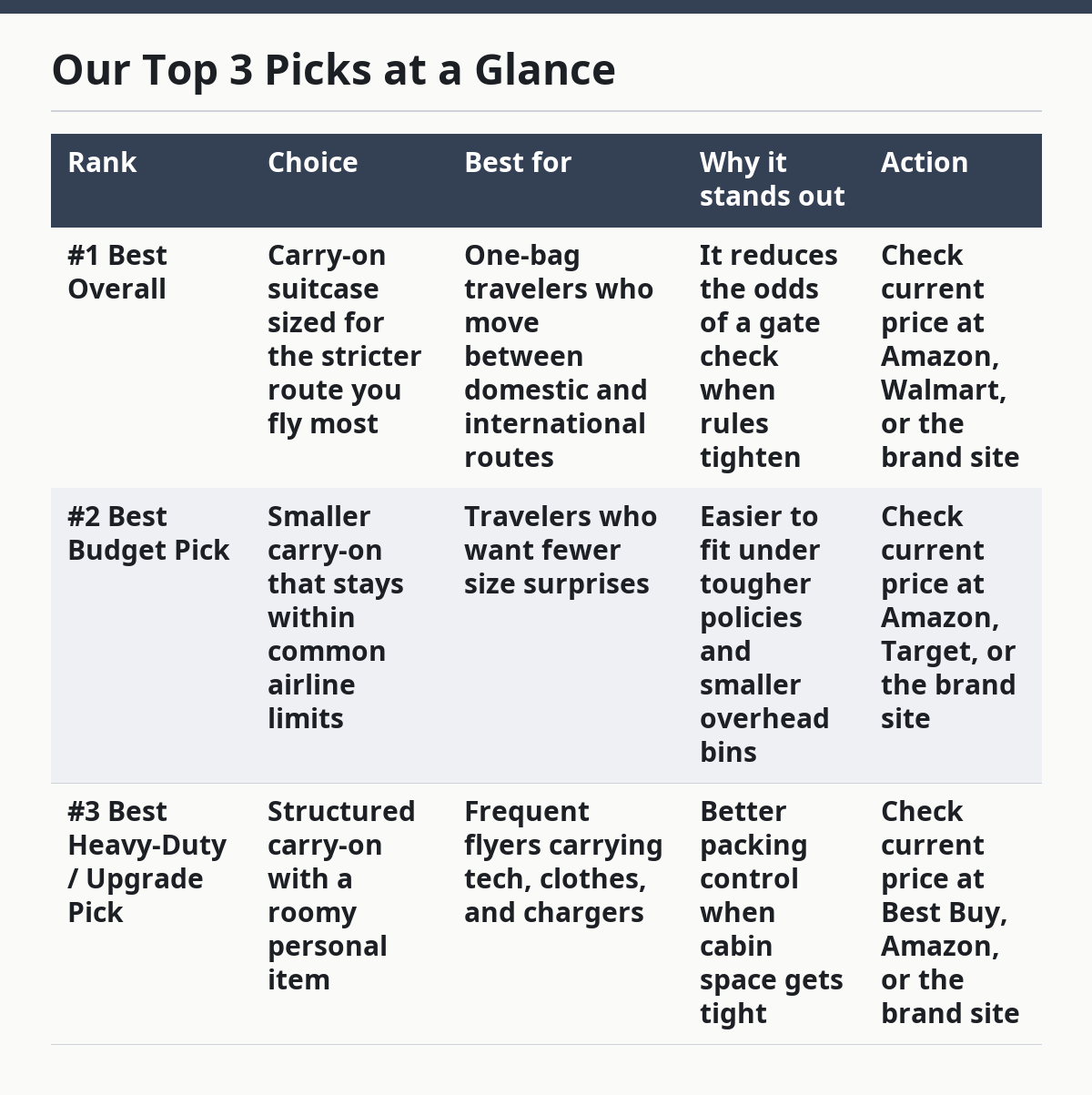
Our Top 3 Picks at a Glance
| Rank | Choice | Best for | Why it stands out | Action |
|---|---|---|---|---|
| #1 Best Overall | Carry-on suitcase sized for the stricter route you fly most | One-bag travelers who move between domestic and international routes | It reduces the odds of a gate check when rules tighten | Check current price at Amazon, Walmart, or the brand site |
| #2 Best Budget Pick | Smaller carry-on that stays within common airline limits | Travelers who want fewer size surprises | Easier to fit under tougher policies and smaller overhead bins | Check current price at Amazon, Target, or the brand site |
| #3 Best Heavy-Duty / Upgrade Pick | Structured carry-on with a roomy personal item | Frequent flyers carrying tech, clothes, and chargers | Better packing control when cabin space gets tight | Check current price at Best Buy, Amazon, or the brand site |
The real difference between international and domestic carry-ons
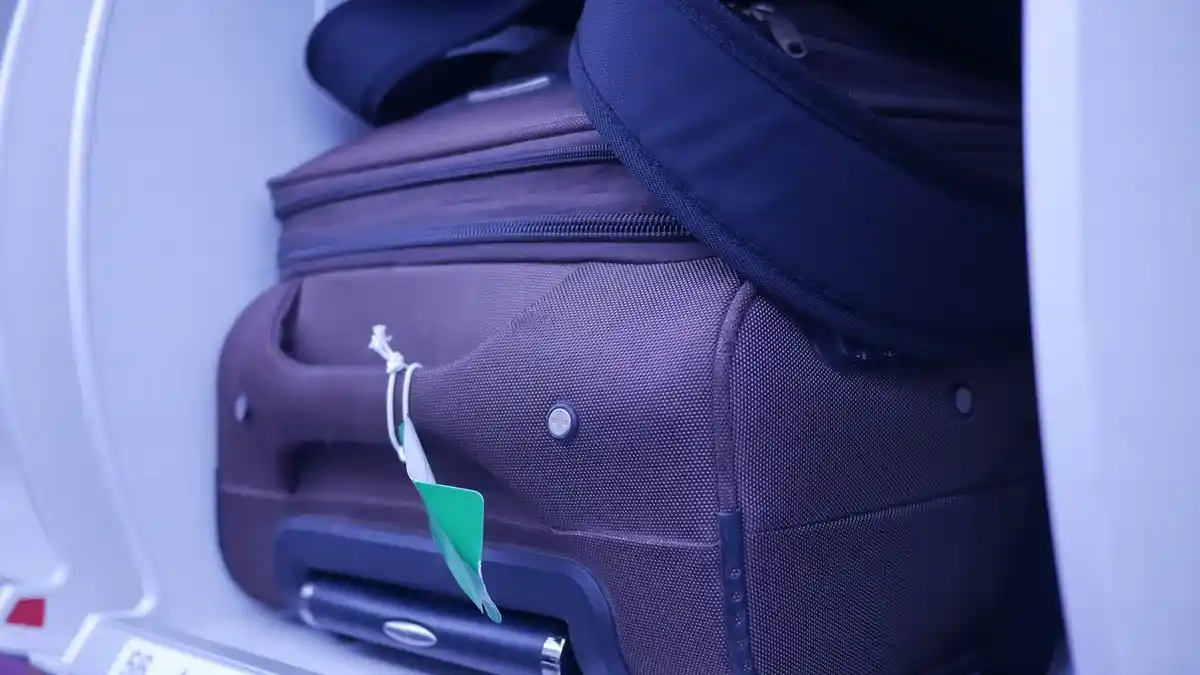
International carry-ons usually demand more restraint. Domestic flights often let you get away with a larger suitcase, but that comfort disappears the moment you switch carriers or connect through a stricter route.
Picture this: you’re leaving for a week, and your bag fits domestic overhead bins with no drama. Then your return leg is on a smaller international carrier with tighter cabin rules, and the same bag becomes a headache at the gate. That’s the whole problem in one scene.
The truth is, international flights reward smaller, simpler bags, while domestic travel gives you more slack on paper. Airline policy variation is the real issue, not geography. A bag that looks “carry-on size” can still be rejected if the carrier’s published limits are tighter than the box or shell you bought.
A good rule lives in the details:
- Domestic flights often suit a fuller carry-on suitcase, especially on major U.S. carriers with roomy overhead bins.
- International flights often call for a more conservative size, because many carriers publish stricter dimensions and weigh bags more often.
- Personal item allowance matters on both, but it becomes your backup plan when the carry-on is too full or too large.
If you want the size rules themselves, the hub article on carry-on size rules and fit covers the measurements and airline standards in one place. This page is about choosing the right bag for the trip type, and the related guide on carry-on size rules can help you compare limits before you buy.
Which route type puts less pressure on your bag?
Domestic travel wins if your main goal is packing freedom. International travel wins only when you travel light and keep your bag inside the tightest published limit you’re likely to face.
Picture this: you fly two or three times a year, mostly within one country, and your bag stays on the plane almost every time. That’s a domestic-first pattern, and it supports a fuller carry-on suitcase with a little more storage depth.
Now picture the opposite: you connect across regions, switch airlines, and land on carriers with different bin space, different gate policies, and different interpretations of what “carry-on” means. That pattern favors a smaller, more standardized bag.
Here’s the catch:
- Domestic-first travelers can pick a bag for comfort and packing space.
- International-first travelers need a bag that behaves well under stricter rules.
- Mixed-route travelers need the conservative choice, even if it leaves some unused space.
A bag that is easy to pack but hard to board is a bad trade. Not even close.
For readers comparing bag types, the related guide on personal item rules explains how that backup bag can keep the trip moving when the main carry-on is full. For airline-specific planning, the checked bag vs carry-on page also helps you decide when the cabin is no longer the right fit.
How do airline policies change the bag you should buy?

Airline policy variation changes the bag more than brand names do. A carry-on that clears one airline’s published size can still be too bulky for another carrier’s bin, especially on regional jets and some international routes.
Picture this: you find a hard-shell suitcase with a generous interior and think you’ve solved packing. Then one of your flights uses a smaller aircraft, and the suitcase becomes awkward at the gate because the airline’s rules are tighter than the bag’s shape suggests. That mismatch is common.
The best choice is usually the bag that fits the most restrictive airline you regularly fly. That usually means:
- a more compact carry-on suitcase for international travel,
- a slightly roomier carry-on for domestic travel when you stick to one or two carriers,
- and a personal item that can hold essentials if the larger bag gets checked.
For a route-by-route example, the guide on best carry-on luggage can help you compare features without losing sight of size limits. If you travel with more electronics, the travel backpack for flights page is also useful because a backpack can sometimes do the job of a second bag.
| Criteria | International-leaning carry-on | Domestic-leaning carry-on | Winner for this condition |
|---|---|---|---|
| Size tolerance | Better for stricter published limits | Better when domestic carriers allow more room | International, for mixed carriers |
| Packing space | Less of it | More of it | Domestic, for long weekends |
| Gate-check risk | Lower if you stay conservative | Higher on tighter international routes | International |
| Overhead-bin fit | More reliable | Less reliable on smaller planes | International |
| Flexibility across airlines | Stronger | Weaker | International |
| Trip comfort | Less room, more certainty | More room, more risk | Depends on route |
| Personal item dependence | Higher | Lower | Domestic, if you can carry more |
| Best for connections | Better | Riskier | International |
The good part? This table makes the choice plain. If you cross airline systems, buy for the stricter one.
What kind of carry-on suitcase works best for domestic flights?
A domestic-first carry-on wins when your flights stay inside one country and your bag lives mostly in the overhead bin. You can favor storage, pocket layout, and packing ease because the policy gap is often smaller than on international routes.
Picture this: you’re packing for three days, a laptop, a charger, and one pair of shoes, and you want the bag to swallow everything without forcing a second tote. That is the domestic use case. It rewards a suitcase with more usable interior space and a shape that opens cleanly.
Domestic travelers can be more relaxed about shell size, but that freedom has a limit. The more your travel pattern includes discount airlines, regional jets, or last-minute route changes, the less room you have to gamble. A bag that barely fits one domestic carrier can still become a nuisance on another.
Pros:
- More room for clothes and bulkier items
- Better if you rarely change carriers
- Less need to split gear into a personal item
Cons:
- Easier to oversize
- More likely to be gate-checked on stricter routes
- Can become awkward once a trip adds an international leg
Who Should Skip This: frequent international flyers and anyone who regularly uses mixed carriers should look at the stricter option instead.
Buy this if: you’re a domestic traveler who wants the largest practical carry-on without constant policy anxiety.
Skip this if: you take international flights more than a few times a year and hate surprise gate checks.
What kind of carry-on suitcase works best for international flights?
An international-first carry-on wins when you need a bag that clears tighter airline rules and fits smaller bins without drama. It is the safer choice for route changes, layovers, and airlines that enforce size more strictly.
Picture this: you’re flying overnight, connecting through another country, and your bag has to work on two different carriers with two different rulebooks. That’s where a smaller, cleaner carry-on suitcase earns its keep. It gives up some storage, but it buys peace of mind.
International travel also makes the personal item more valuable. A bag with a good front pocket, easy access to documents, and enough structure to stay within shape limits can save you time at security and boarding. If your carry-on is tight on space, the personal item becomes the overflow plan.
For international packing, the related article on carry-on packing tips explains how to use each inch efficiently. The airport security tips page is also helpful because quicker screening matters more when you travel with only one main bag.
Pros:
- Better fit across carriers
- Lower risk of being too large for stricter bins
- Easier to pair with a personal item
Cons:
- Less packing room
- Harder to fit bulky shoes or extra layers
- Can feel restrictive on longer domestic-style trips
Who Should Skip This: domestic-only travelers who like to overpack will feel cramped and may regret giving up space they never needed to lose.
Buy this if: you fly internationally, connect often, or move between airlines with different size rules.
Skip this if: your trips are mostly domestic and you want the biggest legal carry-on you can manage.
What if you want one bag for both trip types?
Choose the stricter size and add a strong personal item. That combination gives you a better shot at clearing both domestic and international rules without owning two bags.
Picture this: you want one suitcase that does everything. You don’t want a closet full of luggage, and you don’t want to check bags unless a trip truly demands it. In that case, the right move is to size down a little and let the personal item carry the overflow.
The compromise is simple:
- pick the carry-on that fits the tighter route,
- make sure your personal item can hold the essentials,
- and avoid hard-shell bags that waste space with awkward curves unless the shell shape is especially efficient.
This is the right setup for:
- business travelers who book different routes each month,
- couples who split travel between domestic and international trips,
- and frequent flyers who want one bag that causes fewer surprises.
It is the wrong setup for travelers who need every inch of space. If you pack full outfits, gifts, or seasonal gear, one bag may not be enough no matter how clever the layout is.
The honest side-by-side
The cleanest answer is that domestic travel favors capacity, while international travel favors compliance. That difference should drive the purchase, not marketing photos or interior dividers.
Picture this: you’re standing in a store or scrolling listings, and two bags look nearly identical. One is slightly bigger. One is slightly more compact. That small difference can decide whether you board smoothly or argue at the gate.
The best choice comes down to these criteria:
- Size limits: international
- Packing room: domestic
- Route flexibility: international
- One-bag convenience: domestic, if you stay local
- Best backup plan: a strong personal item
- Lowest risk of gate trouble: international
- Best for heavier packers: domestic
- Best for mixed routes: international
Here’s the catch: “best” changes with your ticket. If your trips are 80% domestic and 20% international, buying for domestic comfort can still be a mistake because the 20% is where the problem shows up.
The verdict: which one to choose and why
Choose a domestic-leaning carry-on suitcase if you fly mostly inside one country, stay on familiar carriers, and want the most packing space you can get. Choose an international-leaning carry-on suitcase if you travel across airlines, connect often, or want the lowest risk of a size problem. Neither if you routinely overpack and refuse to use a personal item.
Picture this: you’re trying to buy once and stop thinking about luggage. The best choice is the bag that matches the stricter airline you actually fly, not the one that looks best in a product photo.
My recommendation is clear: pick the international-leaning bag if your travel pattern is mixed. It is the safer default. Domestic travelers can afford more room. Mixed travelers cannot.
When to reconsider this choice entirely
Reconsider the whole setup if you almost always check a bag, if your airline usually assigns tiny regional aircraft, or if you pack fragile items that need hard protection. In those cases, carry-on choice stops being the main issue.
Picture this: you spend a lot of time squeezing a suitcase into cabin rules, but your real problem is different. Maybe you carry equipment. Maybe you pack for long stays. Maybe your route is so unpredictable that the cabin bag is always secondary. Then a carry-on optimization exercise may be the wrong tool.
A different setup makes more sense when:
- you need more than one pair of shoes and extra layers,
- you travel with gear that does not fit cleanly in a single suitcase,
- or your airline mix changes so often that even a conservative carry-on feels uncertain.
That’s where trip planning beats bag shopping. If the route itself is unstable, the bag can’t fix it.
Are carry-on rules different on international flights?
Yes, carry-on rules are often different on international flights, and the stricter rule usually wins. International carriers may publish smaller dimensions, weigh bags more often, or enforce overhead-bin limits more tightly than domestic airlines. Check the specific airline’s published policy before you buy, because route changes can change the rule you face. For example, the FAA covers carry-on storage on U.S. flights, while IATA and individual airlines publish route-specific limits that can be tighter.
Should I buy a different bag for domestic travel?
Yes, if your domestic flights regularly allow more room and you want extra packing space. A domestic-first bag gives you more flexibility, but it is a poor fit if you also fly internationally and don’t want surprises. If you want one bag for both, buy to the stricter limit instead. The TSA’s guidance on screening is useful here because a bag that is easy to clear at security is not always the same bag that fits every airline.
How do I choose one bag for both trip types?
Choose the bag that fits the tighter airline policy, then pair it with a useful personal item. That gives you the best chance of boarding on both domestic and international flights without checking your main bag. If you pack heavily, the better answer may be two bags or a checked suitcase for longer trips. For a final check, compare the airline’s published dimensions, the FAA’s U.S. guidance, and the carrier’s own route rules before you buy.
Drafted with AI; not yet reviewed by a person.





Leave a Reply