
Last updated: November 18, 2026
Key Takeaways
- For size limits and fit, see the hub on Carry-On Size Rules and Fit.
- Choose a bag that can handle rough handoffs, keep essentials easy to remove, and repack in about 2 minutes.
- The most useful features protect the shell first and your essentials second.
- Pack as if someone else will open your bag and close it in under a minute.
Gate checks can turn a tidy trip into a scramble, especially when you care about fragile gear, meds, chargers, and quick access. Best Carry-On Luggage for Gate-Check Risk Reduction starts with a hard-sided, easy-to-open bag with strong compression straps, smooth zippers, and a layout that lets you pull valuables fast. The guide below will help you choose the right shell, the right interior, and the right packing method.
In short: a useful gate-check-risk bag protects the shell, keeps valuables easy to remove, and lets you repack in under a minute if a gate agent sends it below.
Our Top 3 Picks at a Glance
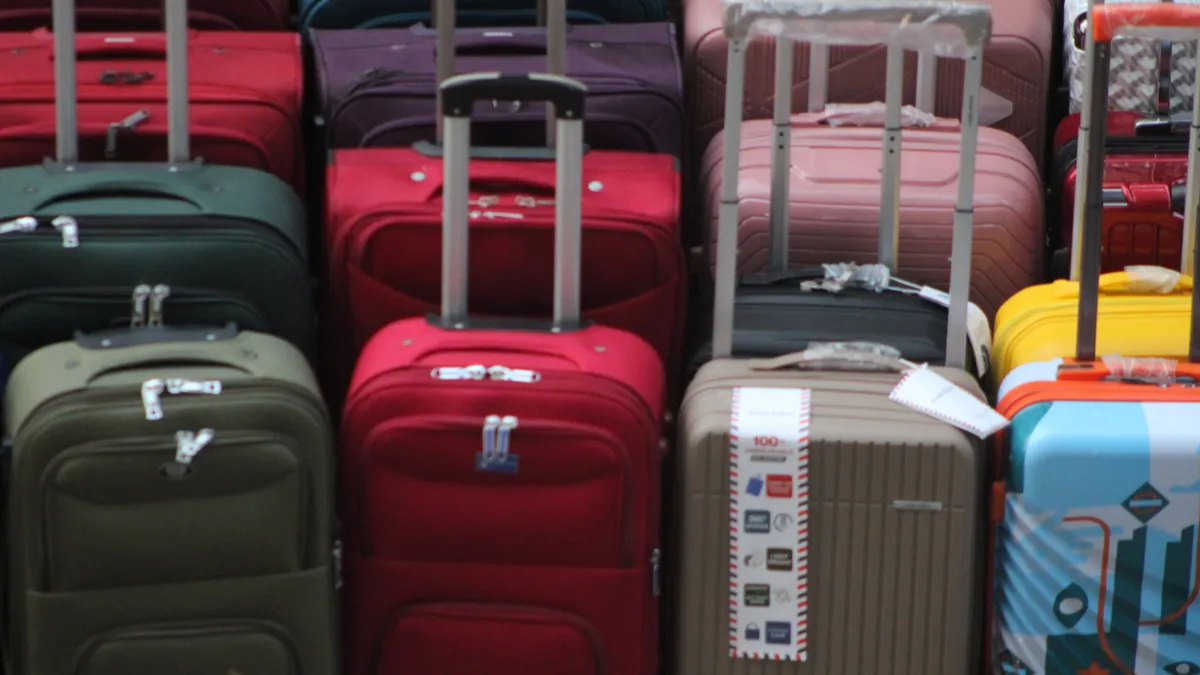
| Product / Option | Best For | Core Spec | Standout Feature | Action |
|---|---|---|---|---|
| Hard-sided carry-on with compression straps | Most travelers who want a strong balance of protection and fast repacking | Durable luggage shell with internal straps | Better crush protection when bins are full | Choose if you want the safest all-around setup |
| Soft-sided carry-on with front access pocket | Travelers who need quick access to documents and small valuables | Expandable or structured fabric body | Easier last-minute repack at the gate | Choose if you value speed over shell protection |
| Aluminum-frame or heavy-duty upgrade bag | Frequent gate-checks and rough handling | Rigid exterior and reinforced corners | Stronger edge protection under pressure | Choose if you want maximum durability and can accept extra weight |
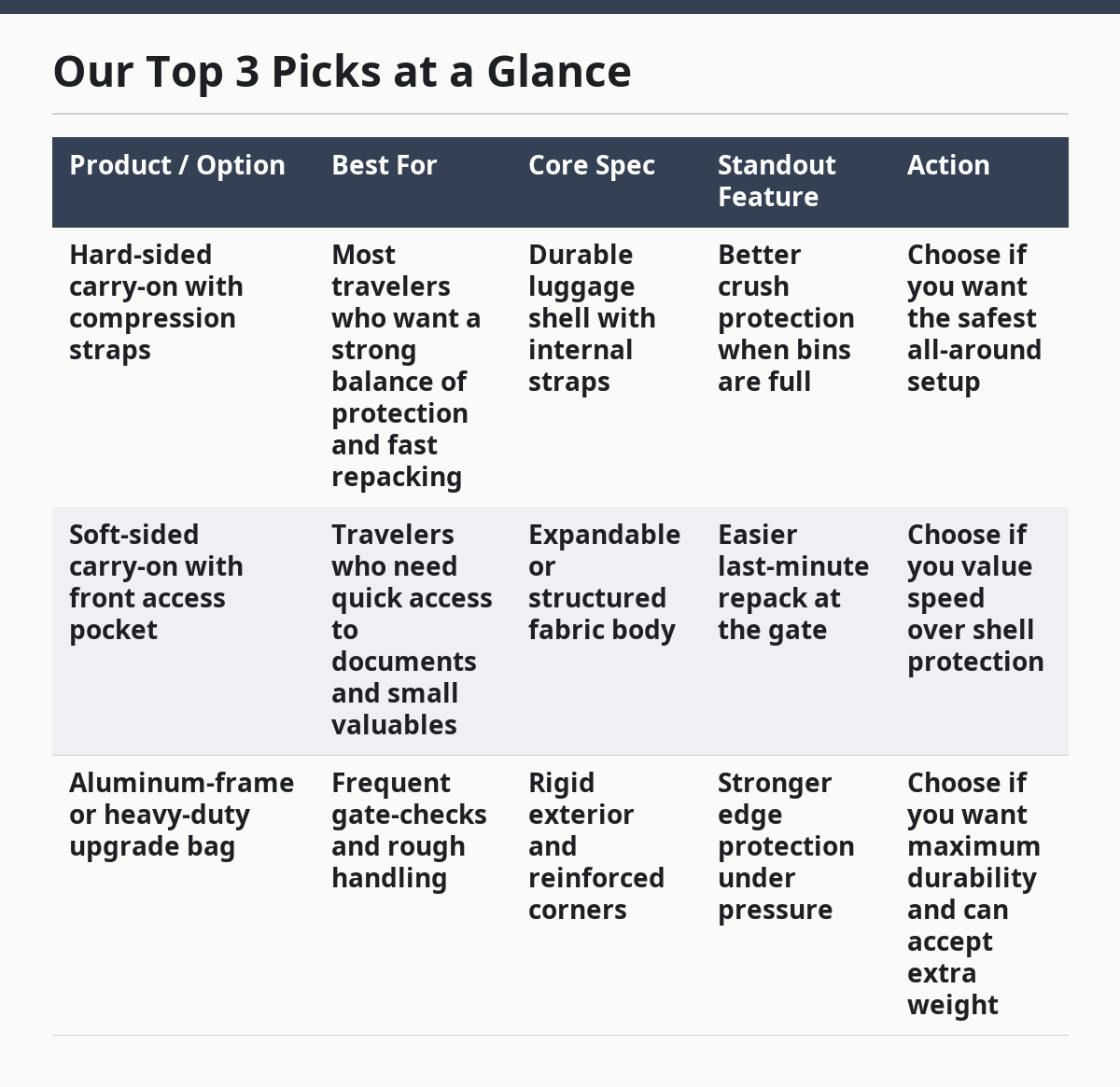
| Product / Option | Best For | Core Spec | Standout Feature | Action |
|---|---|---|---|---|
| Hard-sided carry-on with compression straps | Protecting breakables and keeping shape when a bag gets stacked or squeezed | Durable luggage shell | Compression straps hold clothing tight so the interior does not explode open | Pick this if your main fear is damage during gate check |
| Soft-sided carry-on with front access pocket | Fast removal of laptop, charger, meds, and documents | Fabric body with exterior pocket | Front pocket can keep essentials within reach right before boarding | Pick this if you expect a gate agent to call your bag late |
| Heavy-duty upgrade bag | Rough handling and repeated gate checks | Reinforced corners and rigid frame | Stiffer edges resist flex better than thin fabric | Pick this if you travel often and do not mind added weight |
Before the recommendations, one plain note: this page is about protection and repacking, not about airline size rules. For size limits and fit, see the hub on Carry-On Size Rules and Fit. Gate checks happen for crowded bins, not just oversized bags, so the smarter purchase is often the bag that survives being handled twice.
What a gate-check-proof carry-on needs
Picture this: you’re standing near the door, and the gate agent says your bag has to go below because the overhead bins filled up. You need a bag that can take a rough handoff, keep valuables out of the main crush zone, and make repacking painless in about 2 minutes.
A good gate-check-risk bag does three jobs. It protects the contents with a durable luggage shell, it keeps important items easy to remove, and it closes in a way that won’t burst open if the bag shifts under pressure. That usually points to a hard-sided model with compression straps, good zipper pull tabs, and an interior that doesn’t waste space.
What matters most is straightforward:
- A shell that resists scuffs, dents, and corner wear
- Zippers that glide cleanly and don’t snag on the first pull
- Internal straps or dividers that stop loose packing
- A layout that puts valuable items on top or in an outside pocket
- Handles that feel solid when the bag is dragged to the aircraft door
These features matter because a gate check can happen late, when you have little time to sort through the bag. You do not need the fanciest bag. You need one that stays intact when handled by strangers and can be emptied fast if the gate agent changes the plan 20 seconds before boarding.
What to skip
Skip ultralight bags with flimsy walls if your trip includes a full flight, tight bin space, or a connection where you may need to gate-check twice. Also skip designs with only one deep cavity and no straps; they are annoying to repack and easier to crush. A thin soft shell can be fine for a short hop, but repeated gate checks are a poor match for it.
Which carry-on features help if my bag gets gate-checked?
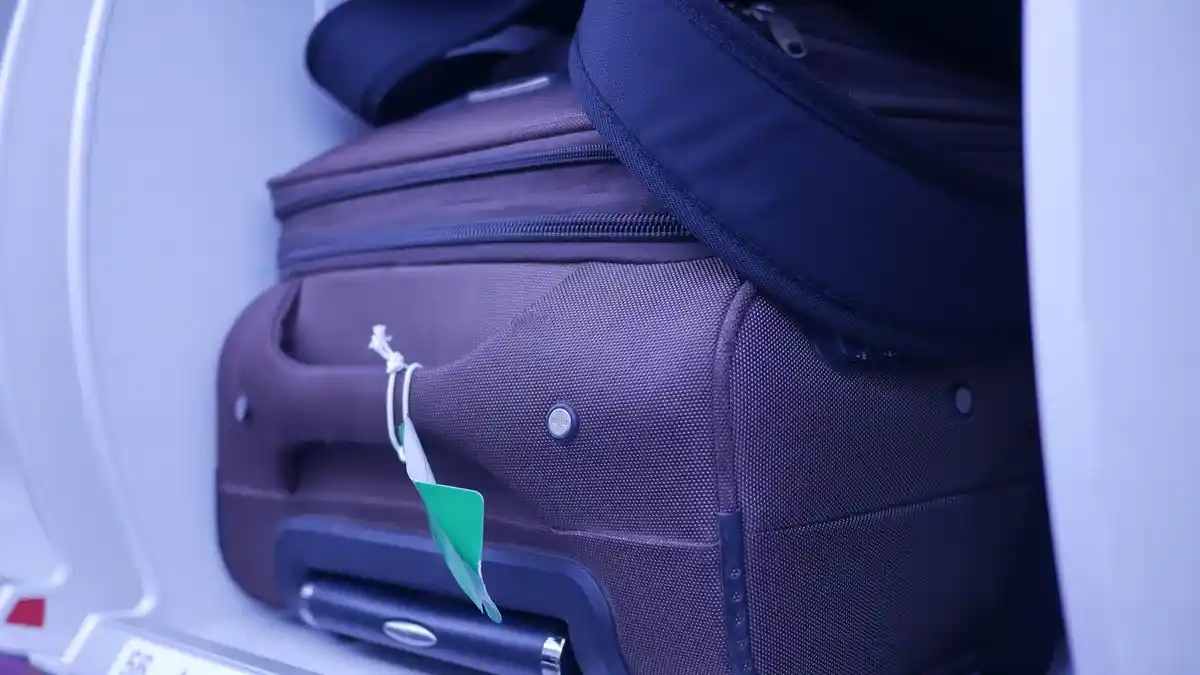
The best features are the ones that protect the shell first and your essentials second. A rigid body, interior straps, and a quick-access pocket matter more than extra pockets you will never use.
Picture this: you have five minutes before boarding and need to strip out a laptop, charger, medication, snacks, and a passport. A bag with a front pocket and simple packing layout saves you from dumping everything on the floor.
Look for these features:
-
Hard or reinforced shell
A polycarbonate or similar durable shell handles scuffs and pressure better than a soft bag with thin fabric. It is not magic, but it gives your items a better chance when the bag is stacked. -
Compression straps
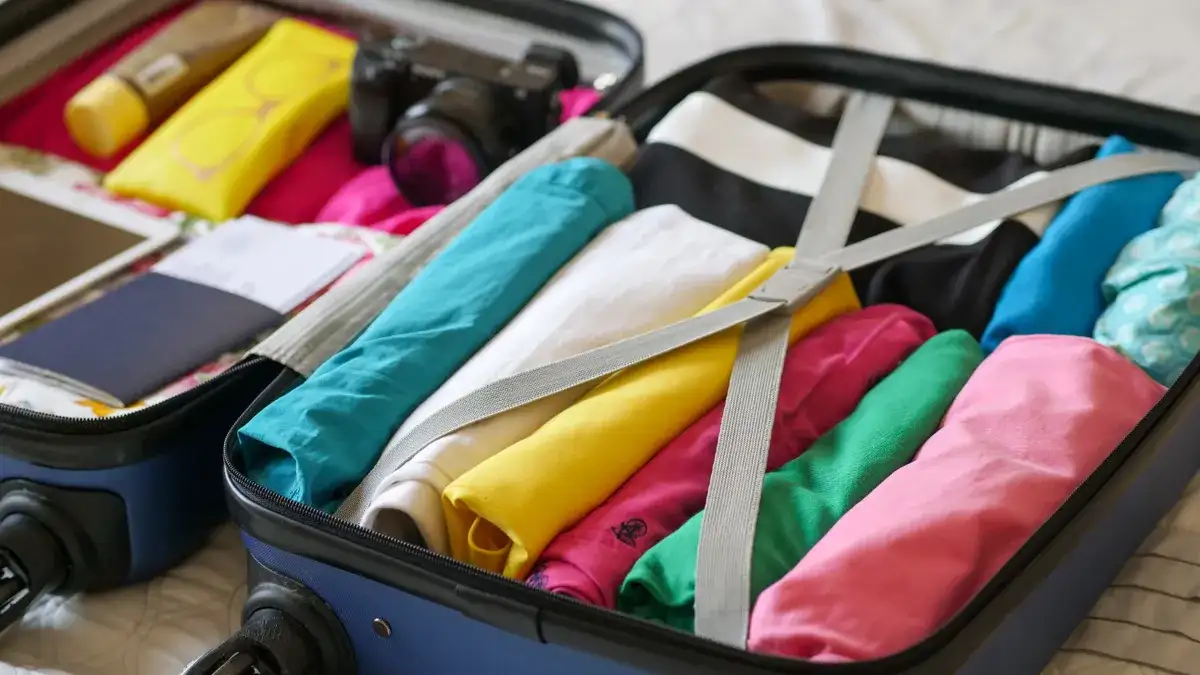
These keep clothing from shifting when the bag is opened and closed at the gate. They also make repacking cleaner, because you can cinch down the load instead of stuffing loose layers back in. -
Easy-to-remove valuables compartment
A front pocket or top-access section helps with passports, medication, charger cables, and one compact device. That matters when the bag is going to the hold for the final leg. -
Strong zipper tracks and pulls
Cheap zippers fail where gate checks punish them most: quick openings, abrupt closures, and overpacked corners. Smooth metal or well-made coil zippers are worth paying attention to. -
Interior that packs flat
A bag with a simple interior is easier to reload in a narrow gate area. Fancy pockets can trap socks, cords, and boarding passes where you can’t reach them.
The trade-off is simple. A harder shell often weighs more and can flex less around odd-shaped items. A softer bag gives you faster access, but it gives up some protection. If gate-check risk is the issue, protection wins more often than style.
How do I pack for a possible gate check?
Pack as if someone else will open your bag and close it in under a minute. That means the items you cannot afford to lose or crush should be removed first, while the rest should be packed tight enough to survive a rough handoff.
Because many people pack for the flight, not for the gate agent, laptops often end up buried under shoes and toiletries.
Use this order:
-
Put valuable items in a small pouch near the top or in a front pocket.
Keep passport, wallet, meds, phone charger, keys, and one pair of earbuds where you can grab them fast. -
Place hard items in the center, not near the shell.
A water bottle, headphones case, and toiletry kit should sit away from edges so the shell takes the hit first. -
Use packing cubes for clothing.
Cubes make repacking faster because you can lift out a block and put it back in as one unit. -
Fill empty space with soft clothing.
Socks and tees stop items from shifting when the bag is lifted or turned sideways. -
Tighten the compression straps last.
That locks the load before boarding and keeps the interior from ballooning open if the bag is opened at the gate. -
Keep anything fragile out of the bottom corners.
Corners take the most impact when a bag lands on a cart or is pushed under another case.
A gate-check bag should feel boringly organized. If you have to think hard to find one item, it will be slower to repack. Slow is the enemy at the boarding door.
What should I never put in a gate-checked carry-on?
Never put anything irreplaceable, medically critical, or fragile enough to fail if the bag is dropped or stacked on top of. A gate-checked bag is treated like checked luggage for the last part of the trip, even if it starts the day as a cabin bag.
Picture this: your bag is tagged at the jet bridge and disappears below the cabin. That means your first-aid kit, electronics, and important papers should already be out of the danger zone.
Do not leave these inside if there is any chance of gate check:
- Passport, ID, boarding pass, and travel documents
- Medications you need during the flight
- Lithium battery packs and loose power banks
- Laptop, tablet, camera body, and memory cards
- Jewelry, keys, cash, and cards
- Delicate souvenirs or glass items
Two sources back up the basic logic here. The Transportation Security Administration gives clear guidance on lithium batteries and power banks, and IATA’s battery guidance explains why damaged or poorly packed batteries create a safety issue. If you are unsure about a battery item, check the TSA page on spare lithium batteries and the IATA Dangerous Goods guidance before you fly.
The mistake people make is thinking, “It’s only a gate check.” It still means the bag may be tossed, compressed, or delayed. If the item would ruin your day when delayed, it belongs on you.
What to do instead
Move the essentials into a small personal item before boarding. Keep one pouch ready with meds, chargers, documents, and any battery-powered gear you need to reach without opening the main bag. That way the gate-check decision does not force a messy repack.
Best carry-on luggage types for gate-check risk reduction
Picture this: you’re comparing two bags in a store or online, and both look good until you imagine them going down to baggage handling for one leg. The right choice is the one that protects the shell and lets you recover your essentials fast.
A hard-sided carry-on is the strongest all-around pick for gate-check risk reduction. It gives you better crush protection and usually has a cleaner interior for quick repacking. The downside is that a rigid shell can feel less forgiving if you overpack, and some designs scratch easily.
A soft-sided carry-on with a front pocket is better if you need quick access and a little more give around odd-shaped items. The drawback is plain: the fabric can absorb scuffs, and the body may lose shape under pressure.
A heavy-duty upgrade bag makes sense if you expect repeated gate checks. It tends to have a stiffer frame and more corner protection, but it can weigh more and feel less convenient on long walks through terminals.
Here’s how I’d sort them:
- Choose hard-sided if your main concern is shell damage.
- Choose soft-sided with front access if you need faster last-minute repacking.
- Choose heavy-duty upgrade if you travel often enough to justify the extra bulk.
The Verdict: what I’d buy for gate-check risk reduction
Picture this: you want one bag that cuts stress without turning every trip into a packing puzzle. The safest bet is a hard-sided carry-on with compression straps, a clean interior, and a simple pocket setup for the items you may need to pull out in 30 seconds.
The best fit for most travelers is the hard-sided option in the table above because it handles pressure better and keeps the contents organized when a gate agent changes the plan. It is not perfect. A rigid shell can be heavier, and if the interior is badly designed, it still wastes time at the gate.
This is not the right choice for someone who stuffs a bag with bulky gear and wants lots of external pockets. For that person, the soft-sided model with front access is the better fit. It gives up some crush protection, but it is faster to open and reload.
The reader who benefits most from this guide is the one who wants fewer surprises at boarding. If that sounds like you, buy for protection first, then make sure the interior lets you strip out valuables without dumping the whole bag on the floor.
Quick checklist before you buy
Picture this: the bag looks good online, but one trip through a busy terminal will show its weak spots fast. A last pass through the details saves you from paying for style and getting stuck with a hard-to-pack shell.
Use this final check:
- Does the bag have a durable luggage shell or reinforced body?
- Can you remove your valuable items in one quick motion?
- Are there packing cubes or straps that keep the load tight?
- Can the zippers close cleanly when the bag is full?
- Is the interior simple enough to repack after a gate check?
If you can answer yes to most of those, the bag is built for the job. If not, it may look good in a shopping cart and fail exactly where gate-check risk hurts most: at the boarding door.
Drafted with AI; not yet reviewed by a person.




Leave a Reply