
Last updated: November 18, 2026
Quick Answer: clean a carry-on suitcase in 5 steps with a microfiber cloth, a mild cleaner, and light pressure, then dry it fully before storage so the shell, fabric, wheels, and zippers keep working.
This guide to How to Clean and Maintain a Carry-On Suitcase gives the steps, the mistakes that cost you wear, and the storage habits that keep the bag moving smoothly.
Key Takeaways
- Wipe the shell, handle, and lining on a regular schedule instead of waiting for grime to build.
- Clean spinner wheels and zippers gently; they fail faster when packed with dirt.
- Use a mild cleaner and a microfiber cloth, not harsh solvents or rough scrubbing pads.
- Dry the bag fully before storage so smells, rust, and mildew do not start.
- Store the suitcase upright or flat in a cool, dry place with the zipper partly open.
How do you clean a carry-on suitcase without ruining it?
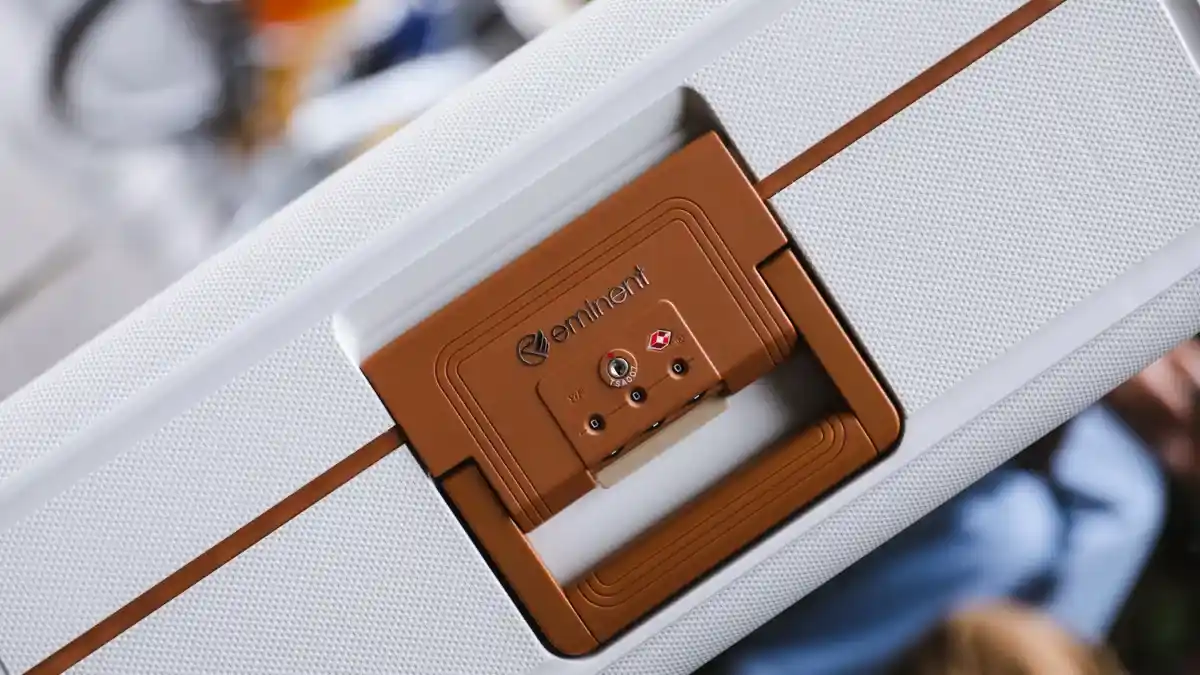
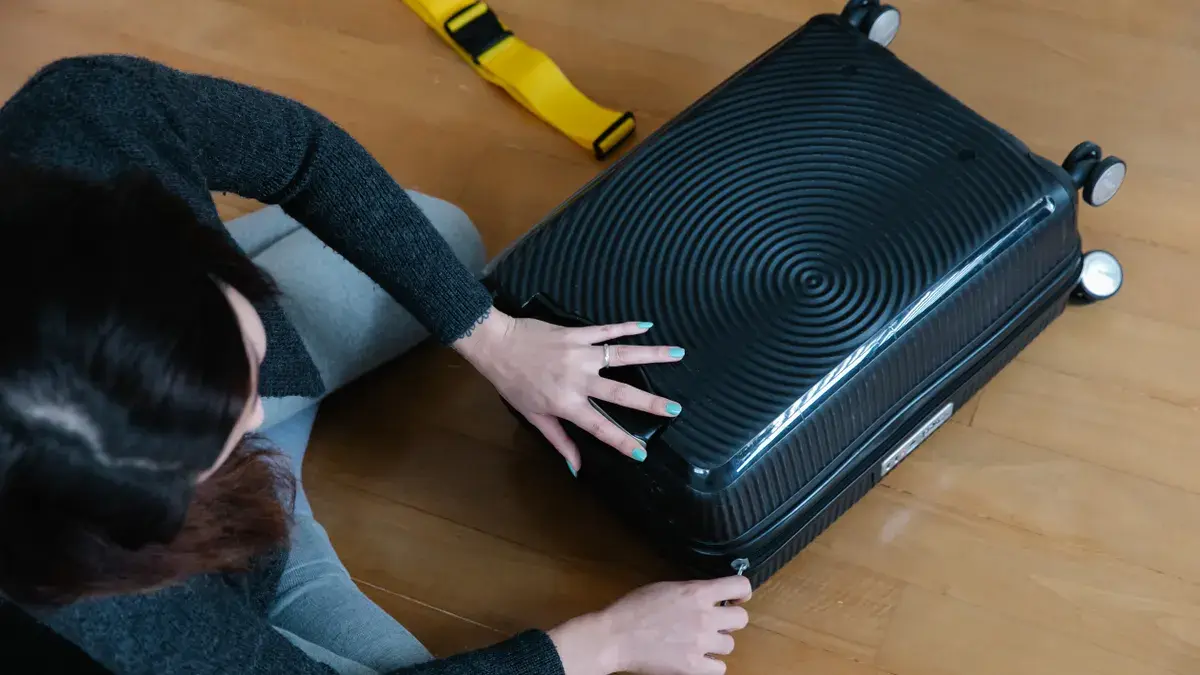
A carry-on suitcase cleans up best with a microfiber cloth, a mild cleaner, and light pressure, not soaking or scrubbing. The job is manageable if you treat the shell, fabric, wheels, and zippers as separate parts, and luggage makers generally recommend checking the care tag or manual before using any cleaner.
Picture this: you’ve just come home from a trip, and the bag has dust on the shell, grit in the wheels, and a sticky spot near the handle. The right move is to clean each part in a set order so dirt does not get pushed deeper. That order matters.
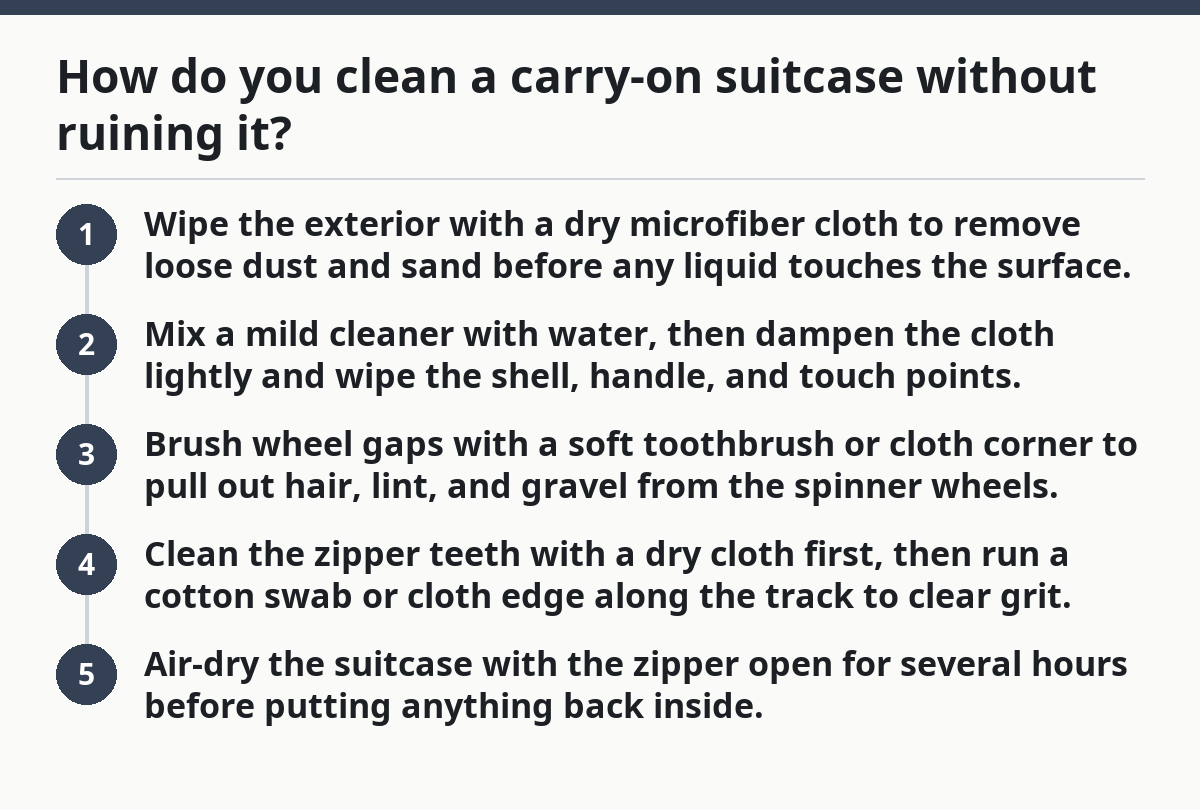
- Wipe the exterior with a dry microfiber cloth to remove loose dust and sand before any liquid touches the surface.
- Mix a mild cleaner with water, then dampen the cloth lightly and wipe the shell, handle, and touch points.
- Brush wheel gaps with a soft toothbrush or cloth corner to pull out hair, lint, and gravel from the spinner wheels.
- Clean the zipper teeth with a dry cloth first, then run a cotton swab or cloth edge along the track to clear grit.
- Air-dry the suitcase with the zipper open for several hours before putting anything back inside.
The truth is, most damage starts with too much water. A soft cloth leaves less residue than a sponge. If the bag is a hard shell, you can usually wipe it down faster; if it is softside, the fabric needs a lighter touch and a shorter drying time. The American Cleaning Institute recommends following the product label and testing cleaners first, which is a useful rule for luggage too.
What should you use on the shell, fabric, and lining?
A mild cleaner and water handle most dirt, while a microfiber cloth protects the finish on both hard shell and softside luggage. Strong bleach, acetone, and rough scrub pads can dull the surface, lift coatings, or fray fabric edges.
Picture this: you’re staring at a gray smear on the front of the bag and wondering if a stronger product will fix it faster. It usually won’t. The safer first pass is a small amount of cleaner on a cloth, not straight onto the material.
- Hard shell: wipe with a damp microfiber cloth and a mild soap solution. For scuffs, use light pressure and repeat the pass instead of rubbing hard.
- Softside fabric: spot-clean with a cloth and a little cleaner; do not soak the panel. Too much moisture can leave rings and stretch seams.
- Interior lining: vacuum crumbs first, then wipe the inside pockets and base with a barely damp cloth. Let the lining dry open.
If the lining smells stale, leave the case open near moving air for a full day. A closed suitcase traps odor fast. On the flip side, direct heat from a radiator or hair dryer can warp synthetic parts, so room-temperature drying is the better trade-off. Consumer Reports and the luggage maker Samsonite both caution against harsh cleaners and heat, which supports that approach.
For material care beyond cleaning, the Luggage Materials and Durability hub can help connect maintenance habits to longer bag life.
How do you clean suitcase wheels and zippers?

Suitcase wheels and zippers need dry cleaning first, because trapped grit does more damage than surface dirt. Spinner wheels collect hair, sand, and tiny stones; zippers collect dust and fabric fuzz that makes them catch.
Picture this: you roll the bag across a hotel lobby and hear a crunchy drag from one wheel. That sound is the warning. The fix is usually simple if you act before the wheel housing packs full.
- Flip the suitcase on its side and remove visible debris from the wheels with your fingers or a dry cloth.
- Loosen hair and lint with a soft toothbrush, toothpick, or cotton swab around the wheel axle and housing.
- Wipe the wheel surface with a damp cloth, then dry it right away so the bearings do not stay wet.
- Check the zippers for grit and clean the teeth with a dry brush or cloth edge.
- Run the zipper slider back and forth a few times after cleaning to spread the movement evenly.
A zipper that feels stiff is not asking for force. It is asking for debris removal. If you yank it, the slider can go out of line or split the teeth. On some bags, a tiny amount of zipper lubricant is fine, but only if the manufacturer allows it and the track is clean first.
This is often the quickest maintenance task, and it can take only a few minutes. Done monthly, it keeps the suitcase moving smoothly instead of turning into a repair job.
How often should you clean a carry-on suitcase?
A carry-on suitcase should get a quick wipe after dirty trips and a deeper clean every few months, especially if it has spinner wheels that hit sidewalks, airports, and curbside grime. Frequency depends on how often you travel and where the bag rolls.
Picture this: you’ve used the same case for a weekend trip, then a work trip, then a rainy train ride. Dirt layers up fast, and the bag starts to look older than it is. A simple schedule keeps that from happening.
- After each trip: empty the bag, shake out crumbs, and wipe the shell or fabric where you see marks.
- Monthly: clean wheels, zippers, handles, and the bottom edge where dirt collects first.
- Every 3 to 6 months: do a full interior and exterior cleaning, then air-dry it completely before storage.
A quick check after travel also helps you catch weak spots early. Look at the corner seams, wheel mounts, handle tubes, and zipper pulls. Those are the parts that show wear before the body of the bag does. If you see a crack, tear, or loose wheel, cleaning alone won’t fix it. Big mistake.
This is not a luxury habit. It is basic wear control, and it is easier to manage than a last-minute repair.
What mistakes make a suitcase wear out faster?
The fastest path to wear is too much water, too much force, or the wrong cleaner. Those three habits turn small dirt problems into fabric damage, cloudy shells, and sticky hardware.
Picture this: you want the bag to look new again, so you scrub harder, soak the fabric, and leave it wet in the corner. The bag may look cleaner for a day, but the damage shows later in warped parts, smell, and rough hardware.
- Soaking the bag: water can seep into seams, wheel housings, and liners. That leads to odor and slow drying.
- Scrubbing with a rough pad: it can scratch polycarbonate, scuff coatings, and pill soft fabric.
- Using harsh chemicals: they may strip finish, fade color, or dry out synthetic trim.
- Storing it damp: that invites mildew and rust around zippers and metal parts.
The better move is slow, light, and targeted. Clean one section at a time. If a mark stays after two gentle passes, stop and reassess instead of attacking it. That approach protects the bag and your time. It also keeps the surface looking even, which matters more than chasing every tiny stain.
How should you store a carry-on suitcase when not in use?
Store a carry-on suitcase clean, dry, and partly open in a cool place so moisture does not get trapped inside. A closet shelf, under-bed space, or dry corner works if the bag is not pressed under heavy boxes.
Picture this: the trip is over, and you want the case out of sight until next time. That’s fine, but the wrong storage spot can undo the cleaning work in a week. Heat, damp, and pressure all shorten the life of the shell, wheels, and lining.
- Empty every pocket and shake out dust, receipts, and sand.
- Dry all surfaces for several hours after cleaning, including wheel wells and zipper tracks.
- Open the zipper slightly so trapped air can escape.
- Cover the suitcase with a breathable bag or cloth if it sits in a dusty space.
- Set it upright or flat where nothing heavy presses on the frame or handle.
Avoid plastic wrap or sealed bins unless the bag is already bone dry. Trapped humidity can create smell and mildew faster than people expect. If the suitcase has a telescoping handle, store it down unless the maker says otherwise. That keeps the mechanism from snagging or bending under pressure.
What should you check before the next trip?
You should check wheels, zippers, handles, seams, and corners before the next trip so a small fault does not become a travel problem. A 2-minute inspection catches most issues early.
Picture this: you’re packing the night before a flight and the zipper sticks halfway, or one wheel wobbles when you roll the case down the hallway. That is the worst time to discover wear. A quick pre-trip check gives you time to fix the problem or switch bags.
- Roll the suitcase on a flat floor and listen for scraping or wobble.
- Zip it open and closed once or twice to spot sticking teeth.
- Lift it by the handle to make sure the grip feels solid.
- Inspect corners, seams, and the bottom edge for cracks, fraying, or loose stitching.
If the bag still works but feels rough, clean the moving parts before the trip, not after. If a wheel is broken or a seam is opening, maintenance may no longer be enough. At that point, repair or replacement is the honest answer. Not every problem can be wiped away. The TSA’s baggage guidance also makes clear that damaged luggage can slow travel, so a quick check before departure is practical, not fussy.
How do i clean suitcase wheels?
Clean suitcase wheels by removing loose dirt first, then brushing out hair, sand, and lint with a soft toothbrush or cloth. Wipe the wheel surface with a damp microfiber cloth and dry it right away so moisture does not sit in the axle area. If the wheel still drags after cleaning, inspect the housing for wrapped debris or damage.
How do i remove scuffs from luggage?
Remove scuffs from luggage with a microfiber cloth, mild cleaner, and light pressure. Start with a damp cloth and repeat the pass before trying anything stronger. On hard shell luggage, that often lifts surface marks without harming the finish; on fabric, focus on spot cleaning because heavy rubbing can fray fibers.
How should i store a carry-on when not in use?
Store a carry-on clean, dry, and partly open in a cool, dry place. Leave the zipper slightly open, and avoid pressing the bag under heavy items or sealing it in a damp container. A breathable cover helps keep dust off without trapping moisture inside.
Drafted with AI; not yet reviewed by a person.




Leave a Reply