
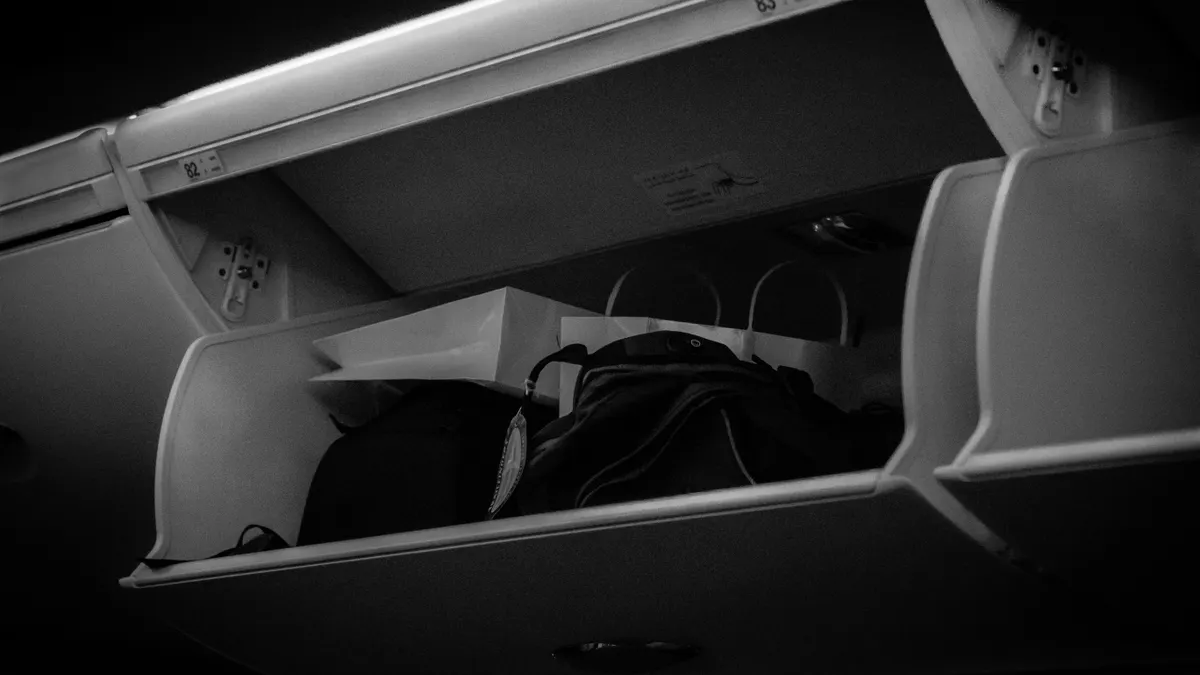
Last updated: November 18, 2026
Quick answer: For Best Carry-On Luggage for Small Overhead Bins, the best small-bin carry-on luggage is a slim, compact suitcase that stays easy to lift, rolls cleanly, and gives up a little packing space so it actually boards.
This guide shows which shapes work best on regional jets, what to skip, and how to pick the right shell or softside bag for tight overhead bin clearance.
Key Takeaways
- A slim carry-on usually fits better than the biggest legal size you can buy.
- A slim hardside carry-on or a softside piece with a flat face and minimal depth can work best for tight bins.
- Choose the bag by depth first, then by wheel style, then by packing layout.
- The right choice depends on what you carry and how often you board regional jets or older aircraft with tighter bins.
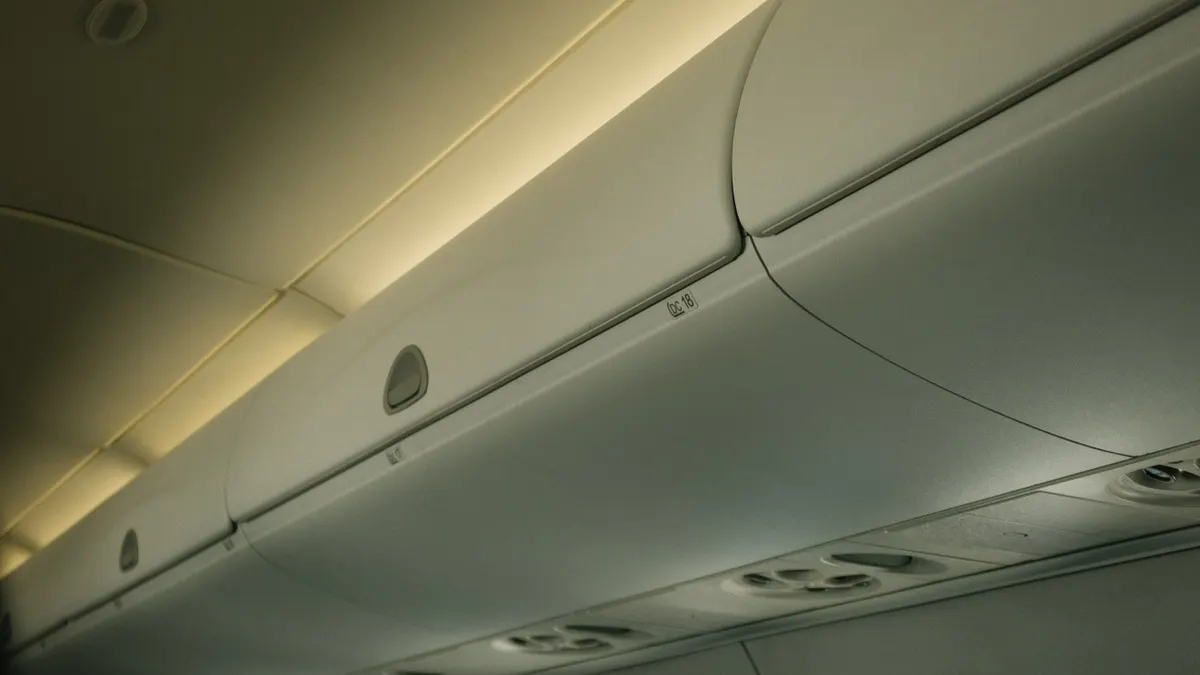
Our Top 3 Picks at a Glance
| Product / Option | Best For | Core Spec | Standout Feature | Action |
|---|---|---|---|---|
| Slim hardside carry-on | Frequent flyers who want structure and protection | Slim profile, spinner wheels | Keeps its shape in cramped bins | Choose if you want the easiest slide-in fit |
| Softside carry-on luggage | Overpackers who need a little give | Flexible sides, front pockets | Squeezes into tight spaces better than rigid shells | Choose if bin space is usually tight |
| Compact spinner carry-on | Travelers who want easy airport movement | Four wheels, smaller footprint | Easier to turn in narrow aisles | Choose if you hate dragging a bag behind you |
What fits small overhead bins without a fight?
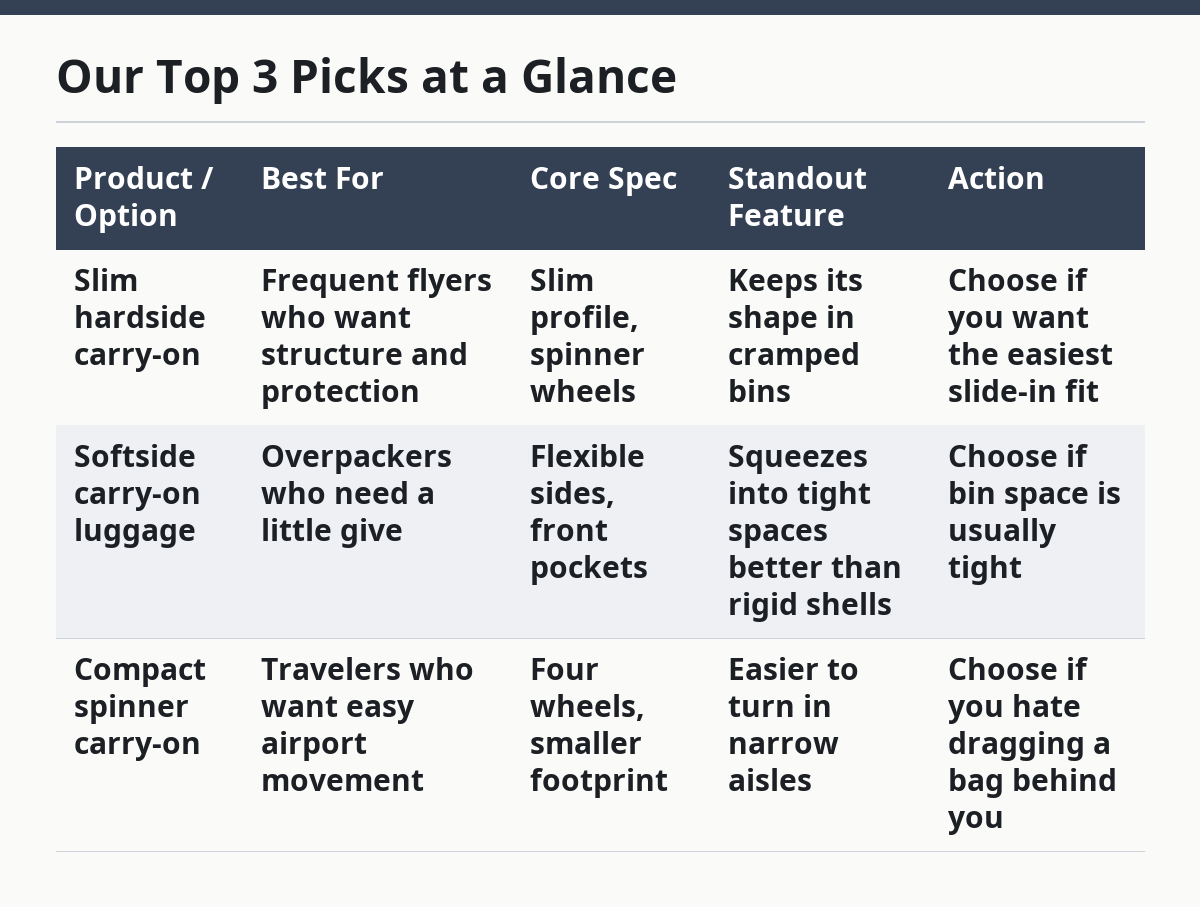
A slim carry-on fits best, not the biggest legal size you can buy. The issue on small bins is not just airline rules; it’s the bin opening, the taper of the compartment, and how much the bag bulges when packed.
Picture this: you’re boarding a regional jet and the bin door looks narrow before the bag even goes up. A boxy suitcase that looks fine on paper can still snag at the lip, while a slimmer bag slides in flat and leaves room for other passengers.
The best shape has one job: take less room at the corners.
That means looking for:
- a narrow body instead of a wide one
- smooth outer panels instead of side pockets that stick out
- wheels that don’t add much depth
- a bag that stays close to its shell when packed
Here’s the catch: a bigger suitcase with a clean profile can still work better than a smaller one with bulging pockets. A 45-degree tilt at the bin mouth matters more than a few inches of extra nominal capacity.
If you are shopping for tight bins, skip anything that depends on expansion zips for normal use. Expanded bags often become the first ones gate-checked on crowded flights.
The carry-on shapes that work best on regional jets
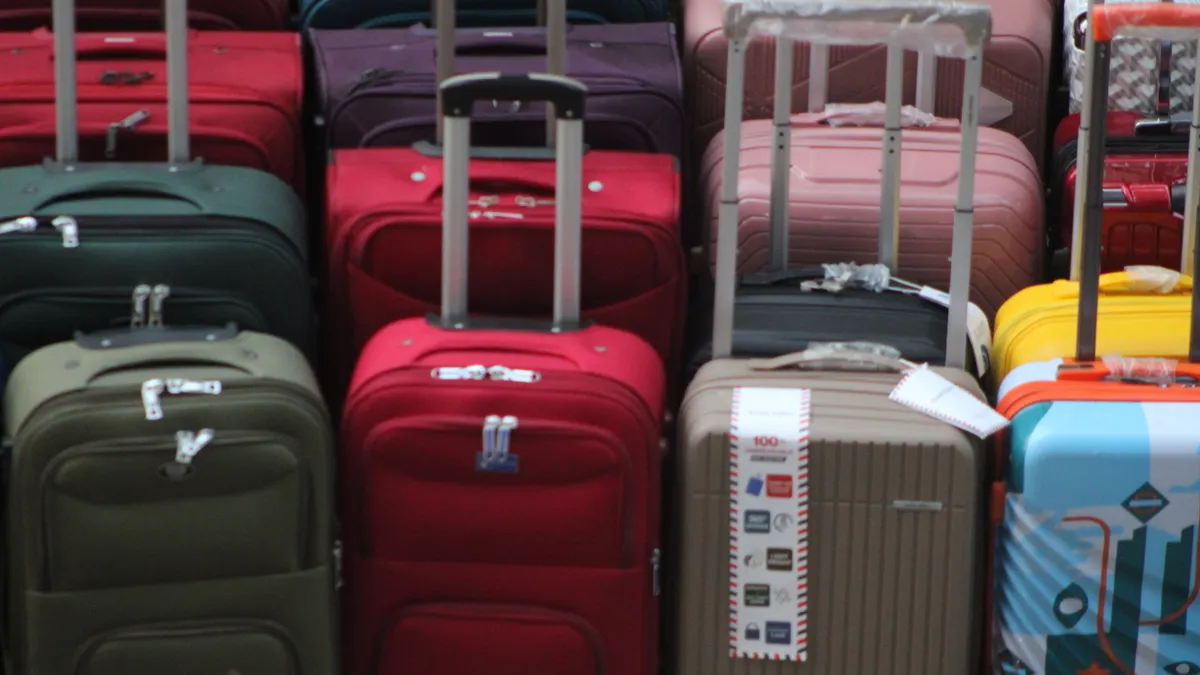
A slim hardside carry-on or a softside carry-on luggage piece with a flat face and minimal depth is often the best fit for small bins. A rigid shell protects clothes and gear, but softside bags can compress more easily when space gets ugly.
Picture this: you’re on a 50-seat jet, one of the bins is already partly filled, and boarding is moving fast. You need a bag that fits on the first try, not one you have to rotate three times while the line builds behind you.
For this job, the shape matters more than the brand name.
Look for these traits:
- Compact depth over flashy capacity
- Spinner wheels that sit flush or nearly flush
- A body that narrows near the sides
- A lid that closes without overstuffing
A hard shell helps if you carry laptops, headphones, or fragile items. A softside bag helps if your packing style is looser or you want pockets on the outside. On a packed regional flight, softside often wins because it flexes around odd bin shapes.
What not to buy: a tall, boxy spinner with deep wheel housings and a wide frame. It can be legal and still awkward. That’s a bad fit for a traveler who flies commuter routes twice a month and wants a fast boarding experience.
How do I choose luggage for tight overhead bins?
Choose the bag by depth first, then by wheel style, then by packing layout. That order matters because a bag that is too thick is trouble no matter how nice the rest looks.
Picture this: you’re comparing two suitcases online, and both say “carry-on.” One is sleek and flat; the other has a deep body, chunky wheels, and an expansion panel. The flat one usually has the better odds in a small bin.
Use this order:
- Check the shape. A slim rectangle beats a square block every time for overhead bins.
- Look at the wheels. Spinner wheels are easier in airports, but large wheel housings eat into fit.
- Watch the front pockets. External pockets help, but stuffed pockets create bulges that catch at the bin edge.
- Skip expansion for normal use. An expansion zipper is useful only if you can keep it closed most of the time.
- Prefer simple interiors. Compression straps and one or two dividers are easier to live with than bulky organizers.
A useful rule: if the bag looks close to the same width from top to bottom, it tends to load better than a model with flared sides. That flat-sided design is why many compact hardside luggage models do better on crowded commuter routes.
The point is not to buy the smallest bag on the shelf. It is to buy a bag that wastes less space. That difference saves you from the gate-check line more often than a hard size limit on a product page.
What I would pick for different traveler types
The right choice depends on what you carry and how often you board regional jets or older aircraft with tighter bins. A single “best” bag does not fit every flyer, because the trade-off is always space, protection, or flexibility.
Picture this: you’re a light packer with one outfit change, a charger, and a laptop. Or you’re a weekender with shoes, a toiletry kit, and a jacket. The right bag for each person is not the same, even if both want the same overhead bin result.
- Choose a slim hardside carry-on if you pack electronics or fragile gear and want a neat, rigid shape.
- Choose softside carry-on luggage if you want the bag to flex into tighter bins and use outside pockets often.
- Choose a compact spinner carry-on if you walk a lot through terminals and hate dragging a two-wheel bag behind you.
The real question is not “Which suitcase is best?” It is “What can I give up?” A hard shell gives you protection, but it can be less forgiving at the bin mouth. A softside bag gives you flex, but it can be easier to overpack.
Who this is not for: If you routinely check bags anyway, a small-bin specialist is probably not worth the compromise. A larger, more standard carry-on may suit you better on routes with bigger overhead bins.
Common mistakes that get bags rejected at the bin
The biggest mistake is buying to the airline rule instead of the bin shape. A bag can meet published limits and still be a pain at boarding. That problem gets worse on older aircraft and regional jets with tighter compartments.
Picture this: you’ve packed the bag right to the zipper line, the shell is bulging, and the spinner wheels add an inch of hard plastic where the bin narrows. That is how a “legal” bag turns into a gate-check candidate.
Avoid these mistakes:
- Overpacking the shell. A stuffed hardside case loses the benefit of its slim profile.
- Using the expansion panel. This turns a fitted bag into a stubborn one.
- Ignoring wheel depth. Big wheels help rolling, but they add bulk in the exact place bins fight back.
- Choosing high, wide pockets. They snag on the bin lip and make the bag awkward to angle in.
- Buying for looks only. A glossy shell means nothing if the body is too deep.
The fix is simple: keep the bag packed so the sides stay flat, and leave some room for compression. That matters more than fancy fabric or a polished finish.
Which features matter most for small-bin carry-ons?
The features that matter most are overall depth, wheel profile, and how the bag handles pressure. A zipper lock or premium lining does not help if the case is too bulky to place in the overhead bin cleanly.
Picture this: you’re in a narrow aisle, and the crew has already asked everyone to place bags quickly. You need a suitcase that cooperates without a wrestling match. The best small-bin bags do exactly that.
Use this checklist:
- Slim profile: Less depth means better odds in tight bins.
- Flat exterior: Fewer protrusions, fewer snags.
- Sturdy handles: A solid top handle helps with quick lifts.
- Spinner wheels: Good for movement, but keep them compact.
- Simple pockets: Enough for travel papers, not so many that the bag balloons.
A good small-bin bag often looks plain. That’s a strength, not a flaw. Fancy contours and extra storage can work against you when the bin is already crowded.
For a deeper guide to size rules and fit, the main hub on Carry-On Size Rules and Fit is the right place to start before you buy.
What should you skip if you fly small planes often?
Skip oversized, expandable bags and anything with chunky corners if you fly on regional jets more than long-haul aircraft. Those are the bags that make boarding slower and packing more annoying.
Picture this: you are standing at the gate with a suitcase that looked fine in the store. Once packed, the shell has hard edges, the wheels stick out, and the expansion zipper is half-open. That bag is built for trouble in a small bin.
Avoid:
- deep spinner suitcases with wide wheel bases
- hard shells that flare at the middle
- travel packs that rely on stuffed side pockets
- bags marketed as “roomy” before they are marketed as compact
Pick the smaller, flatter option even if it gives you less space on paper. That trade buys you a better chance of keeping the bag with you, which is the whole point.
Buy this if: you are a frequent commuter who wants a bag that slides into tight overhead bins without drama.
Skip this if: you are a week-long packer who needs expansion space more than easy bin fit.
The Verdict: the best carry-on for small overhead bins
The best carry-on for small overhead bins is a slim, compact bag with a flat body, modest wheel depth, and no reliance on expansion. That is the shape most likely to work on tight regional aircraft and crowded boarding groups.
Picture this: you want one suitcase that boards fast, rolls well, and does not become a problem at the bin mouth. The bag that wins is usually the one that gives up flashy extras and keeps the silhouette clean.
If you fly often on smaller planes, put shape ahead of storage tricks. A softside carry-on luggage model can be the smarter pick for flex, while a compact hardside luggage option is better if protection matters more than squeeze. Both can work. The wrong choice is the bulky one that only looks right on a product page.
For this topic, the answer is simple: small-bin carry-on luggage should be chosen for fit first, features second.
Drafted with AI; not yet reviewed by a person.




Leave a Reply