
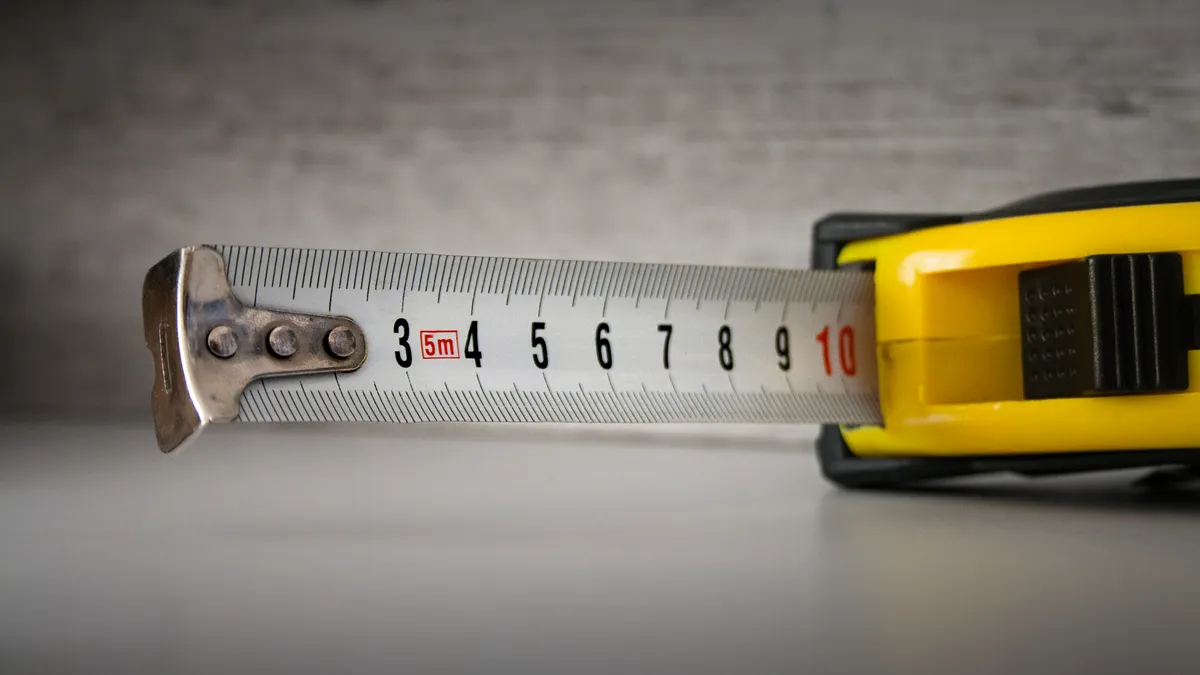
Last updated: November 18, 2026
In short: Carry-On Size Rules and Fit: The Complete Guide usually comes down to the airline’s published limit, which is often around 22 x 14 x 9 inches, but the only size that matters is the one your airline enforces on your route and fare.
This guide sorts out the size rules, the measuring trap, and the fit questions that keep people at the gate.
Key Takeaways
- Airline size limits are not one standard; the published limit can change by carrier, cabin, and even aircraft.
- A bag can be “carry-on size” on paper and still fail the bin test because wheels, handles, or soft sides push it over.
- Check the airline’s current published dimensions and compare them with the bag’s outer shell, not just the main body.
- Personal-item rules are separate from carry-on rules, and that second bag often decides whether your loadout works.
- The trouble spots are low-cost carriers, regional jets, and overpacked soft-sided bags.
Picture this: you’re at the counter with a bag that looked fine at home, and the agent points to the size gauge. That’s the whole problem this guide solves—what fits, what doesn’t, and how to judge a bag before you leave.
The truth is, “carry-on size” is not one universal number. Airlines publish their own limits, and the strictest ones are usually the ones that matter when you’re standing at the gate.
What carry-on size rules actually mean
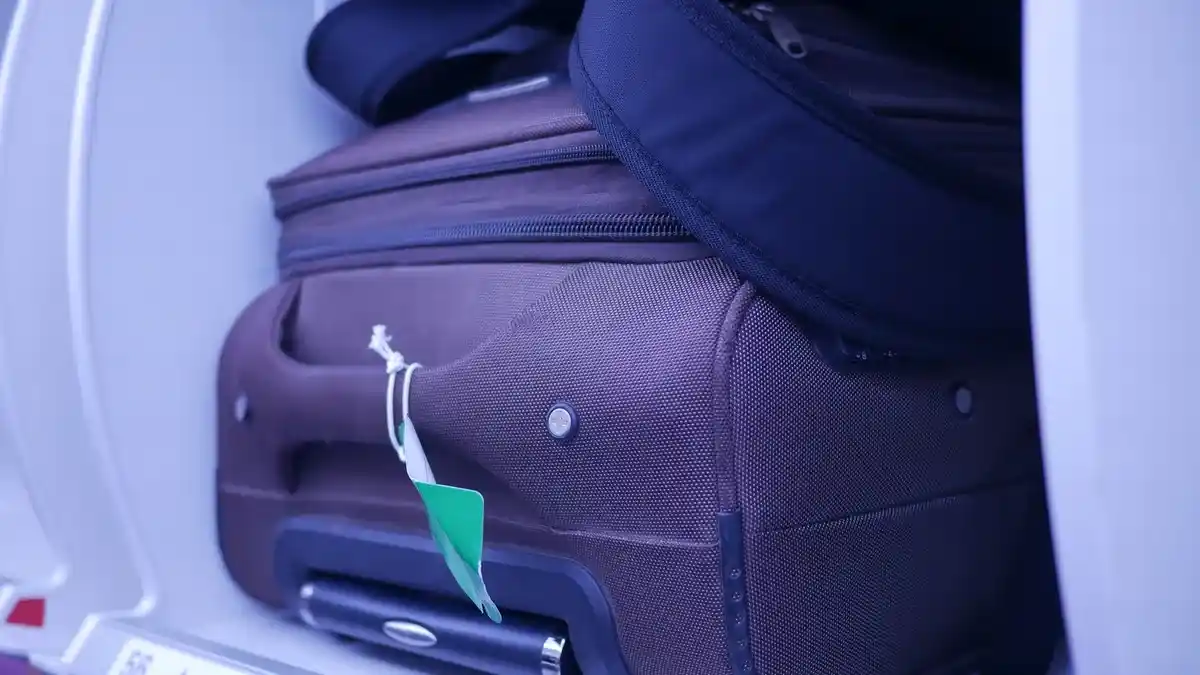
Carry-on size rules mean the airline has set a maximum outside measurement for the bag you can bring into the cabin. Those rules usually cover height, width, and depth, and the published limit often includes wheels and handles.
Here’s the catch: a bag’s tag can say “carry-on approved” and still not fit a specific airline’s gauge. The number on the product page is a claim; the airline’s published dimensions are the rule.
- A hard shell keeps its shape, so it is easier to measure.
- A soft-sided bag can squish a little, but an overstuffed one gets taller and wider.
- Spinner wheels add bulk fast.
- Exterior pockets can push a bag past the limit even if the main body looks fine.
For a plain-English reference, the U.S. Department of Transportation has consumer guidance on airline baggage policies, and the IATA explains that cabin baggage size is set by each airline rather than by one global rule:
- U.S. Department of Transportation, airline baggage guidance
- International Air Transport Association, cabin baggage policies
The practical answer is simple. Use the airline’s measurement, not the retailer’s label. If the airline says one thing and the product listing says another, the airline wins.
Why the same bag fits one airline and fails another
The same bag can pass on one route and get flagged on another because airlines do not all use the same template. Some publish generous limits. Some are tighter. Some care more about the bag’s outer shape than the number on the spec sheet.
Picture this: you’ve packed a 20-inch spinner for a full-service carrier, then switch to a low-cost airline with a stricter cabin rule. The bag that sailed through before may now be checked at the gate.
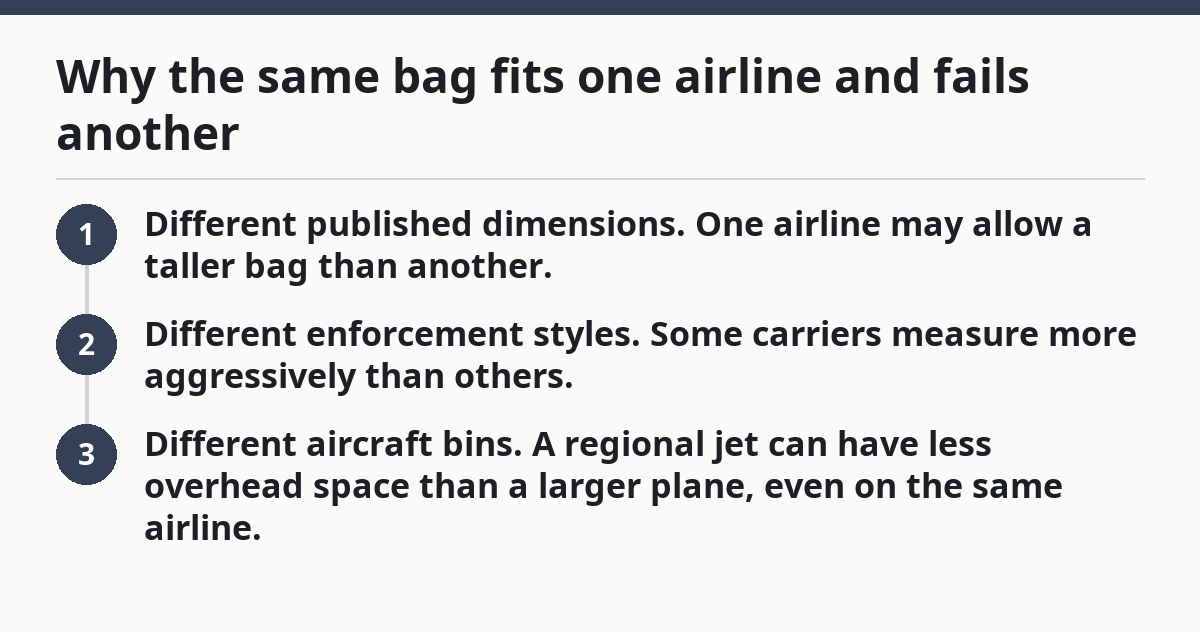
That mismatch happens for three reasons:
- Different published dimensions. One airline may allow a taller bag than another.
- Different enforcement styles. Some carriers measure more aggressively than others.
- Different aircraft bins. A regional jet can have less overhead space than a larger plane, even on the same airline.
The most important thing is not the word “carry-on.” It’s the exact allowance. Some airlines publish one bag plus one personal item. Others charge for the main cabin bag on certain fares. A few route-specific rules change by aircraft type.
A simple habit helps:
- Check the airline page for the route you’re flying.
- Look for the cabin-bag dimensions, not the overall baggage allowance page.
- Compare the bag’s outside measurements, including wheels.
- Leave a little slack for uneven packing.
The fit that works best is the bag that clears the tightest rule you expect to face.
How to measure a bag the way airlines do
You measure a bag from its outermost points, not from the flat panel or the main compartment. That means wheels, bumpers, side pockets, and the top handle all count if they stick out.
Picture this: you’re standing next to a tape measure with a packed suitcase on the floor. The numbers that matter are the largest points in each direction, because that’s how the bag meets a bin or a sizing frame.
Use this method:
- Stand the bag upright if that is how it will roll into the gate.
- Measure height from the floor to the highest fixed point.
- Measure width across the widest point, including side pockets.
- Measure depth from the front of the bag to the farthest back point.
- If the bag is soft-sided, measure it while packed the way you actually travel.
A bag that measures 22 x 14 x 9 inches at rest can still grow when packed tightly. This is why the outer shell matters more than the marketing copy.
A few traps show up often:
- Expandable zippers can add depth and ruin the fit.
- Bulging front pockets can push the width over the line.
- Oversized wheels count even if the body is slim.
- Top-heavy packing can make the bag hard to slide into a gauge.
The good news? If you measure the bag the right way once, you can reuse that number for every trip. Keep a note in your phone with the bag’s real outer dimensions. That beats guessing at 5 a.m.
What size fits most overhead bins?
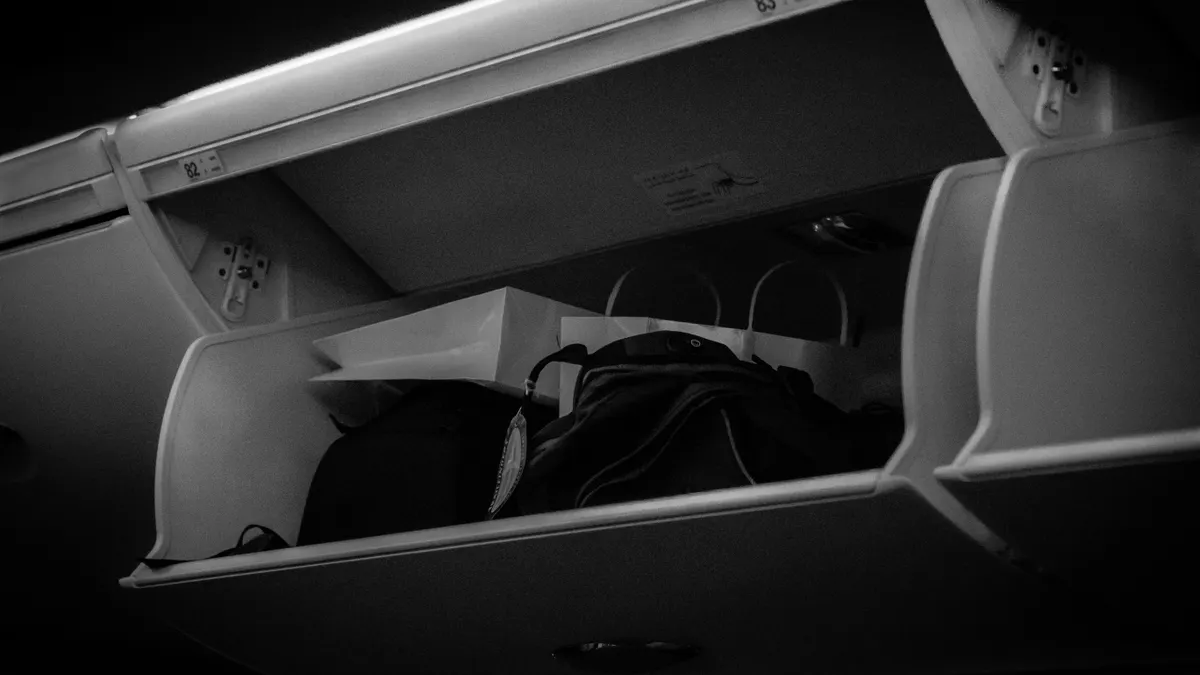
A bag around the common cabin range usually fits many overhead bins, but “fits most” is not the same as “fits all.” The safest assumption is that a bag near the common limit may still be borderline on stricter airlines or smaller aircraft.
Picture this: you’re boarding early, bin space is open, and your bag goes in wheels first without a fight. That is the ideal case. Now imagine the same bag on a full flight with a small regional bin. Different story.
The shape matters as much as the size.
- Shorter, deeper bags may fit the bin but waste packing space.
- Taller, slimmer bags can be easier to place upright.
- Hard-sided shells hold their shape and can be harder to squeeze.
- Soft-sided bags may compress, but only if they are not overloaded.
For many travelers, the sweet spot is a bag that stays a little under the strictest published allowance on the routes they fly most. That gives room for the zipper track, the frame, and the small measurement errors that happen in real life.
Here’s the catch: bin fit is not just about the bag. A winter coat stuffed on top, a bulky laptop sleeve, or a side pocket with a water bottle can turn a “fine” bag into a problem.
A better mental model:
- Think of the bin as a fixed box.
- Think of the bag as an object that must slide in cleanly.
- Think of your packing as the thing that changes the final shape.
If the bag barely fits at home, it is not a safe travel pick.
The carry-on plus personal-item rule is where people get burned
The carry-on plus personal-item rule is where most travelers lose the game, because the second item is often smaller than people expect. Many airlines allow one cabin bag and one personal item, but the personal item must fit under the seat.
Picture this: you packed a full-size cabin bag, then planned to bring a backpack as your second piece. That works only if the backpack is small enough and the airline treats both items the same way on your fare. If the rule is unclear, check the airline’s baggage page or ask the airline directly before you fly.
The personal-item rule matters because it changes the whole packing plan. If your airline allows only one small under-seat item on a cheaper fare, your “normal” day bag may be too large.
Use this checklist:
- Check whether your fare includes one cabin bag, one personal item, or both.
- Compare the personal-item dimensions separately.
- Make sure the second bag can compress under the seat.
- Do not assume a tote, briefcase, or backpack automatically qualifies.
This is also where soft bags help. A structured backpack can be just a little too tall. A soft tote may squish under the seat more easily. That said, a floppy bag can be harder to carry and organize.
The setup that works best answers both questions at once:
- Will the main bag meet the overhead limit?
- Will the second bag fit under the seat without a fight?
If either answer is shaky, the packing plan is shaky.
Airline types that are most likely to cause trouble
Low-cost carriers and regional flights are the most likely to create carry-on problems because their limits tend to be stricter and their enforcement can be tighter. That does not mean every flight on those airlines is a problem. It means the margin for error is smaller.
Picture this: you’re on a short hop, boarding quickly, and the agent checks every bag at the gate. That is where a bag that looked fine in the terminal can cost you time or a fee.
The airlines that deserve extra caution are:
- Low-cost carriers with tighter published dimensions or added fees.
- Regional flights with smaller aircraft bins.
- Busy holiday departures where gate checks happen more often.
- Full flights where overhead space runs out early.
A larger legacy carrier can still cause issues, especially on a smaller plane. But the stricter the published rule, the more likely your bag choice matters.
The safest move is to build your setup around the smallest allowance you expect to face. If your regular route includes one strict airline and one generous airline, pack for the strict one. That way you do not have to repack every trip.
Big idea: if your bag only fits on easy routes, it is not a dependable travel bag.
What a good fit looks like in the real world
A good fit is a bag that clears the airline’s limit with a little room left over, packs without ballooning, and still leaves space for the items you actually need.
Picture this: you zip the bag closed without pressing on the sides, the wheels roll straight, and the bag slides into the size frame without force. That is what “good fit” looks like.
A strong fit has these traits:
- The bag’s outer dimensions stay under the route’s limit.
- The main compartment closes flat, not domed.
- The wheels and handle do not make the bag awkward to measure.
- The pack-out leaves room for souvenirs or a jacket if needed.
A bad fit shows up fast:
- The top handle sticks up high.
- The front pocket bulges.
- The bag only fits if you push it into shape.
There is a difference between “can be squeezed in” and “fits.” Airlines care about the first one when they are trying to make space. Travelers care about the second one when they want an easy trip.
The practical advice is boring but useful: buy or pack for clearance, not optimism. A bag that is a touch smaller than the limit is easier to live with than one that lives on the edge.
The honest verdict: what to choose and why
Choose a bag that stays under the strictest published cabin allowance you expect to face. Choose a soft-sided model only if you need a little packing give and you can keep it from bulging. Choose a hard-sided model only if its outer shell still leaves real slack under the limit. Neither works well if you fly airlines with different rules and you’re trying to make one overstuffed bag do everything.
That is the cleanest answer for most travelers. It avoids gate drama, surprise fees, and the “almost fits” problem.
Now, you might be wondering if one shape is always better. It isn’t.
- Hard-sided bags protect contents better and keep their dimensions stable.
- Soft-sided bags can be more forgiving if you pack lightly.
- Slim bags are easier to place in bins, but they may hold less.
- Tall bags may hold more, but they can fail a stricter gauge.
The right choice depends on the route, the aircraft, and how much you tend to pack. If you fly one airline often, match that airline’s published rule. If you fly a mix of carriers, buy to the tightest one.
Choose this if you mostly fly one airline
Choose the bag that matches that airline’s published dimensions if you mostly fly one carrier and know its cabin rule by heart. That lets you pack with confidence and use the full allowance.
The downside is obvious. If you switch airlines often, a bag built to one rule may be too big for another. That is how a “perfect” bag turns into a hassle.
Choose this if you fly mixed routes
Choose the smaller, stricter-fit option if you fly mixed routes or low-cost carriers because the smaller bag reduces the chance of a gate issue. It also gives you room for overpacking mistakes.
The trade-off is capacity. You may have to pack more carefully, use smaller packing cubes, or leave a spare pair of shoes at home.
Don’t choose this if you always overpack
Neither style works well if you habitually cram the bag full and expect the shell to stretch. A bag that is already near the limit has no room left for real life.
That is not a product problem. It is a packing problem.
Common mistakes that make a “right size” bag fail
A bag can meet the published size and still fail at the gate because of packing habits. The usual mistakes are small, but they add up fast.
Picture this: you added one more sweater, stuffed the side pocket, and zipped the expansion panel. The bag still looks normal to you. It does not look normal to a gate agent or a size frame.
The usual mistakes are:
- Packing the expandable section open.
- Using side pockets as overflow storage.
- Ignoring the extra space taken by wheels and handles.
- Assuming a soft bag will compress no matter what.
- Measuring the bag empty, then traveling with it full.
There is also a simple math mistake: people often measure the inside space and forget the outside shell. That gap is the whole story. A bag’s interior volume and its exterior size are not the same thing.
Fix it with a habit:
- Measure the bag packed.
- Keep the expansion zipped shut unless you truly need it.
- Leave pocket items for the personal bag.
- Check the airline’s size page before each trip, not once a year.
The best part? Once you know your bag’s real outer size, you stop guessing. That saves time at the counter and at the gate.
The exceptions that can change the answer
The rule flips in a few cases, and those cases matter.
Picture this: you already own a bag that is slightly too big for your usual airline, but you only fly once a year. In that case, a checked-bag fee may be less painful than buying a new case. Or maybe you travel with a medical device or work gear that changes your loadout. The standard advice shifts fast.
The main exceptions are:
- You fly mostly on generous carriers. Then a larger bag may be fine.
- You only take short trips. A smaller bag may be enough even if the rule is looser.
- You travel with bulky gear. Cameras, uniforms, or work tools can make the main bag choice less important than the personal-item setup.
- Your airline publishes route-specific rules. In that case, the route matters more than the brand.
On the flip side, if you fly low-cost carriers even a few times a year, the strictest rule should steer your choice. That is where the pain shows up.
The cleanest strategy is to size your bag to the harshest common case. It feels conservative. It also keeps the trip boring, which is the real goal.
Questions people ask before they buy or pack
What size carry-on fits most airlines?
A size near the common cabin range fits many airlines, but not all of them. The safer target is the published limit for the strictest airline you use, because the gate check cares about that airline’s rule, not the bag’s label. For current route rules, check the airline and the U.S. Department of Transportation baggage guidance.
Does a spinner bag count the same as a two-wheel bag?
Yes, the airline usually treats them the same in theory, but spinner wheels can make the bag bulkier in practice. That extra width or height can be the difference between fitting and failing a gauge.
Can I use a backpack as my carry-on?
Yes, if the airline allows that size as your main cabin bag. A backpack can be easier to place in bins, but a tall or structured one may still miss the limit on stricter carriers.
Is a soft bag better than a hard shell?
A soft bag is better if you need a little flex and tend to pack light. A hard shell is better if you want fixed shape and more protection, but it can be less forgiving when the dimensions are tight.
Should I buy the biggest bag the airline allows?
Not if you fly different airlines or tend to overpack. A bag that sits right on the edge leaves no room for measurement differences, bulging pockets, or a strict gate check.
Drafted with AI; not yet reviewed by a person.




Leave a Reply