

Last updated: November 18, 2026
Quick Answer: for most travelers, a well-built polycarbonate case is the most balanced choice, with aluminum strongest for rigidity and nylon strongest among common soft shells.
Your suitcase keeps cracking, scuffing, or splitting at the corner. The shell material matters, but luggage materials and durability also depend on the frame, zipper, wheels, and how the bag is built.
In short: the toughest luggage is usually a well-built polycarbonate or aluminum case with strong corners, a solid zipper or frame, and reinforced stress points.
The guide below explains what each material does well, where it fails, and how to judge a bag before you buy.
Key Takeaways
- Hard-shell luggage does not automatically mean stronger luggage.
- Polycarbonate bends and absorbs impact better than brittle plastic shells.
- Aluminum resists dents well but shows damage fast and can add weight.
- Polyester and nylon can hold up for years if the weave, coating, and stitching are solid.
- Zippers, wheel mounts, and corner protection often fail before the shell does.
- The best material depends on your travel pattern, not just your budget.
I write about luggage construction, travel gear, and failure points that show up after real use patterns like overhead bins, curb drops, and gate checks in luggage materials and durability discussions.
What actually makes luggage durable?
Durability starts with the weakest part, not the marketing label. A bag with a thick shell can still fail if the zipper teeth skip, the wheel housing cracks, or the handle base pulls loose.
Picture this: you’re pulling a bag across a wet curb, then stacking it in an overhead bin, then dragging it through a hotel hallway for the third trip this month. That sequence punishes seams, corners, and wheel stems far more than a glossy shell finish ever will. In luggage materials and durability, the abuse pattern matters as much as the shell.
The truth is, durable luggage is a system. One part may be rated or marketed well, but the bag only survives if all the parts hold up together.
Look at these failure points first:
- Shell material: resists cracks, dents, and punctures.
- Frame or zipper system: keeps the bag closed under pressure.
- Corners and edges: often take hard impact from drops and conveyor belts.
- Wheels and handle mounts: fail under repeated pulling and side loads.
- Interior lining and stitching: can tear when overpacked or snagged.
Here’s the catch: a bag can survive light travel for years and still be the wrong choice for checked-bag abuse. That’s why luggage materials and durability have to start with how you travel, not just what the shell is made of.
Hard shell or soft shell: which lasts longer?

Hard shell and soft shell both last a long time when built well, but they fail in different ways. Hard shell resists shape loss and moisture better; soft shell usually hides wear better and can be easier to repair.
Picture this: you want a case that won’t get crushed in a full overhead bin, but you also want one that can flex when you overpack souvenirs on the return leg. That trade-off is where most luggage buyers get stuck, and luggage materials and durability make it practical rather than abstract.
Hard shell often wins for:
- Better resistance to rain and spills
- Better shape retention
- Better protection for fragile contents
- Easier wipe-down cleaning
Soft shell often wins for:
- Exterior pockets and fast access
- A little give when the bag is packed tight
- Easier patching, in some cases
- Lower visible denting and scuffing
A hard shell is not automatically stronger. A cheap molded shell can crack at the edge while a dense woven soft bag keeps going with only cosmetic wear. On the flip side, a good hard shell can shrug off corner abuse that would shred a thin fabric case.
The best choice depends on your trip pattern:
- Frequent checked luggage: hard shell often makes more sense.
- Carry-on only: either style can work, but wheel and handle quality matter more.
- Business travel: hard shell keeps clothes and electronics better protected.
- Family travel: soft shell can be easier when you need extra pockets and flexibility.
Material alone does not decide lifespan. Build quality does.
Polycarbonate luggage: the best all-around hard shell?
Polycarbonate is often the most balanced all-around hard-shell material for many travelers because it bends under impact instead of cracking right away. That flex is the reason many better hard cases use it or a polycarbonate blend.
Picture this: your case gets shoved into a bin, bumped against a luggage cart, and dragged off a belt by one corner. A shell that flexes a little is usually safer than one that shatters under the same hit, which is why polycarbonate luggage and durability often go together.
Polycarbonate’s strengths are straightforward:
- It handles impact better than brittle plastics.
- It can tolerate repeated loading and unloading in many bags.
- It usually balances weight and toughness well.
- It works for both carry-on and checked sizes.
The trade-offs are real:
- It can still scratch and show wear.
- Thin shells can oil-can or flex too much.
- Cheap blends may look like polycarbonate but behave more like lower-grade plastic.
The detail that matters is not just “polycarbonate” on the tag. Some makers use a single-shell build, some use layered construction, and some blend it with ABS to cut cost. The blend changes how the shell behaves.
Who should choose polycarbonate?
Polycarbonate fits travelers who check bags a few times a year, want a lighter hard case, and care about impact resistance more than a perfect showroom finish.
It is a smart pick for:
- Flyers who want a hard shell without jumping to aluminum
- Travelers who toss bags into shared vans, taxis, and overhead bins
- People who want a strong all-purpose case for domestic and international trips
It is not ideal for:
- Travelers who hate scratches showing on the shell
- People who want the most rigid feel possible
- Anyone who thinks shell material alone can save a weak zipper
Who Should Skip This: if you want the most rigid, dent-resistant exterior and don’t mind extra weight, aluminum is the better fit in this article.
Buy this if: you want a balanced hard shell that handles impact well and you pack electronics or breakables.
Skip this if: you want a metal look, hate cosmetic wear, or need the bag to stay flawless after every trip.
ABS and polypropylene: budget materials with different strengths
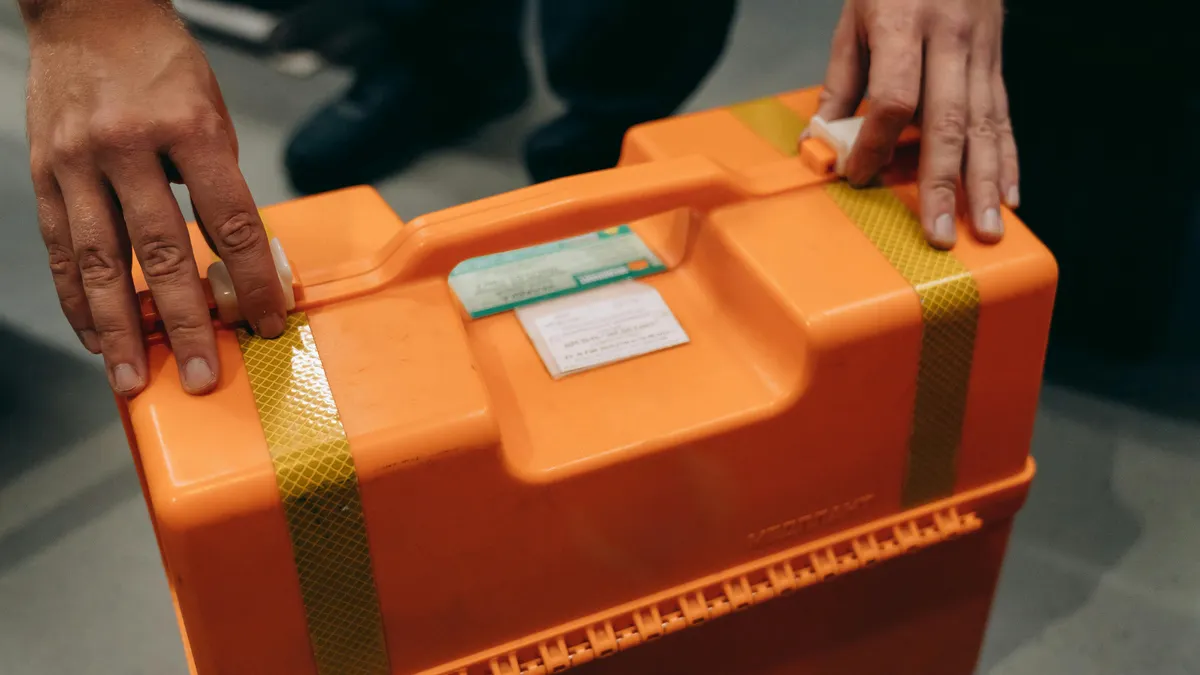
ABS is usually the cheaper hard-shell option, while polypropylene tends to be the better-value upgrade when weight and toughness both matter. If the price gap is small, polypropylene is usually the better buy.
Picture this: you see two similar suitcases on a shelf, one with a glossy shell and one with a duller finish. The cheaper one may look fine on day one, but the shell chemistry tells a bigger story than the shine does.
ABS is common because it molds well and keeps manufacturing costs down. The downside is that it can be more brittle and less forgiving on impact. That matters when a bag drops off a cart or hits a conveyor angle.
Polypropylene has a better toughness-to-weight reputation. It often feels less fancy, but the shell can take abuse better than basic ABS in many luggage lines.
ABS: where it works and where it falls short
ABS makes sense for light travelers who want a hard shell on a budget and don’t mind replacing the bag sooner. It can work for occasional weekends, short flights, and low-stress storage.
Its weak points are clear:
- It can crack more easily under sharp impact.
- It may show stress whitening and scuffs fast.
- It often appears in lower-cost builds with weaker zippers and wheels.
Polypropylene: the quieter upgrade
Polypropylene is the safer bet if you want a lighter hard case that can handle repeated trips better than basic ABS. It is often a better choice for checked luggage than ABS at a similar price tier.
Its limits still matter:
- It can look less polished than more expensive shells.
- It may be used in midrange bags with average hardware.
- It does not fix weak corner protection by itself.
The real question is not “ABS or polypropylene?” It is “How much abuse will this bag see before I replace it?”
Why aluminum lasts so long and why it annoys some travelers
Aluminum wins when you want a rigid shell, strong edge protection, and a case that keeps its shape under pressure. It is also the material most likely to show dents, scuffs, and cosmetic battle scars quickly.
Picture this: your luggage gets stacked under heavier bags, then knocked sideways in transit, then pulled across a rough curb. Aluminum can take a lot of that abuse without losing its structure.
The reason people choose aluminum is simple:
- It feels stiff and protective.
- It resists deformation better than soft plastic shells.
- It often pairs with frame-style construction that feels solid in hand.
The downsides are just as real:
- It adds weight.
- It dents instead of flexing.
- The finish can show wear fast.
- Repairs can be more complicated and more expensive than with fabric bags.
A dent is not always a failure; in many aluminum cases, the dent is the evidence that the shell absorbed the hit instead of transmitting it to your contents. That is useful, but not every traveler wants to look at the scars.
Aluminum makes sense if you care about structure first
Choose aluminum if your priority is a rigid, premium-feeling case for frequent travel and you can live with visible wear.
It is strongest for:
- Frequent checked travel with fragile contents
- Travelers who prefer frame-style closure
- People who value structure over low weight
It is a bad match for:
- Travelers who want a light bag
- Anyone who hates visible dents
- People who overpack and expect the shell to flex generously
Who Should Skip This: if you want light weight and a shell that hides wear, polycarbonate is the better fit in this article.
Buy this if: you want a rigid case, travel often, and care more about protection than cosmetics.
Skip this if: you need the lightest possible bag or you want a suitcase that still looks new after rough handling.
What matters more than the shell: zippers, frames, wheels, and handles
The shell gets the attention, but hardware often decides the bag’s lifespan. A strong case with weak wheels or a bad handle will fail sooner than a modest shell with better construction.
Picture this: you’re rushing through a station and one wheel starts wobbling, then the handle sticks, then the zipper snags at the corner. That is not a shell problem alone. That is a whole-system problem, and luggage materials and durability only matter if the hardware keeps up.
The parts that usually decide durability are:
- Zippers: coil zippers are common; chain-style teeth or reinforced systems can handle stress better in some bags.
- Frames: frame-style cases can be stiffer, but they can also add weight.
- Wheel mounts: double wheels often spread load better than flimsy single wheels.
- Telescoping handles: the handle base can loosen if the mounting points are weak.
- Corner bumpers: useful on both soft and hard luggage because corners take repeated hits.
A bag with a weak zipper track can split at the top long before the shell wears out. A wheel housing made from brittle plastic can crack after a few stair bumps. A handle with too much play can feel annoying at first, then fail at the worst time.
Look for the boring details:
- Reinforced stitch lines
- Smooth wheel rotation
- Tight handle locking
- Strong zipper pulls
- Protected corners and feet
The best shell in the world cannot rescue poor hardware.
How fabric luggage earns its durability
Nylon usually beats polyester for abrasion resistance, while polyester often wins on price and color hold. Both can last, but the weave density and coating matter more than the fabric name alone.
Picture this: you throw a soft-sided bag in the trunk, slide it under a seat, and drag it over concrete more than you planned. Fabric luggage survives that kind of life when the weave is tight and the seams are reinforced, so luggage materials and durability still depend on construction.
Nylon is known for toughness. It tends to resist scuffing and abrasion better than many lower-grade fabrics, which is why higher-end soft luggage often uses it. Ballistic nylon, in particular, is associated with heavier-duty builds.
Polyester is common in mainstream luggage because it is cost-effective and can hold up well enough for many travelers. It is often lighter on the budget, though not always as abrasion resistant as comparable nylon.
What actually changes durability:
- Denier rating: higher can mean thicker thread, but it is not the whole story.
- Weave: tighter weaves usually wear better.
- Coating: helps with water resistance and surface wear.
- Stitching: bad seams can ruin a good fabric.
- Reinforcement: panels, corners, and base pads matter a lot.
Soft luggage can be repaired more easily in some cases, but it can also fray, fade, and pick up stains. That is not failure; it is wear. For many travelers, that is acceptable if the bag keeps working.
How to read luggage specs without getting fooled
A luggage spec sheet can sound technical and still tell you almost nothing about real durability. The useful question is not “What does the label say?” It is “What parts of the bag are actually reinforced?”
Picture this: two suitcases both claim “durable construction.” One lists material only. The other lists shell type, zipper system, wheel count, handle design, and frame details. One of those pages is doing real work.
The best specs to look for are:
- Shell material by name, not just “hard-sided”
- Lining or shell blend details
- Wheel count and wheel style
- Handle materials and mounting points
- Zipper type, if listed
- Frame construction, if it’s a frame case
- Corner protection or bumpers
- Warranty terms that mention structural coverage
Be skeptical when a listing only says things like “premium material” or “built to last.” Those phrases tell you nothing about the failure points that matter.
One helpful clue is what the maker does not say. If a bag never mentions wheel bearings, handle reinforcement, or shell composition, that silence usually means the spec is ordinary, not exceptional.
Which luggage material should you choose?
Polycarbonate is the best default choice for many travelers because it balances impact resistance, weight, and price better than the other common hard-shell options. Aluminum wins for rigidity. Nylon wins for soft-sided abrasion resistance. ABS is the budget fallback, not the durability leader.
Picture this: you want one suitcase that can handle airport abuse without turning into a brick or a cracked shell. That is where the decision gets practical, not theoretical, and luggage materials and durability become a buying guide rather than a chemistry lesson.
Choose based on your use case:
- Best all-around hard shell: polycarbonate
- Best rigid premium shell: aluminum
- Best budget hard shell: polypropylene before ABS, if the price is close
- Best soft shell for abrasion: nylon
- Best value soft shell: polyester for lighter use
Here’s the catch: a better material cannot compensate for weak hardware. A polycarbonate bag with flimsy wheels is still a bad bag. A nylon bag with poor seams is still a bad bag.
The best choice by traveler type
- Frequent flyer with checked luggage: polycarbonate or aluminum
- Carry-on traveler: polycarbonate or nylon, depending on whether you want structure or pocket access
- Budget traveler: polypropylene if available, otherwise a well-built polyester soft case
- Heavy packer: aluminum or reinforced nylon with strong stitching
- Light packer who wants low stress: polycarbonate
The smartest buy is the one that matches your trip pattern and survives your worst travel day, not your best one.
When luggage material stops mattering
Material stops being the main issue when the rest of the bag is underbuilt. That is the point where you should stop comparing shell chemistry and start comparing construction quality.
Picture this: you find a shell you like, but the handle flexes, the zipper track looks thin, and the wheel mounts are narrow. At that point, the material choice is only part of the story.
Reconsider the whole category if:
- You are checking bags on nearly every trip and need repairable parts more than a fancy shell.
- You routinely overpack and break zippers before the exterior wears out.
- You need a bag that expands, compresses, and fits odd-shaped loads.
- You care more about internal organization than shell protection.
Soft-sided luggage may be the better answer if you need pockets, flexibility, and easier packing. Hard-sided luggage may be the better answer if you want protection and easier cleaning. Either way, the bag should be judged as a whole.
If the construction details are vague, walk away. That is not a material problem. That is a product problem.
What is the most durable luggage material?
Polycarbonate is the most dependable all-around material for many travelers, while aluminum is the toughest rigid option and nylon is the strongest common soft-shell choice. That answer changes only if you care more about weight, appearance, or pocket access than about balanced durability.
Choose polycarbonate if you want a hard case that flexes on impact, stays lighter than aluminum, and suits most flight patterns. Choose aluminum if you want a rigid shell and can accept dents, weight, and a more premium feel. Choose nylon if you prefer soft luggage and want better abrasion resistance than basic polyester.
Skip all three if the real weak point is elsewhere. A weak zipper, poor wheel housing, or thin stitching can make even a strong material a bad purchase.
FAQs
Is hard-shell luggage more durable than soft-shell luggage?
Hard-shell luggage is more resistant to crushing and moisture, but soft-shell luggage can last longer in some real-world cases if the fabric and stitching are better. The shell is only part of durability. Wheels, handles, and zippers often fail first.
Is polycarbonate better than ABS for luggage?
Yes, polycarbonate is generally the better durability choice because it bends more under impact and is less likely to crack than basic ABS. ABS can still work for light use, but it is usually the weaker hard-shell option.
Does aluminum luggage dent easily?
Yes, aluminum dents more readily than flexible plastic shells, but that dent often means the shell absorbed impact instead of breaking. The trade-off is a heavier bag with more visible wear.
Is nylon or polyester better for soft luggage?
Nylon is usually better for abrasion resistance, while polyester often offers better value. If the denier, weave, and stitching are weak, the fabric name alone will not save the bag.
What part of luggage breaks first?
On many bags, the first failure is a wheel, handle mount, zipper track, or seam near a stress point rather than the shell itself. That is why construction details matter as much as the outer material.
Sources
- U.S. Department of Transportation, Consumer Guide to Air Travel Baggage handling and checked bag guidance
- International Air Transport Association (IATA), baggage and baggage handling standards
- Samsonite material and product construction guides
Drafted with AI; not yet reviewed by a person.





Leave a Reply