
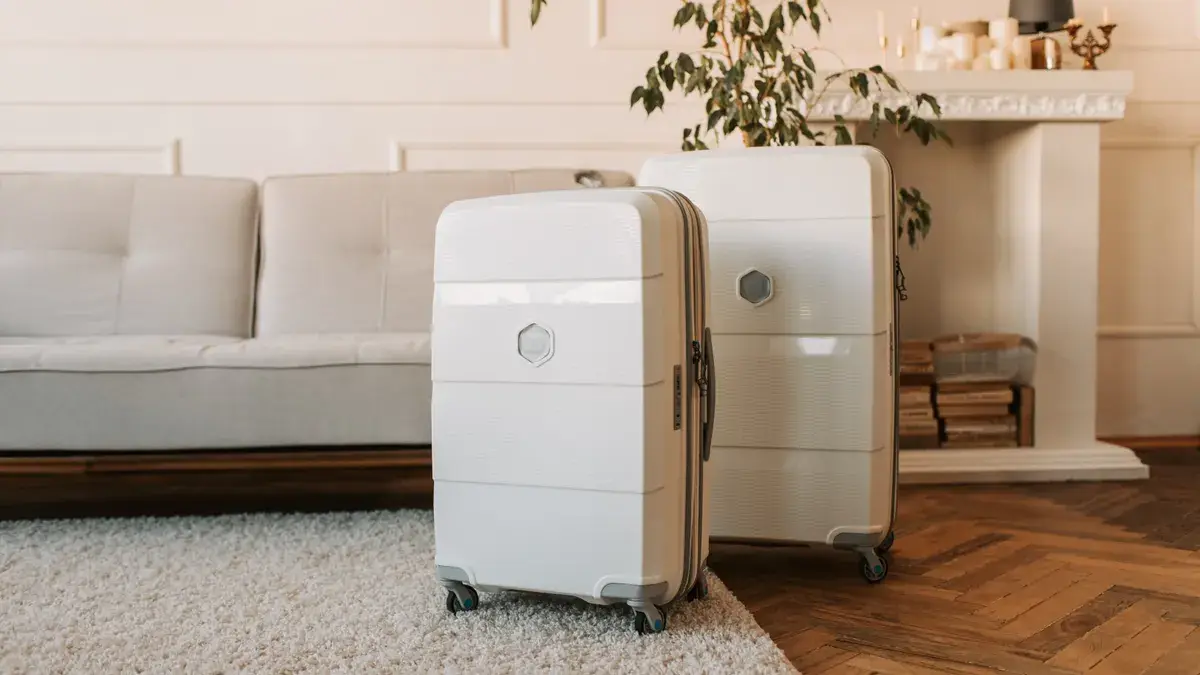
Last updated: November 03, 2026
Quick answer: for most travelers, a 20- to 22-inch carry-on or a 24- to 26-inch checked bag is the most practical starting point in luggage buying basics: The Complete Guide. In short, buy the lightest, toughest suitcase that fits the trips you actually take, then choose spinner wheels, a handle that does not wobble, and a shell or fabric that matches your packing style. If you fly often, size and weight matter more than gimmicks; if you road-trip or check bags a lot, durability and repairability matter more than flashy extras.
Key Takeaways
- Start with your most common trip, not your rarest one.
- Hard-sided luggage protects fragile items; soft-sided luggage adds pockets and packing flexibility.
- Spinners suit smooth floors; two-wheel rollers suit rough ground.
- Handle quality, zippers, and layout matter more than chargers or flashy extras.
Luggage is one of those purchases that looks simple until you stand in a store, open five zippers, and realize every bag claims to be “durable,” “lightweight,” and “premium.” The useful way to buy luggage in luggage buying basics: The Complete Guide is not by brand slogans. It is by trip length, airline rules, packing habits, and how much abuse the bag will take after it leaves your hand.
I write about travel gear with a focus on practical fit, not marketing copy. That means I care about dimensions, wheel layout, materials, repair options, and the trade-offs that matter when a suitcase is full, not when it is sitting empty on a shelf.
The first decision in luggage buying basics: What kind of traveler are you?

The right luggage starts with your most common trip, not your dream trip. If most of your travel is short flights, a 22-inch or 21.5-inch carry-on-sized bag is the safe center of gravity. If you take weeklong trips, check bags often, or travel with bulky clothes, a larger 24- to 28-inch checked suitcase makes more sense.
That sounds basic, but people buy the wrong size all the time. The usual mistake is choosing a huge bag “for flexibility,” then packing enough to make it heavy, awkward, and expensive to check. The other mistake is buying a sleek carry-on that cannot hold a winter coat, shoe bag, and toiletries without turning into a brick.
Think in terms of use cases:
- Business or weekend travel: a hard-sided or soft-sided carry-on in the 20- to 22-inch range.
- One-week leisure trips: a 24- to 26-inch checked bag if you pack moderately, or a carry-on plus personal item if you pack light.
- Family travel: matching sizes that are easy to identify, ideally with replaceable wheels and handles.
- Road travel: durability and packing access matter more than airline-friendly dimensions.
The number printed on the tag is not the whole story. Airlines usually care about external dimensions, and those dimensions include wheels and handles. A “22-inch” bag can still be too tall for some carriers once the spinner wheels are included. Read the full measurement line, not just the marketing name.
One useful habit is to match bag size to your laundry habits. If you can wash clothes mid-trip, you can travel smaller. If you cannot, buy for the return leg, not the outbound one.
What luggage material should you choose?
Choose hard-sided luggage if you want better protection for fragile contents and a cleaner exterior; choose soft-sided luggage if you want exterior pockets, a little packing forgiveness, and easier expansion. The material choice is less about “better” and more about what gets damaged first in your travel life.
Hard shells are usually made from polycarbonate, polypropylene, or ABS blends. Polycarbonate is the name to look for when you want a balance of impact resistance and weight. Polypropylene is often lighter and can be resilient, though finish and build quality vary a lot by brand. ABS is cheaper and can be perfectly usable, but it is generally the least reassuring of the three when you care about long-term abuse.
Soft-sided bags are usually made from nylon or polyester. Ballistic nylon, originally developed for abrasion resistance, is a classic choice in heavier-duty soft luggage. Polyester is common and can be perfectly fine for light travel, but the weave and fabric weight matter. A thin polyester bag can look fine new and then start scuffing, fraying, or sagging sooner than you want.
Here is the honest trade-off:
- Hard shell wins when you want structure, water resistance on the outside, and better protection for breakables.
- Soft shell wins when you want exterior pockets, slightly more give at the zipper line, and the option to squeeze in one more sweater.
The drawback of hard shell luggage is obvious: it scratches, and cheap shells can crack or deform. The drawback of soft shell luggage is equally plain: it can absorb dirt, collect wear on corners, and give less protection to a laptop, camera, or bottle of perfume.
If your trips involve rain, curbs, subway stairs, and overhead bins, I would not overthink this. Choose the shell based on what you actually carry. A laptop, headphones, chargers, and dress clothes favor a hard shell. Odd-shaped items, kid gear, and souvenirs favor a soft shell or an expandable soft-sided bag.
Spinner wheels, two-wheel rollers, and what actually rolls better
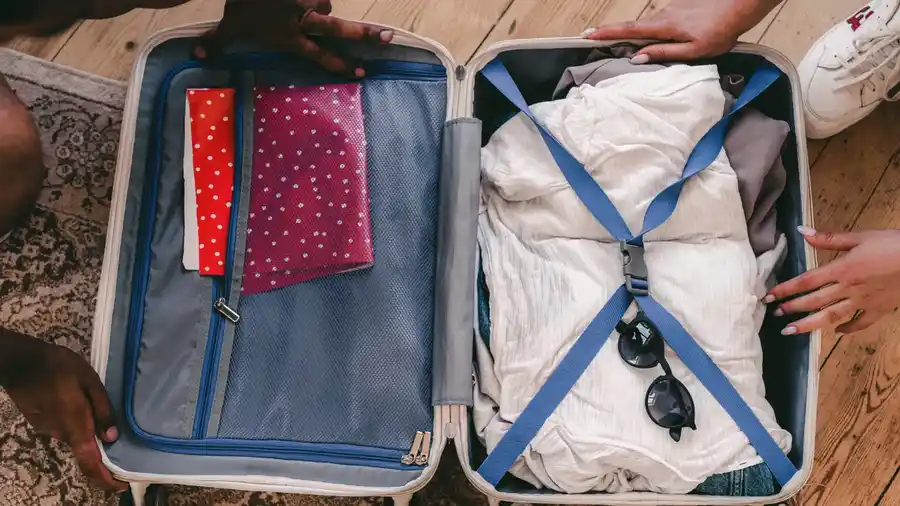
Four-wheel spinner luggage wins for airport terminals and flat floors; two-wheel roller luggage wins for rough sidewalks, thresholds, and older buildings. That is the practical split, and it matters more than almost any other feature on the bag.
Spinner wheels let a suitcase move upright beside you. That reduces shoulder strain and makes it easier to thread through a long concourse. A good spinner feels almost casual to pull. That is why the format became dominant in modern luggage. But spinner wheels also hang below the suitcase, which means more exposed parts and more chances to snag on a curb crack, a cobblestone edge, or a staircase landing.
Two-wheel rollers tilt and drag. They are less fashionable and often less convenient in an airport, but the recessed wheel layout usually gives them an edge on rougher terrain. The wheels are better protected, and the bag is less likely to veer when the floor stops being smooth.
The wheel question is not about style. It is about the surfaces in your actual life.
Spinner luggage is the better choice if:
- you move through airports, hotels, convention centers, and smooth sidewalks;
- you want less wrist strain;
- you pack a bag that will mostly roll, not get dragged.
Two-wheel luggage is the better choice if:
- you deal with uneven pavement, older transit stations, stair-heavy routes, or rough city streets;
- you want fewer exposed moving parts;
- you care about wheel durability more than maneuverability.
There is one more detail people overlook: wheel quality is not just the count of wheels. It is the diameter, the housing, and how well the wheel is mounted. A cheap four-wheel bag with tiny, flimsy casters can feel worse than a well-built two-wheel roller. The wheel should spin smoothly, stay aligned, and not chatter when the bag is fully loaded.
If you want one general rule, use this: buy spinners for airports, rollers for abuse.
What features matter, and which ones are mostly marketing?
A good handle, a solid zipper, and a sensible internal layout matter far more than a built-in charger, a TSA logo on a strap, or a flashy color. The features that change your travel day are usually the dull ones.
Start with the telescoping handle. It should extend smoothly, lock firmly, and not flex wildly when you push the bag. Handle wobble is not a minor annoyance; it makes the suitcase feel cheap and can turn a short walk into a grinding experience. A handle with two height settings is better than one that only gives you a single awkward position.
Next, check the zipper. Coil zippers are common in luggage and can be excellent when well made. A zipper that catches on the fabric, opens unevenly, or feels too thin for the shell is a warning sign. On hard-shell bags, the zipper track is often the weak point long before the shell itself. If a bag has a built-in expansion zipper, inspect whether the expanded section looks like an afterthought or a proper part of the structure.
Now the interior. Good luggage does not have to be packed like a filing cabinet, but it should give you control. Compression straps help. Dividers help. A wet pocket or laundry pocket helps if you travel with gym clothes or damp items. The most useful interior layouts are the ones that stop your bag from turning into a clothes avalanche after security or a rough baggage throw.
Useful features:
- compression straps
- interior divider panels
- sturdy grab handles on the top and side
- replaceable wheel modules, if the brand offers them
- a TSA-recognized lock if you actually check the bag
Less useful than they sound:
- built-in battery packs you cannot easily remove
- USB ports that require a power bank you still have to carry
- fancy “anti-theft” claims without a clear locking mechanism
- overbuilt pockets that steal room from the main compartment
The most common mistake is paying for features that do not solve your problem. If you never check bags, a TSA lock is a nice extra but not a reason to pay a premium. If you mostly carry business clothes, a shoe tunnel and garment section may be useful. If you live out of a suitcase for longer trips, a clean, simple interior with good compression often beats a dozen tiny pockets.
How do you choose the right size without buying the wrong bag?
Choose the smallest bag that covers your longest normal trip, then add only enough room for your packing habits. The best luggage size is the one that stays usable when fully packed, not the one that looks roomy on day one.
For carry-on travel, the real question is not “Will it fit?” but “Will it fit while still being easy to lift, roll, and place overhead?” A bag that technically meets a dimension limit can still be unpleasant if the shape is boxy, the wheels are bulky, or the handle steals interior depth. Always check the full external dimensions, including wheels and handles.
For checked luggage, size changes the whole experience. A 28-inch suitcase may hold a lot, but it can become a monster once you fill it with shoes, gifts, and winter layers. Bigger is not always better. Oversized luggage tends to invite overpacking, and overpacking turns a manageable bag into a back problem and a baggage-fee problem.
Here is a simple sizing framework:
- 20- to 22-inch bags: best for short trips and frequent flyers
- 24- to 26-inch bags: the general-purpose checked-bag range
- 27- to 30-inch bags: best for long trips, shared packing, or bulky cold-weather clothing
One detail most people miss is that interior capacity can vary a lot between bags of the same nominal size. A streamlined shell with thick walls may hold less than a boxier design. This is why cubic inches or liters, when honestly listed, are more useful than vague “medium” and “large” labels. If a brand gives liters, use that as a better comparison point than the marketing name.
Also consider your strength and your stairs. A huge suitcase that you cannot lift comfortably into a car trunk or overhead compartment is not a good purchase, even if it looks practical online. If you often travel alone, size down a step.
The honest side-by-side
Hard-sided and soft-sided luggage are both useful, but they solve different problems. Hard-sided luggage wins for protection and weather resistance; soft-sided luggage wins for flexibility and external storage. If the bag will spend its life in planes, car trunks, and hotel rooms, the difference is manageable. If it will be squeezed into tight spaces or loaded with odd items, soft-sided bags become more attractive.
| Criteria | Hard-sided luggage | Soft-sided luggage | Winner for [condition] |
|---|---|---|---|
| Protection for fragile items | Better shell support for electronics, bottles, and gifts | More flex, less protection from impact | Hard-sided for breakables |
| External pockets | Usually limited or absent | Common and useful for documents or chargers | Soft-sided for quick access |
| Scratch and scuff visibility | Shows wear clearly, especially on glossy shells | Hides some wear better, but fabric can fray | Soft-sided for rough cosmetic use |
| Water resistance | Usually better on the exterior shell | Varies by fabric and coating | Hard-sided for wet weather |
| Packing flexibility | Less give when overstuffed | More forgiving; can compress slightly | Soft-sided for irregular loads |
| Weight efficiency | Can be light in premium models, but cheap shells get heavy fast | Often competitive, especially in simple designs | Tie; check the listed weight |
| Cleaning | Usually wipes down easily | Fabric can stain or hold dirt | Hard-sided for easy cleanup |
| Repairability | Depends on brand; shell damage can be hard to fix | Pockets, seams, and fabric can sometimes be patched more easily | Soft-sided for field repairs |
| Best use case | Air travel with structured packing | Travel that needs flexibility and quick access | Depends on trip style |
The table makes the basic truth clear: neither style wins outright. Hard-sided bags are more satisfying when you care about protection and neat packing. Soft-sided bags are more forgiving when your load changes from trip to trip.
What should you pay attention to in build quality?
The bag’s frame, handle, wheels, zippers, and stitching matter more than the logo. A suitcase can look premium and still fail at the points that matter most. Build quality is mostly about the parts you touch every time you travel.
Start with the corners. Corners take punishment from baggage handlers, car trunks, and floor drops. If the bag has weak corner protection or thin shell material at the edges, that is where problems show up first. Look for reinforced corner molding, solid stitching on soft bags, and a shell that does not flex like a cheap lunchbox.
Then look at the seams and stitching. On soft-sided bags, straight, tight stitching is a good sign, but the real test is whether stress points are reinforced. On hard-sided bags, inspect the seams around the zipper track and handle mounts. That is where many bags begin to separate or feel loose after repeated use.
The handle should lock cleanly and not rattle badly. A wobbly handle is a common complaint because it affects every trip. If the handle assembly feels flimsy in the store, it is not going to improve in an airport line. Wheels should be mounted with enough clearance that hair, grit, and small debris do not immediately interfere.
One more thing: choose a bag that can be serviced. Some premium brands sell replacement wheels, handles, or internal parts. That is a real advantage over a bag that must be discarded after one failed component. A suitcase with replaceable parts can have a longer useful life, even if the up-front cost is higher. That is not a slogan; it is simply a better repair path.
A few standards and terms are worth knowing. If you see “TSA-recognized lock,” that means a lock designed so security officers can open it with an accepted master key system, not that the bag is theft-proof. If you see “polycarbonate,” that usually signals a better shell choice than low-grade ABS. If a soft bag mentions “ballistic nylon,” expect a tougher fabric feel than basic polyester, though the rest of the build still matters.
When should you buy the cheapest bag, and when should you spend more?
A budget suitcase can make sense if you travel rarely and can tolerate replacement risk; spend more if you fly often, check bags regularly, or need the suitcase to survive rough handling. The price gap is not just about name brands. It usually reflects wheel quality, shell material, zipper reliability, and the chance that the bag still works after the tenth trip.
A low-cost bag can be the right answer for occasional use. If you take one or two trips a year, do not need a perfect wheel system, and are fine replacing the bag later, a budget option can be sensible. Just avoid false economy. A bargain suitcase that breaks a wheel or splits a seam on the third trip is expensive in the only way that matters: it interrupts travel.
A midrange bag often makes the most sense for the average traveler. It usually buys better wheel assemblies, cleaner fit and finish, and more tolerable interior organization without crossing into luxury pricing. That is the zone where many people should start.
Premium luggage becomes worthwhile when at least one of these is true:
- you travel often enough to notice wear quickly;
- you check bags frequently and want better durability;
- you care about repair parts or a stronger warranty;
- you want a lighter bag without sacrificing structure.
The drawback of spending more is obvious: you can overpay for branding and still get features you do not use. If you only fly once or twice a year, a premium shell with replaceable wheels may be overkill. If you routinely move through crowded airports or take long-haul routes, the better build can pay for itself in comfort and less hassle.
One caution: a higher price does not guarantee better luggage. Check whether the brand states actual dimensions, weight, material, and wheel style. If the listing is vague, assume the product is competing on appearance more than engineering.
The verdict: which luggage should you choose?
Choose hard-sided spinner luggage if you fly often, pack electronics or breakables, and want a bag that rolls easily through airports. Choose soft-sided two-wheel or spinner luggage if you need exterior pockets, a little extra give, and better flexibility for odd-shaped loads. Neither if you only want the largest bag you can buy, because oversizing is the fastest way to make luggage inconvenient.
That is the cleanest buying rule. For most readers, the best all-around choice is a medium-size hard-sided spinner in the 20- to 22-inch carry-on range or the 24- to 26-inch checked range, depending on trip length. It gives you structure, simple cleaning, and easy movement through terminals. If your travel happens on rough streets, older buildings, or stairs-heavy routes, switch to a two-wheel roller or a softer bag with durable fabric and strong seams.
Do not buy on features alone. Buy on the surfaces you roll across, the things you pack, and the amount of abuse the bag will take. If the answer is “not much,” a simple model is enough. If the answer is “a lot,” spend for better wheels, better handles, and better materials.
When should you rethink the whole luggage idea?
Rethink the suitcase entirely if you almost never check bags, carry little more than a laptop and clothes, or travel in a way that makes rolling luggage more trouble than it is worth. A backpack, duffel, or hybrid bag may fit the job better.
This matters for city travel, rail travel, and trips with stairs, cobblestones, or crowded public transit. A wheeled bag can become dead weight in those settings. If you are dragging luggage up multiple flights of stairs or through narrow platforms, the “convenience” of wheels disappears fast.
A backpack is often the smarter choice when:
- you move frequently between stops;
- you need both hands free;
- your load stays under what you can comfortably carry.
A duffel works better when:
- your items are soft and flexible;
- you pack fast and live out of a top-opening compartment;
- you want a bag that fits awkward spaces.
The point is not to reject luggage. It is to stop forcing a suitcase into a trip it does not suit. A good luggage decision begins with honesty about the trip, not loyalty to a category.
Quick buying checklist before you click “buy”
Choose the bag that matches your real trips, then verify the details that decide whether it stays usable. Before buying, check the external dimensions, total weight, wheel type, handle stability, material, zipper quality, and whether the brand offers replacement parts.
Use this final checklist:
- Does the size match your most common trip?
- Are the wheels appropriate for the ground you actually roll across?
- Is the shell or fabric suited to the items you pack?
- Does the handle feel solid, not loose?
- Are the zippers and seams reinforced where stress will hit?
- Is the bag easy to clean or repair?
- Does the brand list dimensions clearly, including wheels and handle?
If a bag fails two or more of those questions, keep looking.
Good sources for further checking
- U.S. Transportation Security Administration on what can go in checked and carry-on bags: https://www.tsa.gov/travel/security-screening/whatcanibring
- ASTM International’s luggage-related standards catalog for material and testing references: https://www.astm.org/products-services/standards-and-publications/standards-catalog.html
The best luggage is not the most expensive one, the lightest one, or the one with the most pockets. It is the one that survives your travel routine without making every trip feel harder than it should.
Drafted with AI; not yet reviewed by a person.





Leave a Reply