
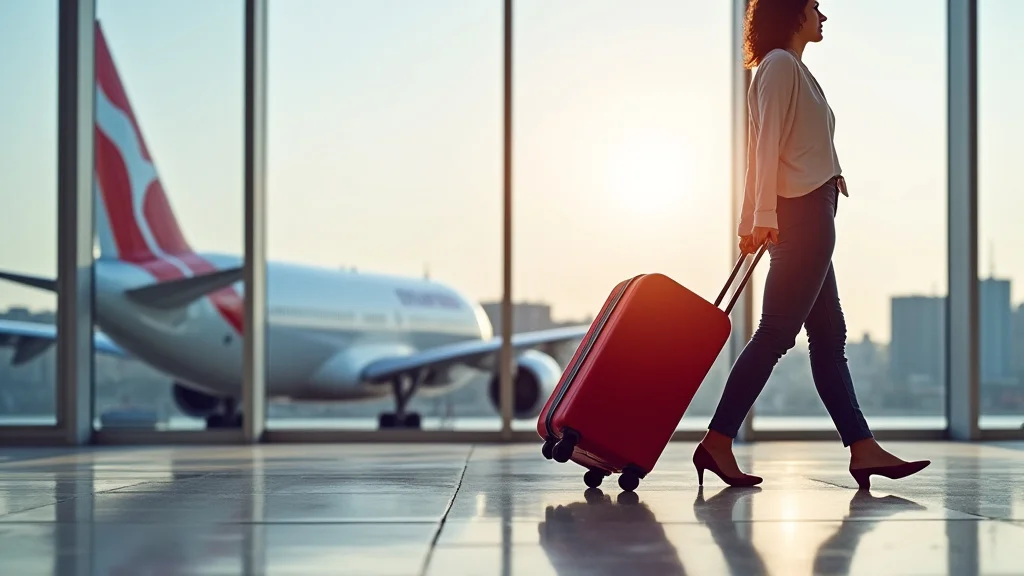
Picture this: You’re at the airport, excited for your trip, only to be stopped by the dreaded luggage check. The airline agent informs you that your bag is overweight, and you’re faced with hefty fees or the decision to leave something behind. Avoid this stressful situation by getting the lowdown on qantas luggage size limits. This post will give you the inside scoop on baggage allowances, helping you pack smarter and ensuring a smoother travel experience. You’ll gain a clear picture of what’s allowed, ensuring you’re prepared before you even leave your home. Get ready to simplify your travel preparations and say goodbye to airport surprises! The information will help you save money and make your travels less stressful.
Key Takeaways
- Learn the specific qantas luggage size limits for carry-on and checked baggage.
- Discover how baggage allowances vary based on your ticket class and destination.
- Get tips on how to measure and prepare your luggage to meet Qantas’s requirements.
- Understand the fees associated with exceeding baggage limits.
- Find out about special considerations for sporting equipment and other special items.
- Gain advice to make sure your travel is easy and worry-free.
Understanding Qantas Baggage Allowances
Traveling with Qantas involves knowing their baggage policies. These policies, especially concerning qantas luggage size limits, dictate how much you can bring onboard or check in. These allowances aren’t arbitrary; they’re designed to ensure passenger safety, aircraft efficiency, and to provide fair space for everyone. They cover aspects such as maximum weight, size restrictions, and how many bags you can take. Understanding these rules is essential to make sure your trip goes smoothly from the moment you arrive at the airport.
Carry-on Baggage: What You Can Bring Onboard
Carry-on baggage limits are designed to fit into overhead compartments or under seats and are a key aspect of qantas luggage size limits. These restrictions are strict because space is limited. The goal is to allow all passengers to have a fair share of space and to facilitate safe boarding and disembarking. Generally, Qantas allows passengers to bring one or two pieces of carry-on luggage, depending on the travel class. Careful attention to these rules is important to avoid delays at security and boarding.
- Size and Weight Restrictions: Each piece of carry-on luggage has specific size and weight limits. Usually, the dimensions (length + width + height) must fall within a set limit, often around 115cm total. Weight restrictions vary, but frequently, the limit is around 7kg for each piece. Check your ticket or the Qantas website for exact measurements specific to your flight.
- Number of Bags Permitted: Usually, the number of carry-on bags depends on your ticket class. Economy class might allow one standard piece, whereas business or first class passengers may be permitted two. A personal item like a handbag or laptop bag may also be permitted.
- Items Allowed: Apart from your carry-on luggage, you can typically bring a personal item such as a laptop bag, a small handbag, or a duty-free purchase. The rules are designed to ensure comfort and practicality for the flight.
- Liquid Restrictions: Liquids, aerosols, and gels in your carry-on luggage must be in containers of 100ml or less. These containers must fit into a transparent, resealable plastic bag, with a total capacity of no more than one liter. This is a crucial safety regulation.
- Consequences of Exceeding Limits: If your carry-on luggage exceeds the size or weight limits, you’ll likely have to check it as hold luggage. This will usually involve a fee, and also means you might have to check it at the gate.
Checked Baggage: What Goes in the Hold
Checked baggage is placed in the aircraft’s cargo hold and is subject to different rules than carry-on items. When checking baggage, qantas luggage size limits dictate the permitted size, weight, and the number of bags you can take. These allowances are determined by your ticket class, the destination, and your Qantas Frequent Flyer status. Understanding these guidelines can help you pack without any stress, and avoid extra charges.
- Weight Allowance Based on Ticket Class: The weight allowance varies based on your ticket type. Economy class typically has a weight allowance per piece of luggage. Business and First class usually have a higher allowance, potentially allowing for heavier bags or more pieces of luggage.
- Size Restrictions for Checked Bags: There are size limits for checked luggage, usually expressed as the sum of length, width, and height. It’s important to stay within these size limits to avoid any excess baggage charges. Qantas provides specific measurements on their website.
- Number of Bags Allowed: The number of bags you’re allowed to check depends on your class of travel and your Qantas Frequent Flyer status. Some tickets might allow for one bag, whereas premium classes often offer multiple bags.
- Excess Baggage Fees: If your luggage exceeds the weight or size limits, or if you bring more bags than allowed, you’ll be charged excess baggage fees. These fees depend on your route and the extent of the excess.
- Restricted Items: Certain items are prohibited in checked baggage for safety reasons. These include flammable materials, lithium batteries (in some cases), and other dangerous goods. These restrictions are in place to ensure passenger and crew safety.
Specific Baggage Allowances Based on Ticket Class and Route
Baggage allowances with Qantas aren’t uniform. The amount of luggage you can bring depends on your ticket class and where you’re going. Understanding these differences can prevent surprises at the airport. You’ll find that Economy class, Business class, and First class all have different allowances. Also, if you’re traveling within Australia versus flying internationally, the rules may be different. For the best information, check your ticket and the Qantas website before you pack, paying special attention to qantas luggage size limits.
Economy Class Baggage
If you’re flying Economy class, your baggage allowance with Qantas is generally more restrictive than other classes. These limits are designed to provide fair space for everyone. It’s especially important to be aware of the qantas luggage size limits for Economy class because excess baggage fees can be costly. Knowing the specifics about your allowances will give you a clear advantage.
- Weight Limits: Economy class typically has a weight limit per checked bag. This could be, for example, 23kg. Always check your ticket or the Qantas website to confirm the exact weight limit for your particular flight, as it varies.
- Size Restrictions: The total size of your checked bag (length + width + height) must not exceed a certain amount, for instance, 158cm. Measuring your bag before you arrive at the airport is a good idea to avoid issues.
- Number of Bags: Usually, Economy class tickets allow for one checked bag. However, this depends on your fare and destination. Check your ticket for clarity.
- Excess Baggage Costs: If your luggage is over the weight or size limits, or if you exceed the number of allowed bags, you’ll have to pay extra fees. These fees can differ, depending on your route and the amount of excess baggage.
- Example Scenario: Imagine you are traveling from Sydney to London on an Economy ticket. Your allowance might be one bag with a maximum weight of 23kg and total dimensions of 158cm. If your bag weighs 25kg, you’ll be subject to excess baggage fees.
Business and First Class Baggage
Business and First class passengers enjoy more generous baggage allowances, a key benefit of premium travel. These travelers are permitted larger and more numerous bags. The rules are designed to enhance the comfort and convenience of the trip, reflecting a premium travel experience. Knowing the qantas luggage size limits for these classes is important for a smooth travel experience.
- Weight Limits: Passengers in Business or First class often have higher weight allowances per checked bag. For example, Business class might allow for 30kg per bag, and First class may offer even more.
- Size Restrictions: While size limits still apply, they’re generally the same as Economy. Make sure to check the specific limits for the size of your bag, as exceeding them can result in additional costs.
- Number of Bags: Premium class travelers frequently have more bags included. Business class might allow two or even three bags, while First class could permit even more, depending on your ticket.
- Excess Baggage Policies: Even with larger allowances, there are limits. Exceeding your weight, size, or bag limits results in excess baggage charges. The cost will vary depending on the amount you exceed your limits and your destination.
- Example Scenario: If you are flying First Class from Los Angeles to Melbourne, your ticket may allow three bags, each weighing up to 32kg. Each bag must be within the specified size restrictions.
International vs. Domestic Baggage
The qantas luggage size limits often vary depending on whether you’re traveling within Australia or flying internationally. International flights often have different allowances than domestic flights. Differences can be seen in weight, size, and the number of bags allowed. Checking the specific allowances for your route is important to make sure you are prepared.
- Weight and Size Differences: International flights often have more generous baggage allowances than domestic flights. For international travel, the weight allowance per bag may be higher, and there may be different size restrictions. Domestic flights may be more restrictive. Always check your specific flight details.
- Number of Bags: International flights might allow more checked bags than domestic flights, particularly for premium classes. The number of allowed bags also depends on the type of ticket you have and the route.
- Route-Specific Variations: Certain routes have specific baggage rules. For example, travel to or from certain regions might have different restrictions due to local regulations or partnerships with other airlines.
- Code-Share Flights: If your flight is operated by Qantas but is a code-share flight (operated by another airline), the baggage rules of the operating airline may apply. Always check the rules of the operating airline.
- Example Scenario: A domestic flight from Melbourne to Perth may have a lower weight allowance for checked baggage than an international flight from Melbourne to Dubai. Check your itinerary to determine the specific limits.
How to Measure and Prepare Your Luggage
Preparing your luggage to meet qantas luggage size limits is a proactive step that can save you time and money. Measuring your bags accurately and packing smartly can help you avoid excess baggage fees and travel stress. Taking the time to do this before your flight can ensure a more seamless experience at the airport. Here are some key steps and tips for a successful packing experience.
Accurate Measurement Techniques
Knowing how to measure your bags correctly is important. This is especially true when adhering to qantas luggage size limits. Accurate measurements can help you avoid surprises at the check-in counter and save you money on additional charges. Always measure your luggage before you head to the airport to avoid any last-minute issues.
- Tools Required: You’ll need a measuring tape, a scale, and possibly a luggage scale if you don’t have a built-in scale. Digital luggage scales are useful for home weighing.
- Measuring Length, Width, and Height: Measure the length, width, and height of your bag. Measure the longest points of the bag for each dimension. Ensure you include all parts of the bag, including wheels and handles, when you measure.
- Weighing Your Luggage: Use a digital scale to weigh your bag to determine its weight. Place the luggage scale on a flat surface, or use a bathroom scale.
- Double-Checking Measurements: Verify your measurements. Double-check all measurements before you leave for the airport to confirm they align with the qantas luggage size limits outlined for your flight.
- Consider Bag Expansion: If your suitcase has an expansion feature, measure it both expanded and unexpanded. This is especially useful if you are right up against the size limit.
Smart Packing Strategies
Packing efficiently can help you stay within the qantas luggage size limits. By making the most of the space available and distributing weight effectively, you can pack more efficiently. Effective packing also helps to prevent damage to your belongings. These strategies help to keep your luggage within the permitted size and weight limits.
- Utilizing Packing Cubes: Packing cubes can help you organize and compress your belongings, optimizing space. Use them to organize your clothes, accessories, and other items.
- Rolling Your Clothes: Rolling clothes rather than folding them can save space and reduce wrinkles. This is an efficient way to make the most of the available space inside your suitcase.
- Wearing Your Heaviest Items: If you’re close to the weight limit, wear your bulkiest shoes and heaviest clothing on the plane. This can help minimize the weight of your checked bag.
- Distributing Weight Strategically: Distribute heavier items near the wheels of your suitcase to make it easier to handle. Ensure that your suitcase is well-balanced to prevent it from tipping.
- Using the Space Inside Shoes and Other Items: Utilize the inside of your shoes, hats, and other items to store smaller things such as socks and accessories.
Understanding Excess Baggage Fees
Exceeding the qantas luggage size limits can lead to extra charges. These charges vary based on the extent of the excess baggage and your destination. Knowing the fee structure in advance is important. Having a solid grasp of these fees enables you to make informed decisions about your luggage and budget, potentially saving you a significant amount.
Fee Structure and Calculations
The cost of excess baggage depends on the weight, size, and the number of bags exceeding the limit. These fees are designed to cover the additional handling costs and space limitations on the aircraft. Understanding the structure will help you calculate and prepare for these costs if necessary.
- Weight-Based Fees: If your bag exceeds the weight limit, you’ll be charged a fee per kilogram or pound. The fee varies depending on your route and ticket class. The charge increases with the amount of extra weight.
- Size-Based Fees: If your bag’s dimensions exceed the size limits, there’s also a fee. This is usually charged per piece of oversized luggage. The exact fees depend on the specific size violations and your destination.
- Additional Bag Fees: If you are checking more bags than your ticket permits, you’ll be charged per extra bag. The cost for these additional bags is determined by your travel class and route.
- Route-Specific Costs: The cost of excess baggage fees will differ based on the route. International flights generally have different fee structures than domestic flights. The pricing changes according to the destination and route.
- Example: Suppose you are traveling from Sydney to Los Angeles in Economy Class. You have one bag that exceeds the 23kg weight limit by 5kg. The fee per extra kilogram might be $20 AUD, meaning you’ll pay an additional $100.
Payment Options and Avoiding Fees
Qantas offers different options for paying excess baggage fees. You can pre-pay your fees online before your flight or pay at the airport check-in counter. Knowing these options can assist you in finding the best method for you, and avoiding fees entirely. Here are some methods to make your trip more economical.
- Pre-paying Online: Qantas often offers the option to pre-pay for excess baggage online. Doing so can be more economical than paying at the airport. Check the Qantas website to see if pre-payment is an option.
- Paying at the Airport: You can pay excess baggage fees at the check-in counter at the airport. Payment can typically be made with credit or debit cards, but cash might not be accepted.
- Avoiding Fees Altogether: The best way to reduce costs is to avoid them altogether. Pack efficiently, distribute weight evenly, and make sure that you are compliant with the qantas luggage size limits.
- Consider Upgrading Your Class: If your baggage exceeds your allowance, upgrading to a higher class might be more cost-effective. Check the price difference between your ticket and an upgrade to see if it is a better value.
- Shipping Items Separately: Consider shipping heavier or bulkier items separately. Shipping them directly to your destination might be a cost-effective alternative to paying excess baggage fees.
Special Considerations for Sporting Equipment and Other Items
When traveling with sporting equipment or other special items, you’ll need to consider specific Qantas policies. These guidelines cover how you can transport these items. They take into account size, weight, and handling requirements. Proper preparation is essential to avoid problems at the airport. Check the qantas luggage size limits for your unique items before you leave.
Sporting Equipment Guidelines
Qantas handles sporting equipment with specific guidelines, which are important to understand. These guidelines make sure your gear arrives safely and in compliance with the rules. The policies consider the unique size and nature of the equipment and ensure passenger safety. Carefully checking the guidelines for your specific sport can save you time and money.
- Types of Equipment: Qantas covers various types of sports gear, like golf clubs, surfboards, bikes, skis, and snowboards. Each type might have unique restrictions. Always confirm the specific policies on the Qantas website.
- Size and Weight Restrictions: Most sporting equipment has size and weight restrictions. Always check the Qantas website for up-to-date information on equipment dimensions and weight limits.
- Packaging Requirements: You’ll usually need to package your sports equipment appropriately to prevent damage. Surfboards should be in a protective bag, and bikes should be partially disassembled and packed in a bike box.
- Fees: Fees for transporting sporting equipment often apply. These fees differ depending on the item and your route. Pre-booking or paying online might be an option.
- Example: If you are bringing a surfboard, it will need to be within the specified length and weight limits. It must be packed in a surfboard bag to protect it from damage during transit. Additional fees will likely apply.
Other Special Items and Considerations
Certain items require specific attention. These items can include musical instruments, mobility aids, or fragile goods. Knowing these guidelines is important for a smooth travel experience. Proper planning prevents any possible issues, from size limitations to handling procedures, and helps to guarantee the safe transit of your belongings. Keeping to the rules for the qantas luggage size limits will help.
- Musical Instruments: Musical instruments are allowed, but size and weight limitations apply. If the instrument is small enough, you can take it as carry-on luggage. Otherwise, it must be checked.
- Mobility Aids: Mobility aids, such as wheelchairs and walking frames, are generally carried free of charge. You must inform Qantas in advance. Specific procedures may apply for loading and unloading the aids.
- Fragile Items: Fragile items, like artwork or electronics, should be carefully packed to prevent damage. You might need to declare them and take extra precautions, like adding extra padding.
- Medical Equipment: Medical equipment necessary for your health is usually permitted. Documentation may be required to confirm your need for these items. Ensure you pack this documentation.
- Contacting Qantas: If you have special items, contact Qantas customer service before your flight to confirm the specific requirements. Doing so will help make the travel experience easier.
Common Myths Debunked
Frequently Asked Questions
Question: Can I combine the weight allowance of two bags?
Answer: No, the weight allowance is usually per bag, not combined. Each bag must adhere to the individual weight limits specified by Qantas.
Question: Are there any items I cannot pack in checked luggage?
Answer: Yes, dangerous goods such as flammable materials, explosives, and lithium batteries are not allowed in checked luggage. Always review the Qantas prohibited items list before packing.
Question: How can I find the most current baggage allowance for my flight?
Answer: The most current information is always available on the Qantas website, your booking confirmation, or through the Qantas app. Check these resources prior to your flight.
Question: What happens if my bag is too large for the overhead compartment?
Answer: If your carry-on bag is too large, it will need to be checked, and you may be charged a fee. Always check size guidelines to avoid any issues.
Question: Can I purchase extra baggage allowance at the airport?
Answer: Yes, you can usually purchase extra baggage allowance at the airport check-in counter. However, it’s usually more expensive than pre-purchasing online.
Final Thoughts
Mastering qantas luggage size limits can dramatically improve your travel experience, making it much more enjoyable and less stressful. From carry-on specifics to checked baggage allowances, understanding the rules, and knowing the nuances of your ticket class is essential. This information will help you avoid unexpected fees and ensure that you’re well prepared for your trip. By measuring your bags accurately, packing efficiently, and taking into account special considerations for items like sports equipment, you’ll be able to travel with confidence. Always double-check the latest Qantas guidelines before you fly. This proactive step helps you pack with ease, stay within the rules, and experience a journey free from baggage-related anxieties. Pack smart, travel safe, and enjoy your travels!


Leave a Reply