
Last updated: November 03, 2026
Quick Answer: a two-wheel suitcase is usually the safer pick for rough ground, while a spinner suitcase is easier in airports with smooth flooring and narrow aisles. This Spinner vs Two-Wheel Suitcase comparison comes down to where the bag actually rolls — airport flooring, curb cuts, hotel carpet, broken sidewalks, and cobblestones matter more than brand slogans.
Key Takeaways
- Spinner: better steering; two-wheel: better rough-surface control.
- Spinner works best on smooth indoor floors and with minimal effort.
- Two-wheel wins when the route is rough, uneven, or messy.
- The trade-off is easiest to see in a side-by-side comparison.
I write about travel gear and mobility with an eye on how bags behave on real surfaces, not just in product photos. If you want the broader buying context, the luggage buying basics hub is the right next stop after this comparison. For related guidance, see the carry-on suitcase guide and checked luggage guide.
The real difference between spinner wheels and two-wheel suitcase designs
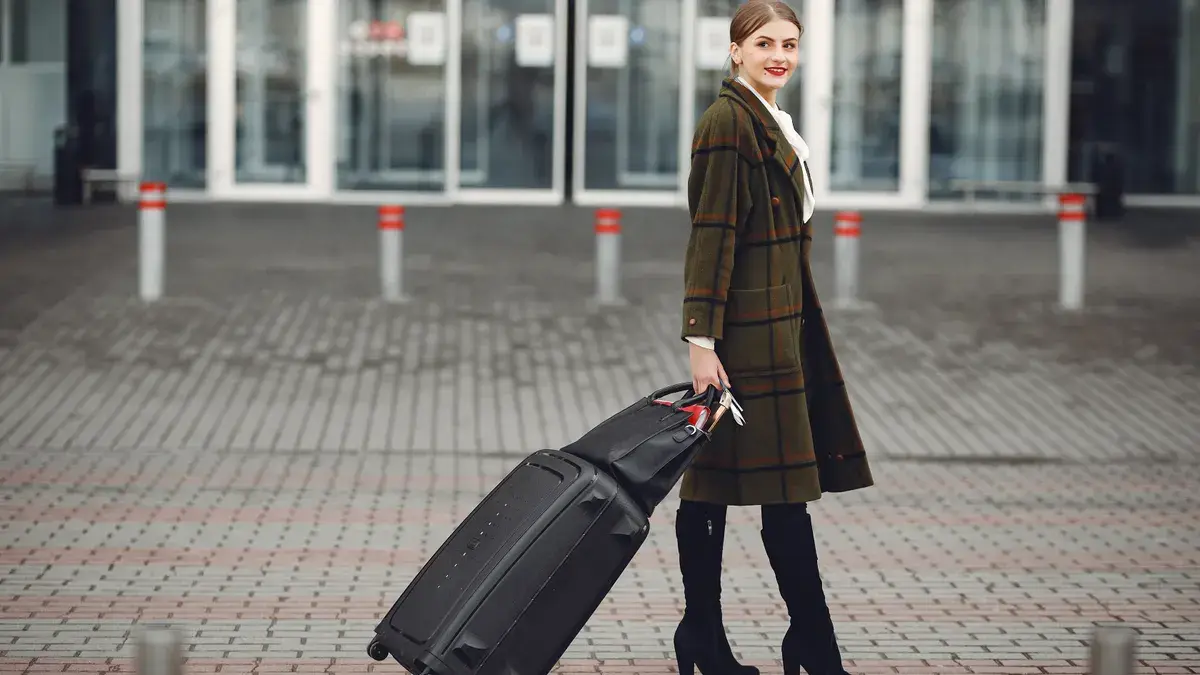
A spinner wins on steering; a two-wheel suitcase wins on durability and rough-surface control. That is the whole decision in one line.
A spinner suitcase uses four small wheels that rotate in multiple directions, so the bag can stand upright and glide beside you. That makes it easy to move through airport flooring, tight check-in lines, hotel lobbies, and aircraft aisles. The trade-off is that those wheels are exposed and often smaller, which means more rolling resistance on uneven ground and more stress when one wheel catches on a crack or curb edge.
A two-wheel suitcase, also called an upright luggage design, rides on two larger wheels and tilts back at an angle. The wheels usually sit partly inside the bag’s frame, which gives them better protection and a more planted feel over curb cuts, rough pavement, and cobblestones. The cost is simple: you carry the bag’s weight at an angle, so your wrist, shoulder, and forearm do more work.
That difference matters most at transition points. A spinner is easiest when the floor is flat and predictable. A two-wheel suitcase is easier when the surface changes suddenly, such as stepping off a sidewalk, crossing a driveway lip, or rolling over worn hotel thresholds.
Spinner suitcase: who should actually use it, and who shouldn’t
A spinner suitcase is the better choice for travelers who spend most of their time on smooth indoor surfaces and want the bag to move with minimal effort.
The strength of a spinner is maneuverability. In a terminal with smooth airport flooring, four wheels let you push the bag upright at your side instead of dragging it behind you. That helps when you need to turn fast, squeeze through security lines, or handle around a crowd without swinging the bag’s tail. On short trips, that convenience is hard to beat.
It also suits travelers who dislike the “pull” feel of a two-wheel case. A spinner puts less rotational strain on the arm than a bag that hangs back from two fixed wheels. If a traveler has limited upper-body strength or just wants the least awkward motion in a hotel lobby, the spinner shape usually feels easier.
The weakness is what happens away from smooth floors. A spinner’s four small wheels can catch on gaps, grit, and tilted pavement. On curb cuts, the leading wheels may hit at different angles, which can make the bag wobble or briefly stall. On cobblestones, the bag can feel busy and noisy, and a fully upright spinner can be harder to control if the surface is rough enough that all four wheels are fighting for traction. Many spinner suitcases also sacrifice some interior space to wheel housings or use more exposed wheel assemblies than a two-wheel upright.
That makes a spinner the wrong pick for someone who regularly walks long stretches outdoors with a bag in tow. It is also a poor match for travelers who expect broken sidewalks, sloped train platforms, or lots of curb hopping between taxi stands and hotels.
Two-wheel suitcase: the specific situations where it wins
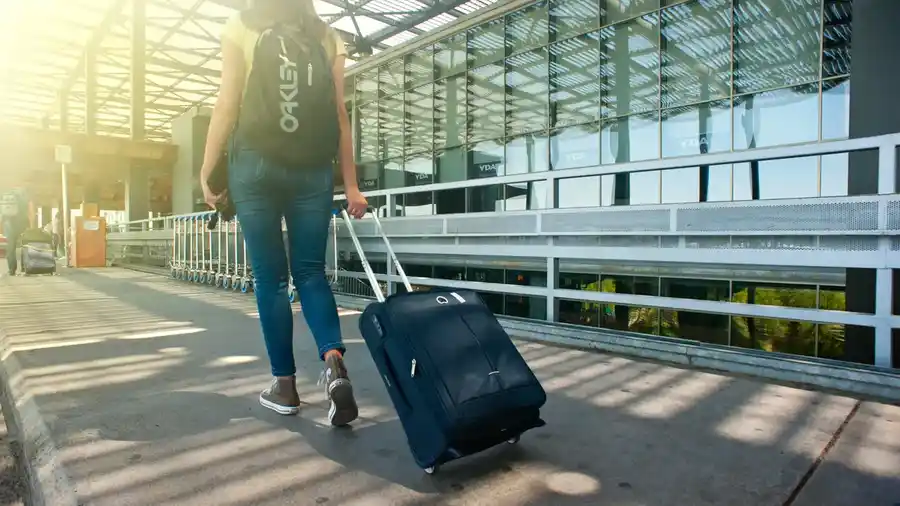
A two-wheel suitcase wins when the route is messy, not pretty.
The case for two wheels is practical. Larger fixed wheels usually roll more confidently over rough surfaces because the bag is meant to be tilted and pulled, not balanced upright on four tiny casters. That tilt lets the wheels take the load in a straighter line. On cobblestones, cracked sidewalks, and uneven curb cuts, that stability matters more than quick turning.
The protected wheel placement is another advantage. On many two-wheel suitcases, the wheels are recessed into the frame or body, which can reduce how often they get knocked by stairs, truck beds, and baggage carts. That does not make them indestructible, but it does mean the wheel assembly is less exposed than the typical spinner setup. For travelers who check bags often, that is not a trivial detail.
A two-wheel suitcase also handles “pull behind me” travel better when the bag is heavy. The fixed orientation gives the bag a straighter track, which helps on longer walks from station exits to hotels. If the trip includes old streets, rough sidewalks, or frequent transitions between pavement and indoor floors, two wheels are the calmer choice.
The drawback is obvious: a two-wheel suitcase is less nimble in tight spaces. It cannot pivot like a spinner, and it is more annoying to move beside you in a crowded queue. It can also put more load through your arm because the bag is always tilted. If you are weaving through an airport with a backpack and a rolling case, that pull angle gets old fast.
I would not recommend a two-wheel suitcase for a traveler who moves mostly in airports and malls and almost never walks outside with luggage. In that case, you are choosing extra effort for no real gain.
The honest side-by-side
A simple comparison makes the trade-off easier to see.
| Criteria | Spinner suitcase | Two-wheel suitcase | Winner for this condition |
|---|---|---|---|
| Maneuverability in tight spaces | Turns easily and glides beside you | Tracks in one direction and needs more steering room | Spinner, for crowded airports |
| Rough surfaces | More likely to snag or wobble | Usually steadier on broken pavement | Two-wheel, for cobblestones |
| Curb cuts | Can tip or hesitate at the edge | Better planted when tilted back | Two-wheel, for curb-heavy routes |
| Airport flooring | Smooth and effortless on flat indoor floors | Works well, but feels less agile | Spinner, for terminals |
| Wheel protection | Wheels are often more exposed | Wheels are often recessed or shielded | Two-wheel, for rough handling |
| Arm effort | Low effort when upright | More pull and wrist load | Spinner, for long indoor walks |
| Noise and vibration | Can chatter on uneven ground | Usually quieter on rough ground | Two-wheel, for sidewalks |
| Best posture | Upright pushing | Tilted pulling | Spinner, for lightweight loads |
| Worst terrain | Grates, cracks, cobblestones | Tight turns and narrow aisles | Spinner loses on rough ground; two-wheel loses in tight spaces |
The table does not make the choice complicated. It narrows it. If your trip is mostly smooth terminal-to-taxi-to-hotel travel, spinner wheels make life easier. If your route includes rough sidewalks, curb cuts, and old streets, the two-wheel suitcase is the better tool.
Spinner wheels: what they do well, and where they fall short
Spinner wheels work best when the surface is predictable and the distance is short enough that convenience matters more than control.
A good spinner setup lets the bag stand upright and move in any direction. That means less shoulder twisting and less need to drag the case behind you at a fixed angle. In airports, that is a real advantage because the floor is usually designed for wheeled traffic. Wide concourses, polished tile, and level check-in areas play to a spinner’s strengths.
The weakness shows up when the wheel has to roll over a defect rather than a clean floor. Because spinner wheels are usually smaller and more exposed, the bag can falter on cracks, thresholds, or changes in surface height. A curb cut sounds minor until the wheel hits it at the wrong angle and the case jerks sideways. The more uneven the route, the more you feel that limitation.
That is why spinner wheels are best for travelers who prize control through crowds and indoor convenience, not for those who need a travel bag to behave like a cart over broken ground. If the plan includes a lot of pavement, the spinner advantage shrinks quickly.
When to choose a two-wheel suitcase instead
Choose a two-wheel suitcase when the trip includes more outdoor rolling than you would like to think about.
This is the better design for travelers moving between stations, taxis, sidewalks, and older hotel entrances. It also makes sense if the bag will be dragged over rougher ground more than a few times per trip. The wheel placement and tilt angle help the suitcase keep moving when a spinner would start to chatter, stall, or wobble.
That does not mean the two-wheel suitcase is a universal upgrade. It is less convenient in crowded interiors and less nimble when the bag needs to swing around a corner. Still, for a route that includes cobblestones, cracked sidewalks, or frequent curb cuts, that trade is worth it. The movement is steadier, and the wheels are usually better protected from direct hits.
One useful way to think about it is this: if the route looks like a lobby, a spinner is probably fine. If the route looks like a city block, the two-wheel suitcase is usually the safer bet.
When to reconsider the wheel choice entirely
Sometimes the wheel style is not the main problem. The trip is.
If the route includes stairs with no elevator, neither wheel setup solves the real issue. A wheeled bag still has to be lifted. If the journey involves very uneven ground for long stretches — such as gravel paths, narrow stairwells, or old streets with broken stone — even a two-wheel suitcase can become annoying. In that case, a duffel with a shoulder strap or a backpack-style travel bag may make more sense than either wheel format.
If you pack heavy and have wrist or shoulder issues, the push-versus-pull question matters more than wheel count. Spinner suitcases reduce pulling strain on flat floors, but a loaded spinner can still become awkward if its wheels stick or if the bag leans off-center. A two-wheel suitcase can feel more stable, yet the tilted pull position can be tiring over time.
For travelers who mostly move on airport flooring and polished hotel surfaces, the spinner usually makes sense. For travelers who cross rough sidewalks and curb cuts every day, the two-wheel suitcase is the safer tool. For other travelers, the best choice may be a different kind of luggage entirely.
The verdict: which one to choose and why
Choose a spinner suitcase if your travel is mostly airport terminals, hotel lobbies, and other smooth indoor surfaces. Choose a two-wheel suitcase if you expect rough sidewalks, cobblestones, curb cuts, or frequent outdoor rolling. Neither if your trip includes lots of stairs, gravel, or long uneven walks, because both wheel styles will frustrate you there.
That is the cleanest call. Spinner wheels are about convenience and easy steering. Two-wheel luggage is about control and resilience on bad ground. Pick the design that matches the surface you will actually face, not the one that looks better in a catalog. For more context, the TSA travel tips page and FAA traveler guidance are useful references.
Are spinner suitcases better than two-wheel suitcases?
Spinner suitcases are better for smooth floors and tight spaces. That means airport flooring, hotel corridors, and quick turns in crowded terminals. Two-wheel suitcases are better when the ground is rough or broken, because their larger, fixed wheels usually track more steadily over curb cuts and cobblestones.
Which suitcase rolls better on rough ground?
A two-wheel suitcase usually rolls better on rough ground. Its larger wheels and tilted pull position help it stay planted when the surface is uneven. Spinner wheels can work, but they are more likely to chatter, snag, or wobble on cracks, threshold lips, and old pavement.
Do spinner wheels break more easily?
Spinner wheels can be more exposed to damage, but “break more easily” depends on the bag’s build and how it is handled. The vulnerable point is the wheel assembly itself, especially when the bag is dragged over curbs or rough sidewalks. A two-wheel suitcase often shields its wheels better, which can help in hard use.
Drafted with AI; not yet reviewed by a person.



Leave a Reply