
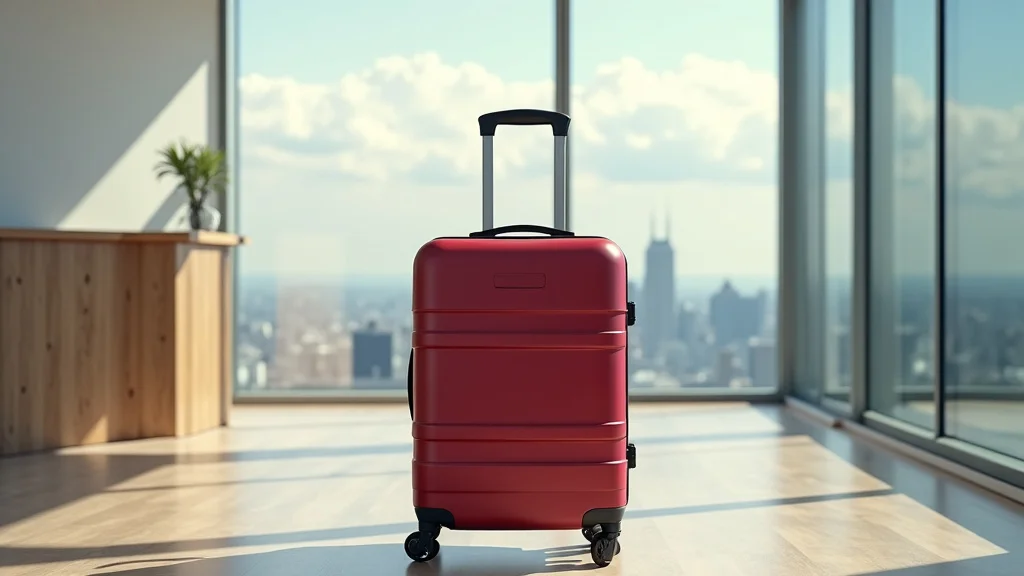
Picture this: you’re at the airport, excited for your vacation, only to have your carefully packed bag deemed oversized. Stressful, right? Avoiding this scenario is easier than you think. This guide explores the details of luggage 158cm size, ensuring your travels are smooth and hassle-free. We’ll cover everything from what it means, to which bags meet the requirements, and how to avoid those extra fees. By the end, you’ll be well-prepared to choose the perfect suitcase, making your travel experience a breeze and saving money. This post will improve your knowledge of luggage 158cm size and its implications, helping you select the right bag and avoid costly surprises.
Key Takeaways
- The 158cm size refers to the sum of a suitcase’s dimensions (length + width + height).
- Knowing this measurement helps you comply with airline baggage regulations and avoid charges.
- Various types of luggage are available within the 158cm limit, from carry-on to checked bags.
- Factors like weight limits also play a role in airline compliance.
- This guide helps you choose the right luggage for your trips.
- You’ll learn how to measure your bag and understand airline policies.
Understanding the Luggage 158cm Size Limit
The 158cm (62 inches) limit is a standard measurement used by most airlines for checked baggage. It represents the total combined dimensions of your suitcase: length + width + height. This standard ensures consistency and allows airlines to manage space efficiently in their cargo holds. Different airlines might have slightly different policies concerning weight limitations, so it is a good idea to check with your airline. It is very important to avoid exceeding this size restriction to prevent extra charges.
Breaking Down the Dimensions
To fully grasp the luggage 158cm size, it’s essential to understand how each dimension contributes to the overall measurement. The length is the longest side of your suitcase, usually the side where the handle is located. The width is the measurement from side to side, and the height is measured from the base of the bag to the top. To determine your bag’s total dimension, you measure each of these, then add them together. For example, a bag measuring 70cm in length, 40cm in width, and 48cm in height would have a total dimension of 158cm. This will ensure your bag complies with most airline regulations.
- Length: This is the longest side of the suitcase, often where the handle is.
- Width: The measurement from one side to the other, across the suitcase’s body.
- Height: The measurement from the bottom of the suitcase to the top, including wheels and handles.
- Calculating Total: Add the length, width, and height together to find the total dimension.
- Airline Compliance: Ensure your bag’s total dimension doesn’t exceed the airline’s limit (usually 158cm/62 inches).
Consider this real-life scenario: A family is going on a trip. They have several suitcases that are checked. They want to ensure their bags comply with airline rules to avoid extra charges. They measure each bag, noting the length, width, and height. After calculating the total dimensions, the family finds that two of their bags exceed the 158cm limit. They have to rearrange items from the larger bags to smaller ones to reduce the overall size or pay extra fees at the airport. This demonstrates the importance of pre-trip measurement to ensure compliance.
Importance of the 158cm Rule
Adhering to the 158cm size rule is crucial for avoiding unexpected fees and ensuring a smooth travel experience. Airlines set these limits to optimize space in the cargo hold, which ultimately impacts the efficiency of operations. Bags that are too large often require special handling, taking up more space and potentially delaying the loading process. Moreover, the 158cm guideline helps maintain consistent rules. By knowing your bag is within the limits, you are able to bypass costly surprises at the check-in counter and avoid potential delays or the need for last-minute repackaging.
- Fee Avoidance: Staying within the limit prevents excess baggage fees.
- Space Optimization: Airlines use the size limit to optimize cargo hold space.
- Standardization: It creates a consistent rule across different airlines.
- Smooth Operations: Adhering to the size guidelines contributes to smooth loading processes.
- Peace of Mind: Knowing your bag meets the requirements reduces travel stress.
Choosing the Right Luggage within the 158cm Size Limit
Selecting the perfect suitcase that fits within the luggage 158cm size requires careful consideration of several factors. Think about the length of your trip, the type of items you plan to bring, and your preferred style of travel. For shorter trips, a smaller bag may suffice. For longer trips or if you require carrying larger items, a slightly bigger bag (while still within the limits) might be more practical. Consider the bag’s durability, material, and features, such as wheels and handles, to ensure it suits your travel needs. Choosing wisely can make a big difference.
Types of Luggage within the 158cm Limit
Several luggage options are available that fit within the 158cm dimension limit, each catering to different travel needs. Hard-shell suitcases are known for their durability and protection of belongings, ideal for carrying fragile items. Soft-sided luggage often offers a bit more flexibility and may be easier to squeeze into tight spaces, making them suitable for travel where space is a concern. Rolling duffel bags can provide a lot of storage space, making them a great option for trips where you need to carry a lot of items. Explore various types to meet the unique needs of your trip.
- Hard-shell Suitcases: Durable and protective, suitable for fragile items.
- Soft-sided Suitcases: More flexible and may offer more storage.
- Rolling Duffel Bags: Offer large storage capacity, useful for carrying larger items.
- Spinner Luggage: Easy to maneuver with multi-directional wheels.
- Upright Suitcases: Classic design with two wheels and a handle.
Consider this example: A frequent traveler knows that a hard-shell suitcase will protect their clothes and electronic gadgets. Another traveler chooses a rolling duffel bag for a camping trip because it will hold all the necessary gear. A family picks a set of upright suitcases for their vacation to match their needs. This demonstrates the options available within the 158cm range.
Key Features to Consider
When selecting luggage 158cm size, keep in mind several essential features that will influence the usability and convenience of your bag. Durability is important; look for bags made from sturdy materials like polycarbonate or ballistic nylon that can withstand the rigors of travel. Wheels are also very important, since spinner wheels provide smooth maneuverability, while two-wheel designs can offer stability on various terrains. Consider the handle system; telescoping handles should be sturdy and extend to a comfortable length. Pockets and compartments can also help in organizing your items.
- Durability: Choose bags made from strong materials like polycarbonate or ballistic nylon.
- Wheels: Consider spinner wheels for ease of movement or two-wheel designs for stability.
- Handle System: Ensure telescoping handles extend to a comfortable length.
- Pockets and Compartments: Look for internal and external pockets to help organize your belongings.
- Weight: Lighter bags are better to maximize the amount of items that you can pack.
Here’s a real-life instance: A business traveler who uses a hard-shell suitcase for protection of their laptop and important documents. The suitcase has a set of spinner wheels. This design makes it easy to move the bag through busy airports. This example demonstrates how features influence the travel experience.
Measuring and Checking Airline Policies for 158cm Luggage
Properly measuring your luggage and confirming airline policies are crucial steps in avoiding problems when you travel. Measuring your bag requires precision. You’ll need a measuring tape to find the length, width, and height. Remember to measure external dimensions, including wheels and handles. It’s smart to check your airline’s website or contact customer service to verify their exact rules regarding the 158cm measurement, as policies may change. Doing this research will help avoid any fees or unexpected issues.
How to Measure Your Luggage Accurately
Accurate measurement is the first step in confirming your bag fits the luggage 158cm size limit. Lay the suitcase flat and use a measuring tape to measure the length, width, and height. Measure from the outermost points. This includes wheels, handles, and any protruding elements. It’s better to be sure. Write down each measurement carefully. Once you have these, add them up to find the total dimension. Always double-check your measurements, because even small errors can matter. By doing this, you are prepared.
- Length: Measure from the longest point, usually where the handle is.
- Width: Measure across the widest part of the bag.
- Height: Measure from the base to the top, including wheels and handles.
- Total Calculation: Add length, width, and height together.
- Double-check: Review all measurements and the total to ensure accuracy.
An example is as follows: A traveler, before their flight, measures their suitcase. They record that their suitcase is 75 cm long, 40 cm wide, and 43 cm high. After adding the measurements, they determine that the total dimension is 158 cm. Since this complies with the airline rules, the traveler is confident that their bag will be allowed. This shows the value of accurate measurements.
Checking Airline Baggage Policies
It’s important to be updated about the specific baggage policies of your airline. Policies can differ between airlines and they also might change. Check the airline’s website, look at the baggage information section, or contact their customer service to get the most accurate and up-to-date details. Pay special attention to the rules about size limits, weight restrictions, and any charges for exceeding the limits. Some airlines have varying rules, so confirming the specific policies can prevent surprises at the airport. You might also find details about special items, such as musical instruments, and if they will be an extra charge.
- Visit Airline Website: Check the baggage information section for rules.
- Contact Customer Service: Ask for clarification on specific rules.
- Review Size and Weight Limits: Confirm the precise dimensions and weight allowances.
- Note Fee Structures: Understand any extra charges for exceeding limits.
- Check for Special Items: Review policies for oversized or special equipment.
Here is a real example: A family plans a trip. Before they pack, they check the airline’s website. They discover that the airline has a weight limit of 23kg per bag, in addition to the size restriction. The family weighs their luggage. They remove some items from the bags to ensure they meet the weight requirement. This scenario shows how it is important to understand the airline’s specific rules.
Beyond the 158cm Limit: Oversized Luggage and Fees
Going over the luggage 158cm size limit can trigger oversized baggage fees, which vary significantly among airlines. These fees can be substantial, often more than the standard baggage fees. The excess baggage charges are often determined by the extent to which your luggage exceeds the size limit. If your luggage is much larger than the acceptable size, it might not be permitted on the flight. This can cause you to send the bag via a separate cargo service or make changes to your luggage. Knowing this helps you make informed choices, either by reducing the size of your bag or preparing to pay the fees.
Understanding Oversized Baggage Fees
Oversized baggage fees are the penalties airlines impose on bags that exceed their specified dimension limits. These fees are usually added on top of the standard baggage fees and often depend on how far the bag exceeds the size restrictions. Charges may also vary depending on the destination, the time of year, and the specific airline’s policies. If your bag is very large, it may not be able to be transported on the flight. It’s smart to compare fees between airlines and assess your packing requirements to reduce unexpected charges.
- Extra Charges: Added on top of standard baggage fees.
- Fee Variability: Depends on the extent of size excess.
- Destination Impact: Fees may differ based on your destination.
- Airline Policies: Each airline has its own fee structure.
- Bag Rejection: Very oversized luggage may not be permitted.
Here’s a real example: A person arrives at the airport. Their bag exceeds the 158cm limit. They have to pay a significant fee. This unexpected charge cuts into their travel budget. Knowing the rules in advance could have avoided this fee. This shows the importance of size compliance.
Alternatives to Avoid Oversized Fees
There are steps you can take to avoid these extra fees, even if your luggage is slightly oversized. If your bag is only a little over the limit, it may be possible to repack items to reduce the overall dimensions. Consider buying a smaller bag that will fit within the rules. If you do need to travel with a larger bag, examine shipping the excess belongings by courier, as this may be less expensive than paying the oversized fees. It is always wise to compare all options to choose the best solution for your trip.
- Repack: Reorganize your belongings to reduce bag size.
- Purchase a Smaller Bag: Opt for luggage that fits within the limits.
- Shipping Services: Investigate shipping options for excess items.
- Consider Carry-on: Pack essentials in a carry-on bag to avoid checked baggage.
- Travel Light: Reduce the amount of luggage you carry.
Here is an example: A couple finds that one of their bags is a little bit over the size limit. To avoid extra fees, they remove some of the heavier items from the bag. They distribute them among their other bags. Or, they wear some of the bulkier clothing items during the flight. This shows the steps to stay within the size limits.
Common Myths Debunked
Myth 1: All Airlines Have the Same Size Limit.
The truth: While many airlines follow the 158cm (62 inches) standard for checked baggage, there are small differences between airlines. Some have stricter rules. Always verify the policies of the specific airline you are using before you travel. Confirming the details will avoid issues.
Myth 2: Soft-sided Bags Are Always Easier to Fit Within the Size Limit.
The truth: Soft-sided bags can sometimes be more flexible, but this depends on the bag’s design and how full it is. They can be easier to compress. However, if a hard-sided suitcase is designed well, it may still meet the criteria. Always check the bag’s measurements, no matter the type.
Myth 3: Paying Extra Fees Guarantees Your Bag Will Travel with You.
The truth: While paying for oversized baggage allows your bag to be checked, there’s no guarantee it will travel on the same flight. Space limitations in the cargo hold can still cause delays. It could also mean that your luggage is shipped on the next available flight. Always consider this possibility when deciding how much you bring with you.
Myth 4: If My Bag Is a Little Over, I Won’t Be Charged.
The truth: Airlines are very strict when it comes to the limits. They will charge fees even if your bag only goes over by a little. Always measure and confirm your bag size before you get to the airport. This will ensure you don’t face unexpected charges.
Myth 5: It’s Okay to Guess the Size of My Luggage.
The truth: Guessing the dimensions can cause problems. It’s smart to measure your bag and verify that it matches the airline requirements. This helps you avoid unexpected extra fees or the possibility of not being able to take your luggage on your flight.
Frequently Asked Questions
Question: What does 158cm mean exactly?
Answer: The 158cm measurement refers to the total of a suitcase’s dimensions: length + width + height. It is a guideline used by most airlines for checked baggage.
Question: Are carry-on bags also subject to the 158cm rule?
Answer: No, the 158cm rule generally applies to checked baggage. Carry-on bags have their own, smaller size restrictions, which vary by airline.
Question: Do airlines weigh luggage in addition to measuring it?
Answer: Yes, airlines usually have both size and weight limits for checked baggage. Both aspects affect whether your bag meets their requirements.
Question: What can I do if my bag is too big?
Answer: You can repack, ship the excess items separately, or purchase a smaller bag that meets the size requirements. You may have to pay a fee.
Question: How can I ensure my bag meets the 158cm limit?
Answer: Measure your bag accurately and then verify the specific size and weight restrictions of your airline. Check the airline’s website or contact them.
Final Thoughts
The luggage 158cm size limit is a key factor in smooth and cost-effective travel. By understanding the dimensions, measuring your bags accurately, and checking airline policies, you can avoid frustrating fees and ensure your luggage is accepted without problems. Remember that the limit refers to the sum of the length, width, and height. Several luggage types fit within the 158cm rule, with different features to consider. Always measure your bag before you go to the airport and stay updated on the specific airline’s regulations. Being aware of oversized baggage charges and alternative options will allow you to plan your trip effectively. With the right preparation, you can enjoy a travel experience, stress-free. So, measure your bags carefully and get ready for a trip!


Leave a Reply