
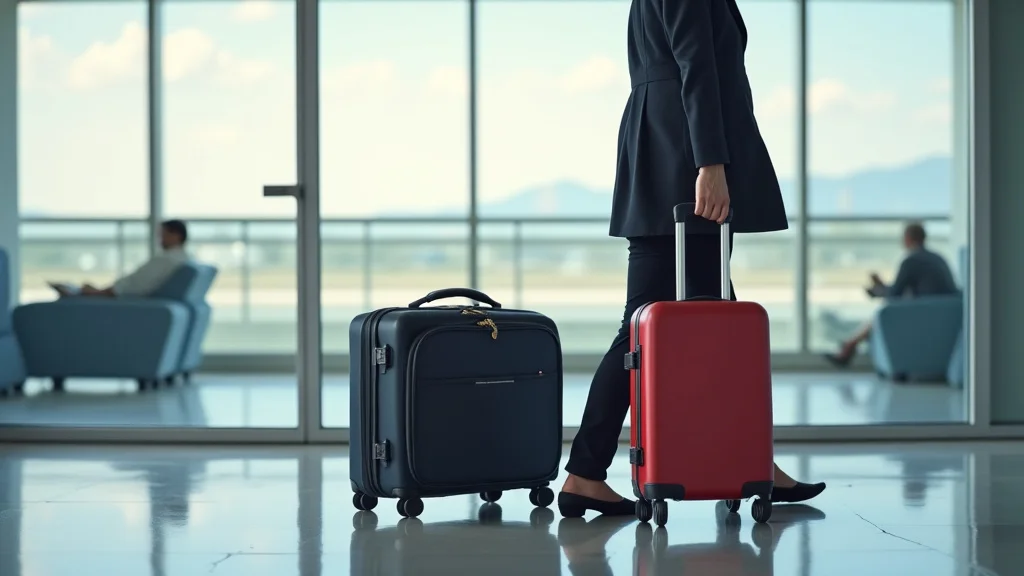
Picture this: you’re at the airport, excited for your trip, but suddenly you’re staring down a security officer who’s eyeing your bag. Panic sets in! You start wondering, what can you take in hand luggage on a plane? This guide will ease your travel anxieties, ensuring you know exactly what you can pack in your carry-on. We’ll explore the rules, regulations, and essential items, making sure you breeze through security. You’ll gain a solid grasp of what’s allowed, avoiding any last-minute surprises or delays. Knowing these specifics will also help you plan better and travel more confidently, ultimately saving you time and stress at the airport.
Key Takeaways
- Learn the basic rules of what is and isn’t permitted in hand luggage.
- Discover the specifics around liquids, aerosols, and gels.
- Understand the regulations for medications and medical devices.
- Find out how to handle electronic devices properly.
- Explore what food and snacks you can take on board.
- Get tips for a smooth security check experience.
Hand Luggage Essentials and Restrictions
Packing for a flight can be a balancing act. You want to bring your essentials, but security regulations can seem restrictive. It’s important to differentiate between what is permitted and what is prohibited. The key to a stress-free experience is knowing the rules. This includes understanding the restrictions on liquids, aerosols, and gels, which are often the most misunderstood category. Getting this right means you can avoid having your items confiscated or facing delays.
Liquids, Aerosols, and Gels: The 3-1-1 Rule
One of the most important rules to remember is the 3-1-1 rule. This rule applies to liquids, aerosols, and gels, and is standard across most international airports. This is because these items, if improperly handled, can pose a security risk. Understanding the specifics will save you a lot of hassle at the security checkpoint. It’s all about ensuring that everything you bring aboard is safe and doesn’t pose any potential risks to other passengers.
- Containers must be 3.4 ounces (100 milliliters) or less: All liquid containers must be small enough to hold this amount.
- All containers must fit in a single, clear, resealable bag: The bag needs to be one quart in size, which is approximately the size of a sandwich bag.
- One bag per passenger: Each person is allowed only one of these bags.
- Examples of allowed items: Include travel-sized toiletries like shampoo, conditioner, toothpaste, and small bottles of perfume or cologne.
- Exceptions to the rule: Baby formula and essential medications, such as insulin, are often exempt from this rule.
For example, if you’re bringing a bottle of shampoo, make sure it’s 3.4 ounces or less. If you need more, you might consider buying travel-sized containers or purchasing the products after you pass through security. This ensures you can still have your favorite toiletries with you on the plane.
Prohibited Items: What to Leave Behind
Certain items are strictly prohibited in hand luggage because they could potentially be used as weapons or pose a safety threat. These restrictions are in place to keep everyone safe during the flight. Knowing these restrictions is essential for a smooth experience through security. This can also save you the frustration of having your belongings confiscated and possibly incurring additional fees.
- Sharp objects: This includes knives (regardless of blade length), box cutters, scissors with blades longer than a certain length (usually around 6cm or 2.5 inches), and any other items that could be used to inflict harm.
- Firearms and ammunition: Absolutely no guns or bullets are allowed in hand luggage. These items must be declared and transported according to specific regulations for checked baggage.
- Explosives and flammable materials: This covers anything like fireworks, gasoline, and other substances that could ignite or explode.
- Sporting equipment: Certain items like baseball bats, golf clubs, and hockey sticks are often not allowed in hand luggage because they could be used as weapons.
- Other restricted items: Certain tools, such as hammers and screwdrivers, might also be prohibited, depending on their size and potential use.
Remember that the rules can vary slightly depending on the country and airline. When in doubt, it’s always best to err on the side of caution. If you are unsure about a specific item, check with your airline or airport security beforehand to confirm. This will help you to avoid problems at the security checkpoint and ensure a safe trip.
Medicines and Medical Devices
When it comes to medications and medical devices, regulations allow for certain allowances. This is to ensure that passengers can access essential medical supplies during their travel. This requires you to prepare carefully before you travel. You should also ensure you have any necessary documentation to avoid delays or issues at security.
Essential Medications: Rules and Recommendations
You can bring your necessary medications, but there are certain guidelines to follow. This is so that you can avoid any problems and ensure you are prepared. The following provides clarity regarding what you need to remember about packing your medicines and how to avoid having any problems at the airport.
- Prescription medications: Carry all prescription medications with you in your hand luggage.
- Supporting documentation: Bring your prescription or a letter from your doctor.
- Proper labeling: Ensure that your medications are clearly labeled with your name and the name of the medication.
- Amount of medication: Carry enough medication to cover the duration of your trip, plus a little extra, to account for any travel delays.
- Liquid medications: Liquid medications are often allowed in quantities larger than 3.4 ounces (100 ml), but you may need to declare them and have them screened separately.
For example, if you are traveling with insulin, you should ensure that you have your prescription and any required medical documentation. It is important to know that you must present your medication for screening if asked. Be prepared to show your prescription and your photo ID to speed up the process.
Medical Devices: Guidelines for Carry-On
Bringing medical devices on a plane also requires that you understand the rules. Security teams are trained to screen passengers’ medical devices carefully. Proper planning can help you to avoid problems. This will ensure that you have everything you need when you arrive. You will also be aware of any potential issues or concerns.
- Approved devices: Common medical devices, such as CPAP machines, nebulizers, and hearing aids, are typically allowed in your hand luggage.
- Declaration: Inform the security officer about any medical devices you are carrying.
- Documentation: Keep documentation (like a doctor’s note or a device manual) handy.
- Battery requirements: Always carry spare batteries for your medical devices in your hand luggage.
- Mobility aids: Mobility aids such as wheelchairs and crutches are usually allowed, but you should check with your airline regarding specific regulations.
If you have a CPAP machine, ensure you have the device and all accessories in a bag. Make sure you also bring a copy of your prescription. This will speed up your journey through security and ensure that you can have what you need.
Electronics and Gadgets
Modern travel often involves carrying various electronic devices. The rules are in place to ensure that these devices don’t pose a safety hazard. Knowing what you can bring in your hand luggage on a plane will help you to avoid any surprises. You can ensure that your devices are ready for use during your trip and that you don’t encounter any issues at the security checkpoint.
Allowed Electronics: What You Can Pack
A lot of electronic items are perfectly acceptable to carry on board. This includes items you need for entertainment or to stay connected. Here are some of the most common allowed electronics:
- Mobile phones: Absolutely permitted in your hand luggage, but must be powered off during takeoff and landing.
- Tablets and e-readers: These are welcome on board and can be used for entertainment and reading.
- Laptops: Laptops are allowed, but you may need to remove them from your bag and place them in a separate tray for screening.
- Cameras: Compact and DSLR cameras are allowed, so you can capture your travel memories.
- Headphones: All types of headphones, including over-ear and earbuds, are permitted.
Remember that you should always charge your electronic devices fully before you leave. This means that you can use them as soon as you need them. Also, depending on the regulations of your destination country, you might want to bring any necessary adapters.
Battery Safety: Rules for Power Banks and Lithium Batteries
Lithium-ion batteries are common in many electronic devices, but there are specific safety rules to follow when traveling. These are important for safety. If you don’t follow these guidelines, your equipment can be seized. Knowing these standards means that you will know how to safely pack all your electronic devices before you travel.
- Power banks: Power banks (portable chargers) are allowed, but there are restrictions on their capacity.
- Lithium batteries: Spare lithium batteries should be carried in your hand luggage, not in checked baggage.
- Battery capacity: Make sure your power banks and spare batteries meet the airline’s capacity limits (usually based on watt-hours).
- Short-circuit protection: Power banks should have short-circuit protection.
- Proper storage: Pack your spare batteries in a way that prevents them from short-circuiting (e.g., in a separate bag or with tape on the terminals).
For example, if your power bank has a capacity of more than 100 watt-hours (Wh) but less than 160 Wh, you need airline approval to bring it on board. Never pack your power banks in checked baggage, as this increases the risk of a fire if they become damaged or short-circuit.
Food and Snacks for Your Flight
Bringing food and snacks on a plane can be convenient, especially for longer flights. However, there are some specific rules and recommendations about what is and isn’t allowed. It is essential to ensure that you comply with these rules. This will ensure that you can bring along what you need without issue. This will also help to prevent any problems during the security screening or on board the flight.
Allowed Food Items: What to Pack
There are several food items that you are generally permitted to bring on board, as long as they meet the specific requirements. This offers you a selection of options for snacking while traveling. Knowing what’s allowed will allow you to pack appropriately and save yourself the cost of buying snacks at the airport.
- Solid foods: Solid foods like sandwiches, fruits, vegetables, and snacks such as chips, cookies, and granola bars are usually permitted.
- Baby food: Baby food and formula are often allowed, but you may need to declare them at the security checkpoint.
- Special dietary foods: Foods required for specific dietary needs (e.g., gluten-free, vegan) are generally allowed.
- Pre-packaged items: Pre-packaged snacks and foods are often easier to transport, and you may find these items are also more convenient.
For example, if you are bringing fruit, ensure that it is whole. Whole fruits are generally allowed, but you might want to slice it before you go through security. If you want to bring homemade sandwiches, ensure that they are packaged properly to prevent any leakage or messes.
Liquid and Gel Food Restrictions: What to Watch Out For
While you can bring most solid foods on board, there are restrictions on liquids and gels, which are part of the broader regulations on what can you take in hand luggage on a plane. This is because these items can present potential risks. Understanding these rules will ensure you can pack food and avoid potential issues.
- Liquids and gels: Anything in liquid or gel form must adhere to the 3-1-1 rule.
- Spreads and sauces: Jams, sauces, and dips that are in containers larger than 3.4 ounces (100 ml) are not allowed.
- Yogurt and puddings: These are often classified as gels and must comply with the 3-1-1 rule.
- Soups and stews: Soups and stews are considered liquids and are restricted by the 3-1-1 rule.
- Food-based drinks: Juice, smoothies, and other drinks must also comply with the 3-1-1 rule.
For example, if you are bringing a jar of jam, you need to ensure that it is in a container that holds less than 3.4 ounces. If you are preparing a sandwich with jam, it is often advisable to take the jam separately. This will help you to adhere to the rules and prevent any complications.
Navigating Security Checkpoints: Tips for Smooth Sailing
Going through airport security can sometimes feel stressful, but with preparation, it can be a relatively straightforward process. There are steps you can take to make the process easier and faster. This will improve your experience. These tips will ensure a smooth journey and remove unnecessary stress from your travel experience.
Pre-Departure Preparation: Before You Arrive
The time to prepare for airport security is before you even arrive at the airport. You need to ensure everything is sorted and organized. Knowing what to expect and being organized will help to save time, reduce stress, and ensure that you have a seamless experience.
- Review the rules: Make sure that you know the latest regulations regarding what can you take in hand luggage on a plane.
- Pack strategically: Pack your luggage to make it easier to go through security.
- Prepare for screening: Make sure you understand the procedures.
- Declare any restricted items: If you are bringing any restricted items, make sure you know how to declare them.
- Carry travel documents: Always have your travel documents and ID ready.
One way you can pack strategically is to keep all of your electronics on top. This means that you can quickly pull them out. This also ensures that the screening process is more efficient. Also, ensure that all liquids are in a clear, resealable bag. This will save you time and prevent delays.
At the Security Checkpoint: What to Do
When you’re at the security checkpoint, you want to be organized and follow the instructions given. The more prepared you are, the faster the process will be. Here are some of the actions you should follow:
- Remove liquids and electronics: Place your liquids bag and any large electronic devices in separate bins.
- Take off outerwear: Remove your jacket and any bulky items and place them on the conveyor belt.
- Empty your pockets: Take everything out of your pockets, including your phone, keys, and wallet, and put them in a bin.
- Follow instructions: Listen to and follow the instructions of the security officers.
- Be patient and respectful: Be patient and treat the security staff with respect.
For example, when you approach the security checkpoint, be ready to remove your electronics, such as your laptop, from your bag. Keep your liquids in a clear, resealable bag ready to be shown. If you are prepared, you will be much faster.
Common Myths Debunked
There are many misconceptions about what is and isn’t allowed on a plane. Separating fact from fiction can help you travel better. This ensures that you are prepared for your travel.
Myth 1: You Can’t Bring Any Food on a Plane
Reality: While there are restrictions on liquids and gels, you can typically bring solid foods on board, like sandwiches, snacks, and fruits. Always check the specific rules of your departure airport and airline.
Myth 2: All Knives Are Prohibited
Reality: The rules regarding knives are complex and vary depending on the airline and country. Small, rounded-blade knives are often allowed, but any blade that can be used as a weapon is prohibited. Always check the rules before packing.
Myth 3: You Can’t Bring Medications Without a Doctor’s Note
Reality: You can usually carry your medications, both prescription and over-the-counter, in your hand luggage. While a doctor’s note may be helpful, it is not always mandatory. It is important that you have your prescription or any necessary documentation.
Myth 4: All Batteries Are Allowed
Reality: While batteries are generally allowed, there are restrictions on the type and size of batteries you can bring. Spare lithium-ion batteries and power banks have specific watt-hour limits, so it’s essential to be aware of these restrictions.
Myth 5: You Can’t Bring a Full-Size Bottle of Hand Sanitizer
Reality: You can bring hand sanitizer, but you have to follow the 3-1-1 rule. The container must be less than 3.4 ounces (100 ml), and it must fit in your clear, resealable bag along with any other liquids or gels.
Frequently Asked Questions
Question: Can I bring a reusable water bottle?
Answer: Yes, you can bring an empty reusable water bottle through security and fill it up after the checkpoint.
Question: Are vape pens allowed in hand luggage?
Answer: Yes, vape pens are generally allowed in hand luggage, but they cannot be used on the plane, and they may need to be declared. The rules on vaping can vary by country.
Question: What about umbrellas?
Answer: Most umbrellas are allowed, but large or pointed umbrellas might be subject to additional screening, as with sporting equipment.
Question: Can I take makeup on a plane?
Answer: Yes, solid makeup items like powder, blush, and eyeshadow are allowed. Liquid and gel-based makeup items must follow the 3-1-1 rule.
Question: How do I declare items that need special attention?
Answer: Tell the security officer when you reach the security checkpoint about any items that may require special handling, like medications or medical devices. They will guide you through the process.
Final Thoughts
Now you’re equipped to navigate airport security like a pro, knowing what can you take in hand luggage on a plane. You’ve explored the core rules around liquids, aerosols, and gels, and you’ve looked at the regulations regarding medications and electronics. You’re also familiar with what food and snacks you can bring. Being informed about what you can pack in your carry-on is the best way to ensure you have a relaxed and smooth experience from the check-in counter to your seat on the plane. Knowledge is power when you travel. With the right information, you can head off on your adventure with peace of mind. Travel safely, and enjoy your flight!


Leave a Reply